The key facts
- A $10 million lawsuit was filed against the Trump 47 Committee over the October 12 rally in Youngstown, Ohio
- In 2020, Trump's campaign already settled a similar lawsuit, promising not to use the song without permission
- According to the lawsuit, the song was played 'many times' at rallies without a license
A $10 million lawsuit filed again
Rock musician Neil Young has filed a federal lawsuit for $10 million against the Trump 47 Committee — the fundraising committee supporting US President Donald Trump. According to him, the committee infringed copyright by playing the 1989 song Rockin' in the Free World before Trump took the stage at a rally in Youngstown, Ohio, on October 12. The lawsuit, filed through the musician's company Silver Fiddle Music, calls this an 'unauthorized public performance.' BBC News reported this.
What the lawsuit claims
The five-page lawsuit states that Trump 'personally knew that a license was required to perform the song at rallies,' and that Young 'has not granted, and would not grant, the requested license.' It also notes that the song was played 'many times at other rallies.' Young himself, a sharp critic of Trump's policies, describes the song as 'a stark anthem contrasting the empty promises of American political rhetoric with the harsh reality of the poor, the homeless, and the forgotten,' and says it is 'the opposite of everything Donald Trump stands for.'
The 2020 precedent and legal context
This is already the second such lawsuit: in 2020, Young sued Trump's re-election campaign over the same song and the composition Devil's Sidewalk. According to the new lawsuit, the campaign at the time 'asserted no defense and settled immediately after being served,' promising never to use the song without permission again; the musician himself confirmed that the parties settled quickly. The legal point is that in the US, even with a legally purchased recording, playing a song at a rally before an audience generally requires a public performance license — permission from the holders of rights to the musical work, directly or through collective rights management organizations, since sound recordings do not carry an inherent public performance right. After filing the lawsuit, Young wrote on his website that he regretted the situation, but 'money and deals are what you understand,' addressing Trump, who, according to him, attended his concerts in the 1980s and 1990s. The BBC notes that The Rolling Stones, Rihanna, Adele, REM, and Prince's estate had previously complained about the use of their music at Trump campaign events; the White House redirected a request for comment to the Republican National Committee.
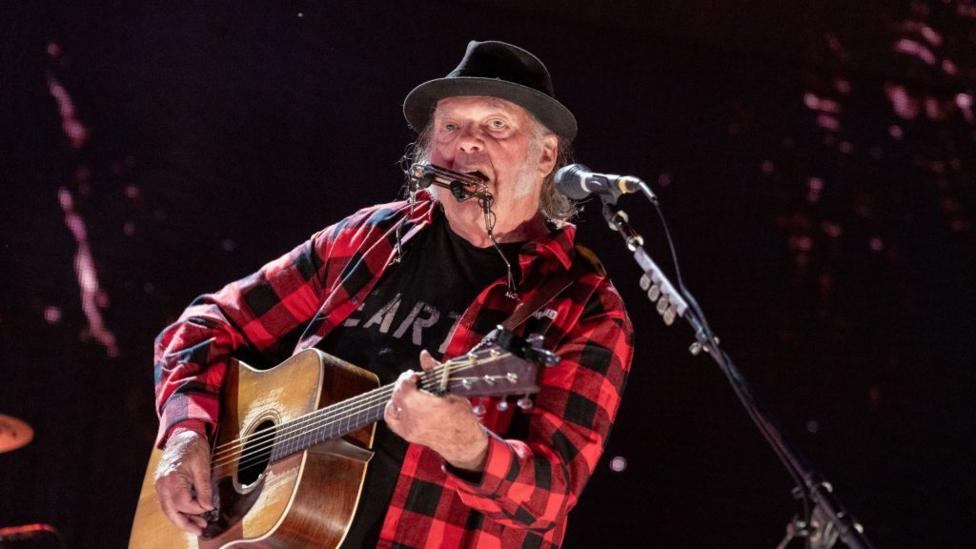 Image source, Getty Images