The key facts
- OpenAI claimed to have solved the Navier–Stokes problem in 88 hours; an NYU mathematician questioned whether the company had used his drafts
- OpenAI claimed to have solved the Navier–Stokes problem in 88 hours; a mathematician from NYU questioned whether the company had used his drafts
- Up to 17% of peer review texts at computer science conferences have been substantially rewritten by a language model
- Up to 17% of peer-review texts at computer science conferences have been substantially rewritten by a language model
- About 147,000 phantom studies were cited in scientific papers over the past year
The dispute over the Navier–Stokes equations
The conflict between mathematicians gave BBC InDepth reason to examine a broader problem: how the use of AI affects trust in the scientific process. Last month, OpenAI announced that its AI agents had solved one of the great unsolved problems of mathematics, related to the Navier–Stokes equations, in 88 hours. The organization that established the prize for solving it stated that the problem had 'apparently been solved,' but that verification would take time.
The accusations and OpenAI's response
Hours before the announcement, New York University mathematician Tristan Buckmaster voiced concerns. Together with Levent Alpoge, who by day worked at the rival company Anthropic, he had been independently working toward the same goal and kept his drafts in the OpenAI Codex tool. According to Buckmaster, his co-author was told that news of their progress had 'reached' OpenAI — he did not specify how. He asked whether his research, stored in Codex, could have made its way into OpenAI's work, while stressing that he 'accuses no one of anything.' OpenAI responded that no one at the company — neither human nor AI — had seen other teams' work before publication. At first, the company said it could not 'rule out,' although it was unlikely, that anonymized data from the use of its products had helped improve the models, but a few days later it reported that Buckmaster's Codex queries from two months before the announcement 'could not have influenced the system in any way.' As the BBC notes, it remains unclear what actually happened.
Fake citations and 'research junk'
Beyond the high-profile disputes, there is a quieter threat: the pollution of scientific journals with so-called AI 'junk,' where texts are written not by scientists but by machines, generating fake references and phantom papers. In 2024, a team led by Professor Dmitry Kobak of Ghent University analyzed more than a million biomedical papers for phrases characteristic of language models: by December of last year, traces of AI were found in almost 90% of them. Detectors are imperfect — some flagged the text of the 18th-century US Constitution as 'AI-generated' — but Kobak himself told Nature he was shocked by the scale. A Stanford University team led by Weixin Liang and James Zou found that up to 17% of the text of peer reviews at four major computer science conferences had been substantially rewritten by a language model. And researchers at Cornell University found that when compiling reference lists, AI invented non-existent works: about 147,000 phantom studies were cited over the past year.
The dispute over the novelty of DeepMind's results
Even genuine science can be presented with exaggeration. After the success of AlphaFold, which predicted 200 million protein folds — work that would have taken laboratories hundreds of millions of years — DeepMind turned to predicting the structures of new materials and announced more than two million new crystal structures as 'nearly 800 years of knowledge.' University of California chemists Anthony Cheetham and Ram Seshadri examined a random sample and concluded in the journal Chemistry of Materials that they had 'not yet found a single strikingly new compound,' calling many of them 'trivial variations of known materials.' DeepMind rejects the accusations, pointing out that it checked every compound for novelty: the substitution of a single atom — which is how many materials useful today came about. Their conclusion was not that the method was wrong, but that the results require more human verification.
Publishers' measures and the case for AI
Some scientific publishers are already responding. Elsevier's research integrity team has developed around 100 signals that flag a paper for additional human review; Nature journals ban AI-generated images and instruct reviewers not to upload manuscripts into AI systems; arXiv bans authors for a year over fabricated references. Elsevier vice-president Sarah Mein speaks of 'research-grade AI' where 'the researcher is in the driving seat'. DeepMind's science lead Pushmeet Kohli does not see abandoning AI as the answer — in his words, it would be 'like saying we should calculate without calculators' — but he acknowledges the need for human oversight: 'Agents today are imperfect. Someone has to be accountable.' An example of responsible use is Andrea Pauli's lab at the Vienna BioCenter, which spent nearly ten years searching for the answer to how a sperm cell penetrates the egg and, with the help of AI, found a protein on the surface of zebrafish eggs that points to a 'lock and key' mechanism. Oliver Vince, founder of London-based Basecamp Research, which collects DNA for an AI that 'speaks the language of biology', after surviving leukaemia has set himself the goal of a system with a better chance of treating cancer: 'We have a technically feasible path to curing cancer.' This is not a promise, the BBC stresses, but a direction — and the open question is whether AI will carry science to that goal or quietly undermine its foundations.
 Image source, Getty

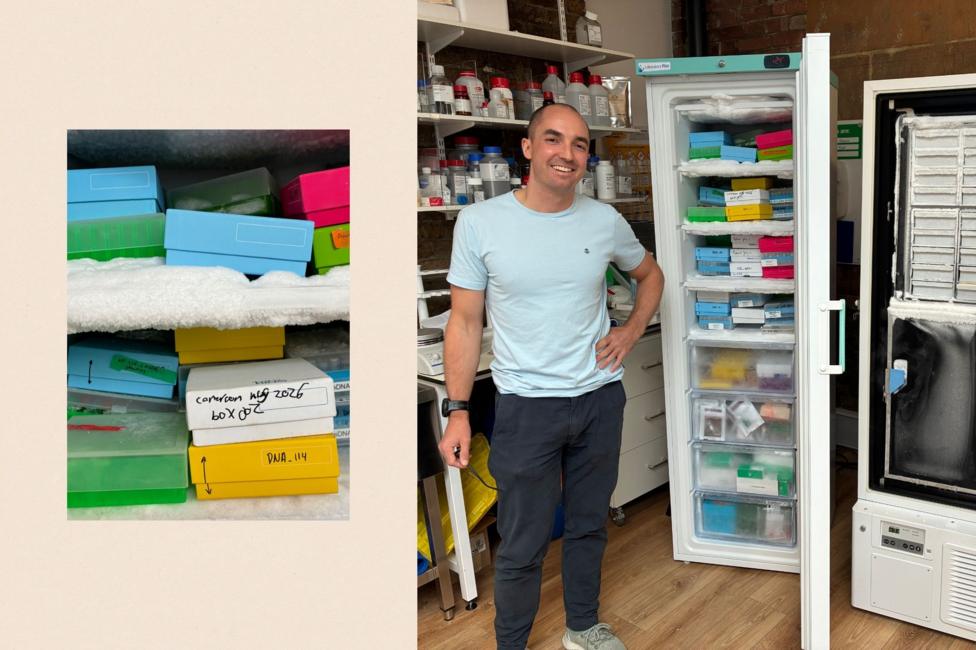
Basecamp founder, Dr Oliver Vince, says just two boxes may hold 10 times more information than all the text on the internet
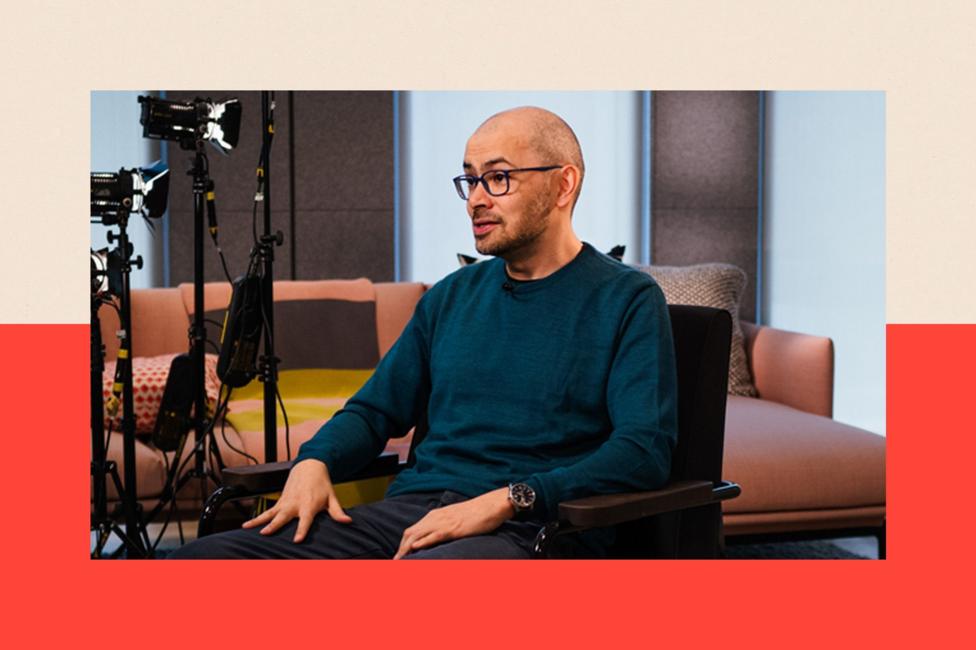 Image source, Jose Sarmento Matos/Bloomberg via Getty Images
DeepMind chief executive Sir Demis Hassabis celebrated his company's use of AI to solve one of biology's biggest problems
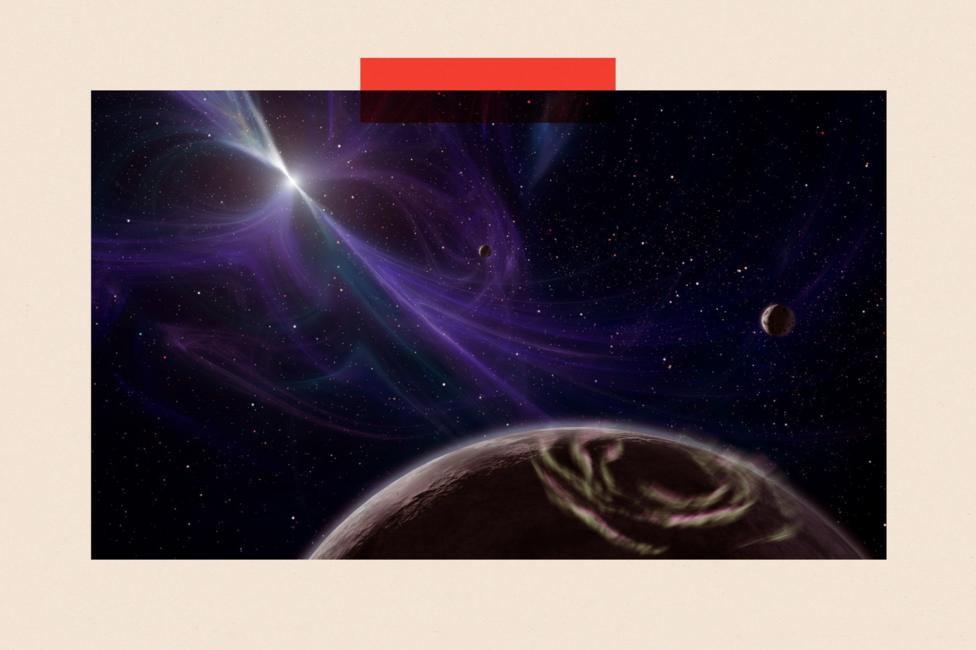 Image source, Universal History Archive/Universal Images Group via Getty Images
Pulsars - an unusual type of neutron star, depicted above by an artist - were discovered in the 1960s partly due to a hunch of scientists
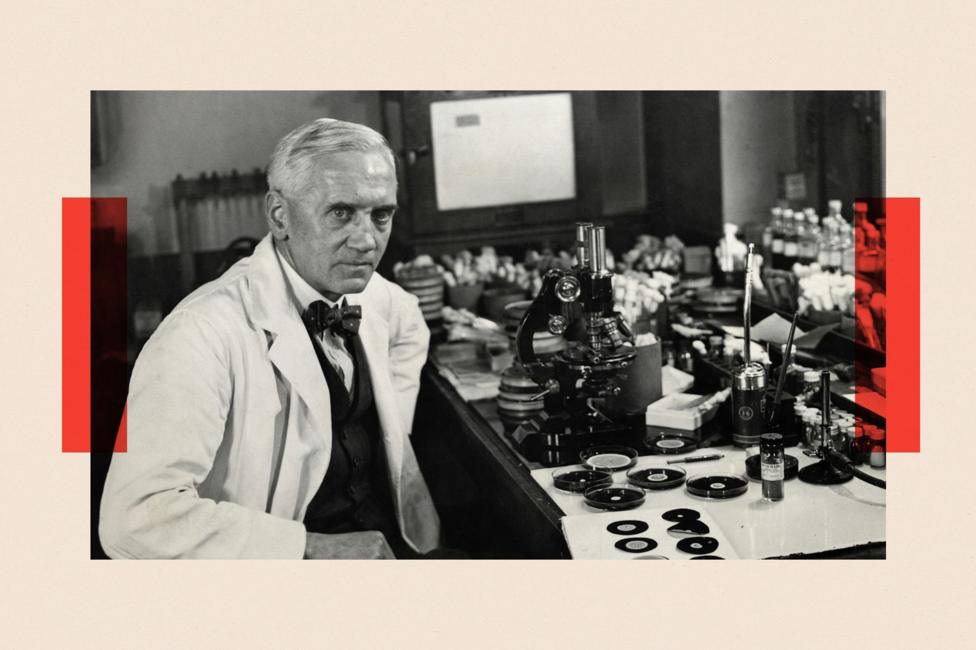 Image source, Daily Herald Archive/SSPL/Getty Images
Scottish scientist Sir Alexander Fleming discovered penicillin in the 1920s