The key facts
- King Charles III began his first visit to the Caribbean as monarch with the Bahamas, acknowledging the 'great suffering of the past'
- King Charles began his first visit to the Caribbean region as monarch in the Bahamas, acknowledging the 'great sufferings of the past'
- According to Buckingham Palace's position, the King will not apologise and will not offer reparations — in line with the UK government's line
- About a dozen protesters in Nassau demanded 'pay what you owe us'; the tour will conclude with the CHOGM summit discussing the legacy of slavery
Recognition without apology
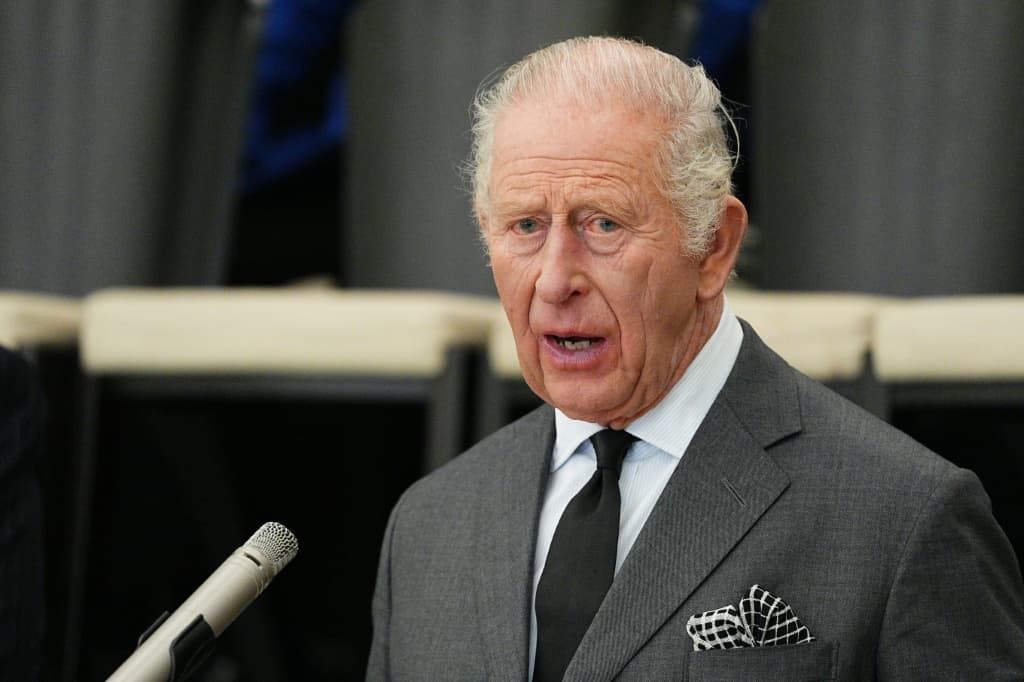
King Charles III began his first visit to the Caribbean as monarch with the Bahamas, acknowledging the 'great suffering of the past' amid renewed calls from Caribbean nations for a British apology for the slave trade. Speaking at a youth rally in Nassau, he said the country's culture was 'born out of darkness' and that it was 'right' to acknowledge historical injustices. This was reported by BBC News.
The palace's position and the tour programme
Even before the trip, Buckingham Palace said the King would not shy away from the topic of 'colonial legacy' and the impact of the slave trade, but, in line with the UK government's position, would not apologise for Britain's role in the slave trade and would not offer reparations. According to a palace representative, the programme of the nine-day tour across three countries — the Bahamas, Guyana and Antigua and Barbuda — 'is primarily focused on highlighting modern partnerships and opportunities for the future', while opportunities to reflect on the legacy of the slave trade are built into the schedule: visits to memorials and sites of remembrance are planned. The representative added that for the King the tour is 'both a new journey and a lifelong continuation', in which he has sought 'to engage, to understand and to educate about the most shameful aspects of our past'.
Protests and meetings in Nassau
On Tuesday, upon arrival, the King met with Governor-General Dame Cynthia A. Pratt and Prime Minister Philip Edward Davis, and then took the salute at a guard of honour of the Royal Bahamas Defence Force. At the youth rally in Clifford Park — where in 1973, as Prince of Wales, he attended the celebration of Bahamian independence — he was greeted with ovations; schoolchildren were let off lessons for the event. One student told the BBC it was the first time they had seen the King 'not through TikTok'. At the same time, a group of about a dozen protesters, not allowed into the main venue, shouted 'pay what you owe us' and 'return the stolen artefacts'. Protester Sharon Peirce-Cooper said: 'He is a person of influence. The Crown still has influence. And if they don't do this, we will become a republic and turn away from England if you don't show respect to former colonies'.
Climate and the CHOGM summit
In his speech in Nassau, the King mentioned his 50-year commitment to fighting climate change and noted the vulnerability of low-lying Caribbean islands, saying that 'our world is crying out for healing'. On Wednesday he will continue his programme in the Bahamas, where he will learn about the islands' vulnerability to climate change and about the Junkanoo tradition — a cultural festival and street parade. He will then travel to Guyana, where the focus will be on the environment and biodiversity, and in Antigua and Barbuda he will be joined by Queen Camilla to take part in the Commonwealth Heads of Government Meeting (CHOGM), where the King will deliver a keynote speech as Head of the Commonwealth. The biennial summit will bring together leaders of the 56 Commonwealth countries; the King confirmed that leaders will discuss the legacy of slavery in the region.
Why the tour is called a risk
The BBC previously analysed why this tour could become 'the biggest risk of his reign': the visit takes place against the backdrop of renewed demands from Caribbean nations for Britain to apologise for its role in selling enslaved people for profit, while the question of reparations remains politically sensitive. For now, the King is holding to the line: acknowledging the past — yes; apologies and payments — no, and this divide defines the framework of the entire trip.
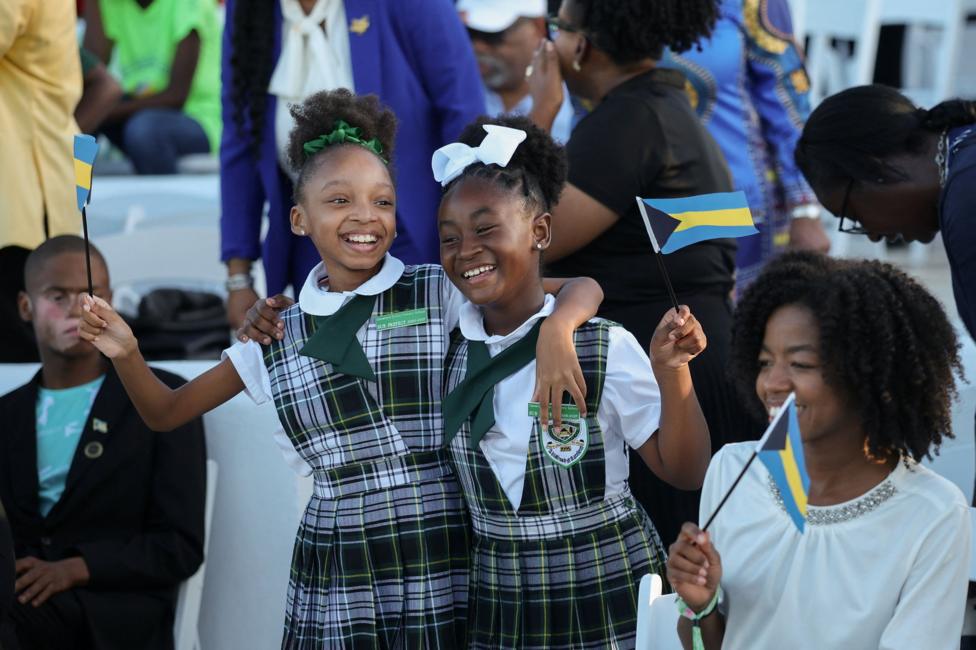 Image source, Reuters
The King spoke with young people as he attended his first engagement of the trip
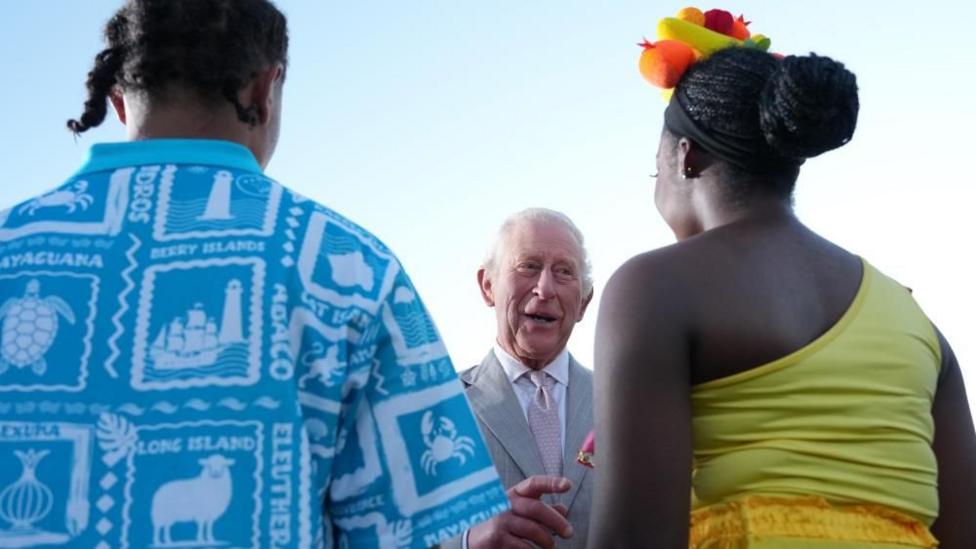 Image source, PA
The King spoke to these performers at a Nassau rally where the focus was on youth
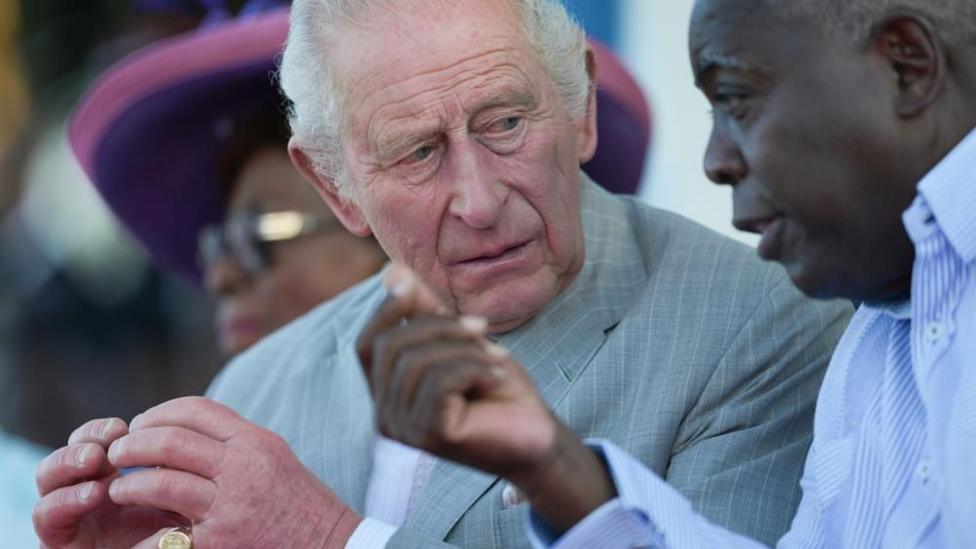 Image source, PA
The King spoke with Philip Edward Davis, Prime Minister of the Bahamas