The key facts
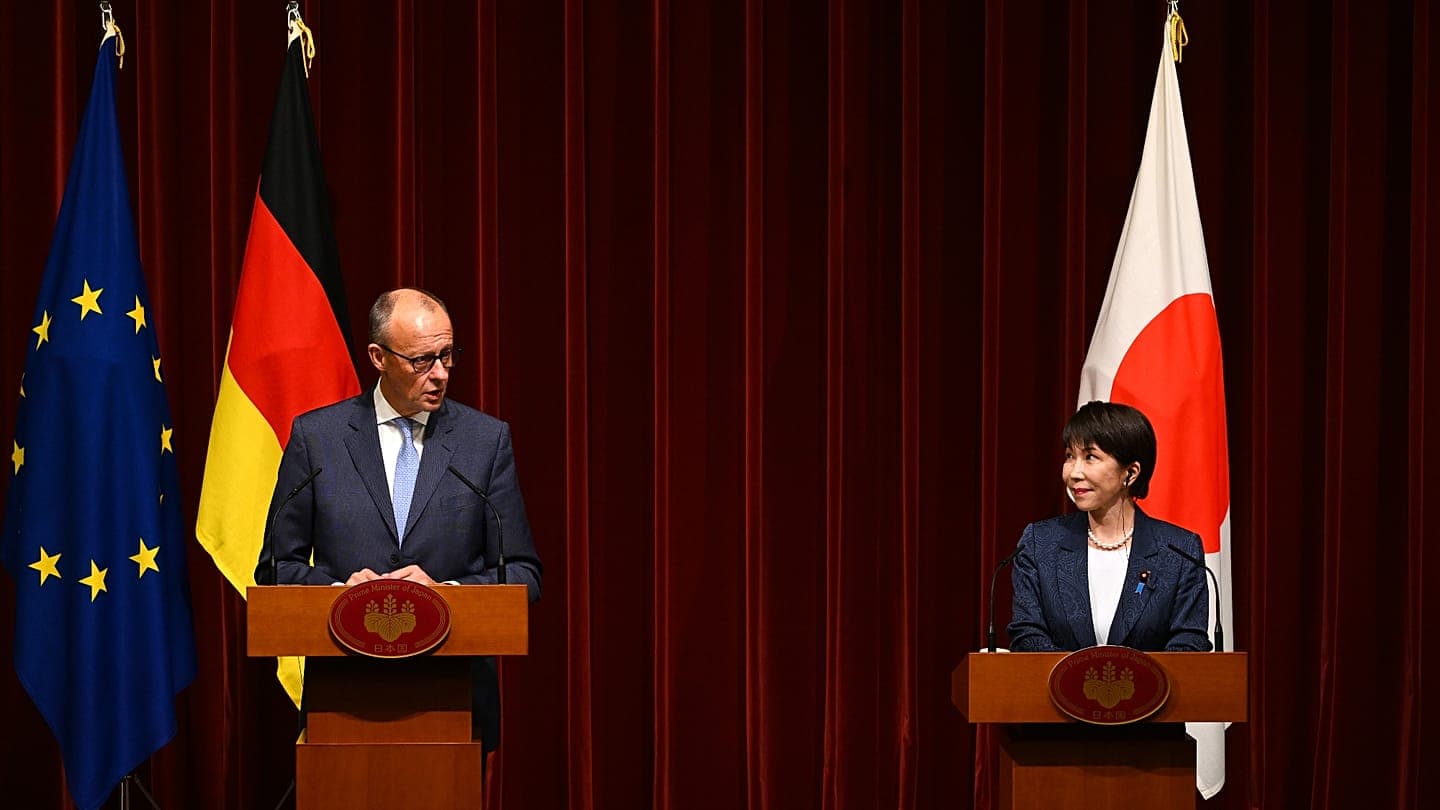
- Merz visited Japan for the first time and met with Prime Minister Sanae Takaichi; a joint declaration of intent on critical raw materials was signed
- The sides agreed on a high-level dialogue on AI and closer cooperation on protection against cyberattacks
- Germany plans to invest €2 billion in AI and high technology by 2029, while Japan expects about €18 billion in private investment by 2040
- Germany plans to invest 2 billion euros in AI and high technology by 2029, while Japan aims for about 18 billion euros in private investment by 2040
Merz's first visit to Japan
As part of his Asian tour, German Chancellor Friedrich Merz visited Japan for the first time and held a meeting with the country's Prime Minister Sanae Takaichi. According to euronews, following the talks the two sides adopted joint statements on economic security and future technologies, aimed at strengthening and coordinating cooperation between the two countries in these areas.
Economic security and critical raw materials
Although neither China nor the United States was mentioned directly in the joint statement or in subsequent remarks, the outlet notes that the text contained indirect criticism of both countries, which have repeatedly used economic policy as a tool of pressure on partners and rivals. In the statement, the heads of the two governments expressed 'deep concern over the growing use of economic coercion,' including arbitrary export restrictions and retaliatory measures concerning critical raw materials, and rejected non-market practices that lead to overproduction and market distortion.
Concrete agreements
The parties intend to strengthen cooperation in monitoring and assessing supply chains so that economic dependencies are not used as an instrument of pressure. Closer work is envisaged in key sectors: critical raw materials, semiconductors, batteries, electric vehicles, industrial AI, robotics, pharmaceuticals and wind energy. On critical raw materials, Merz and Takaichi welcomed the signing of a joint declaration of intent and announced plans to expand the supply base and improve the substitutability of rare earth metals in the automotive industries of both countries. Japan previously faced a shortage of rare earth metals after China restricted exports of a number of important materials.
AI, cybersecurity and the military dimension
Merz and Takaichi agreed to establish a high-level dialogue on artificial intelligence and to cooperate more closely on protection against cyberattacks — topics of growing importance for the Japanese government amid a sharp rise in AI-enabled cybercrime. In the joint statement, the leaders expressed concern over the situation in the East China Sea and the South China Sea, rejected unilateral attempts to change the status quo by force or coercion, and stressed the importance of peace and stability in the Taiwan Strait, calling for a peaceful resolution of conflicts between China and Taiwan. Military cooperation in the Indo-Pacific region is also set to expand: an example was the Bundeswehr's first participation this year in the Japanese-American 'Keen Sword' exercises, which run until Thursday at several locations across Japan, primarily in the sea and airspace around Okinawa, where China has stepped up its military activity in recent years.
Investment and the limits of diversification
At the economic forum in Tokyo, Merz called for the creation of a new political alliance to protect trade based on international agreements, one that could 'provide political impetus and respond jointly when the rules-based order comes under threat.' Germany plans to invest two billion euros in artificial intelligence and high technology by 2029, while Japan aims for roughly 18 billion euros in private investment in these fields by 2040. During his visit, Merz also toured the startup Kyoto Fusioneering — a flagship project of German-Japanese high-tech partnership thanks to its cooperation with Siemens Energy; the goal of the joint work is to generate electricity through nuclear fusion. The Japanese government subsidizes the strategically important semiconductor industry. At the same time, the outlet notes that diversifying partners — the declared goal of the chancellor's Asian tour — is still in its infancy: Germany is following EU requirements under which no more than 65% of critical raw materials may come from China by 2030. On Thursday, concluding his tour, Merz will visit South Korea, where he will discuss bilateral economic ties, security issues, and cooperation in future technologies, including AI.