The key facts
- The term 'associated membership' has been removed from the draft declaration of the Montreal summit — replaced with the wording of an 'ever closer association'
- Germany, France, Italy and Greece opposed the term; Berlin most actively
- The idea was proposed by von der Leyen in September; Canadian Prime Minister Mark Carney preferred the phrase 'an alliance for the future'
The term disappeared from the draft declaration
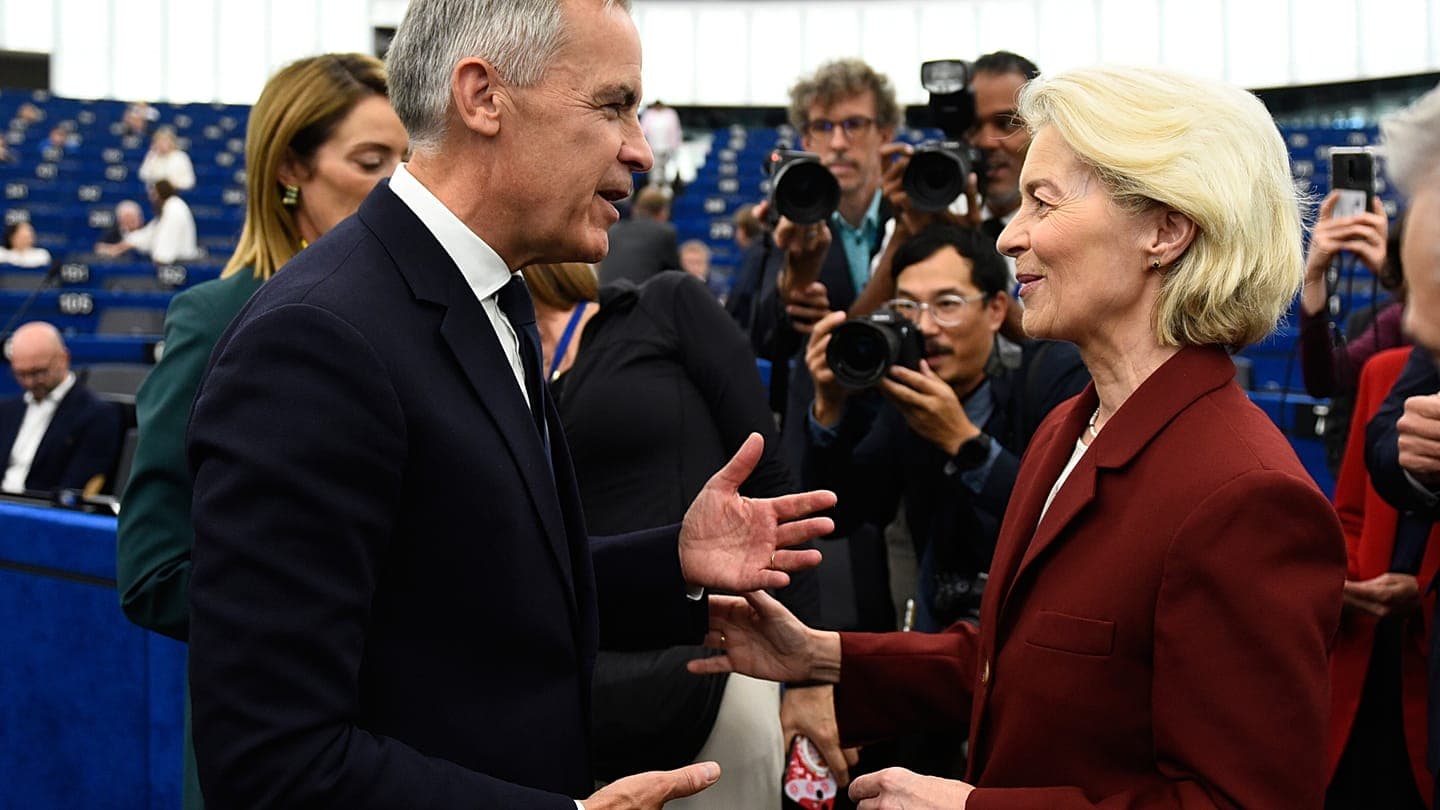
The EU has removed from the final draft of the joint declaration any mention of Canada's associated membership. The text is to be adopted at the conclusion of the EU–Canada summit in Montreal, which will take place on Thursday and Friday. The replacement appeared in a revised version circulated among member states on Wednesday at Germany's insistence: instead of membership, it now speaks of an 'ever closer association' between the EU and Canada, without full membership. Euronews reports this.
Who objected and why
In the final hours, the office of European Council President António Costa conducted intensive negotiations with a number of countries, primarily Germany, which objected to the term in the political declaration. An earlier draft had been sent to countries on Tuesday under the 'silence procedure' — the text is considered adopted if no country explicitly objects — but Germany, France, Italy and Greece raised problems with it. For Berlin, the priority is to determine in practice what closer cooperation with Ottawa means, rather than squeezing the package into a term that is absent from the treaties and could entail serious legal consequences.
Where the idea came from and how Ottawa viewed it
The idea itself belongs to European Commission President Ursula von der Leyen: in September, in her State of the Union speech, she invited Canada to become the EU's first associated member. Canadian Prime Minister Mark Carney, for his part, promoted the phrase 'an alliance for the future', saying he wanted to focus on the substance of the agreement, while terminology was the EU's business. A curious detail: Chancellor Friedrich Merz, whose country has now blocked the term, had previously himself proposed a similar status for Ukraine — as a way to give Kyiv security guarantees before full accession to the bloc. The updated text has again been sent under the silence procedure: it will be adopted if the countries raise no objections by the end of the day.