The key facts
- UN contributions are divided into mandatory and voluntary; mandatory ones are calculated based on GNI, debt and per capita income
- The cap on the share of the regular budget is 22%, and that is exactly where the US stands
- The size of a contribution does not affect the number of votes in the General Assembly: every state has one vote
Comparing states' contributions to the UN system
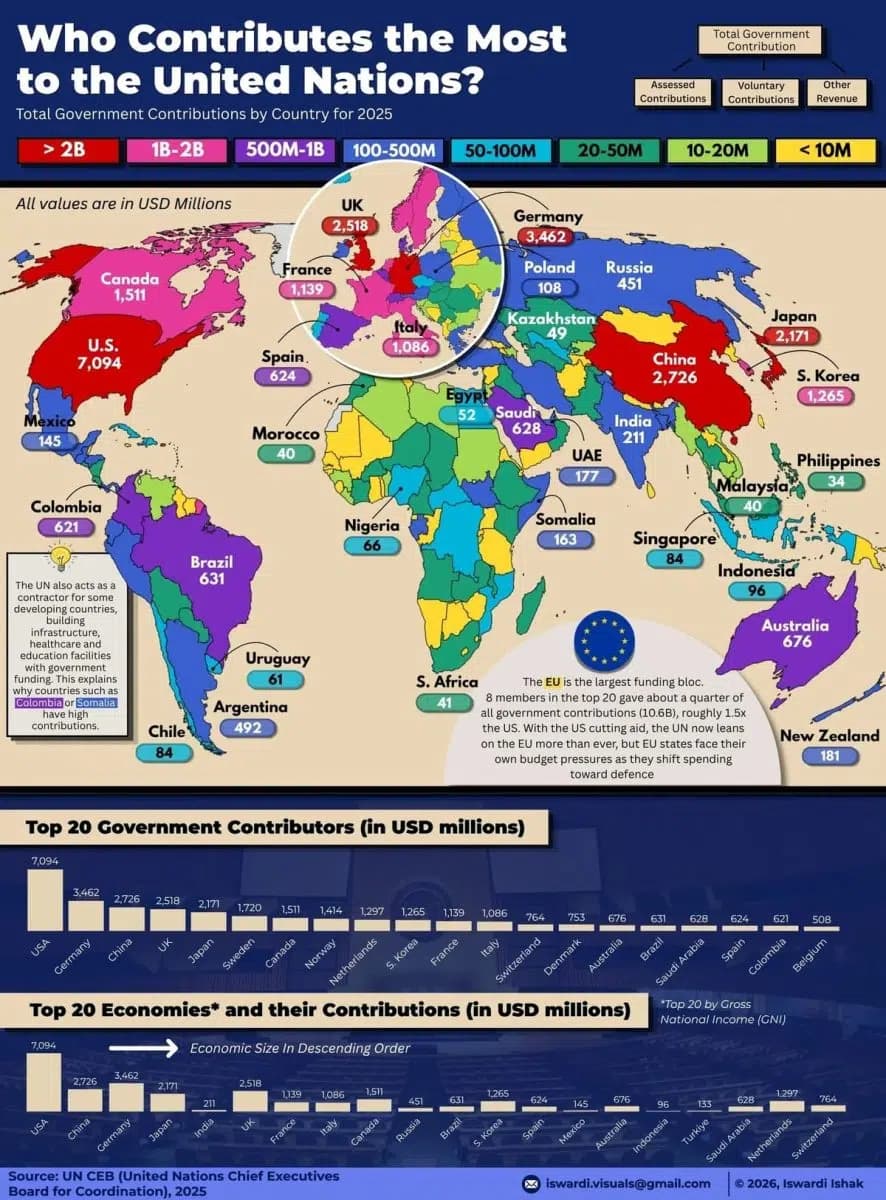
The Kun.uz outlet, citing an infographic by Visual Capitalist, reported on a comparison of states' contributions to the UN system. The data are based on reports by the UN System Chief Executives Board (CEB). Alongside Europe's largest donors, relatively small economies drew attention: Sweden, Norway and the Netherlands contributed more funds than some countries with considerably larger economies.
How contributions are formed
The UN funds peacekeeping operations, humanitarian aid and other programs with money from member states, which comes in two types: mandatory and voluntary contributions. Mandatory contributions are calculated based on a country's ability to pay — taking into account gross national income, debt burden and per capita income. For the UN regular budget, a cap of 22% is set for any single country's share; according to the publication, the US share in this budget is exactly this maximum. At the same time, as Kun.uz clarifies, this does not mean that the US provides 22% of all funds in the UN system.
Special rules for peacekeeping and voluntary programs
A separate formula with higher rates for permanent members of the UN Security Council applies to financing peacekeeping operations. US legislation, the outlet notes, usually caps the US share of these expenses at 25%. Such restrictions do not apply to voluntary contributions: through them, countries support specific initiatives of UNICEF, the World Food Programme and other bodies, and can direct funds to programs of their choosing.
Money does not turn into votes
A country's financial contribution does not change the number of votes in the UN General Assembly: every member of the organization has one vote regardless of the amount of its contribution. The five permanent members of the Security Council hold veto power — a separate mechanism for influencing decision-making. At the same time, voluntary contributions directed to specific programs affect which humanitarian initiatives and development projects receive funding.