The key facts
- dots launched at OpenAI's developer day in late September and is available in the ChatGPT apps to subscribers on the Pro tier and above (from $100 per month)
- The assistant grew out of agentic coding tools, including Codex, and was repackaged as 'a single entity and one conversation'
- OpenAI acknowledges that privacy settings are not yet granular enough and is in talks with payment processors
From code to an 'always-on' assistant
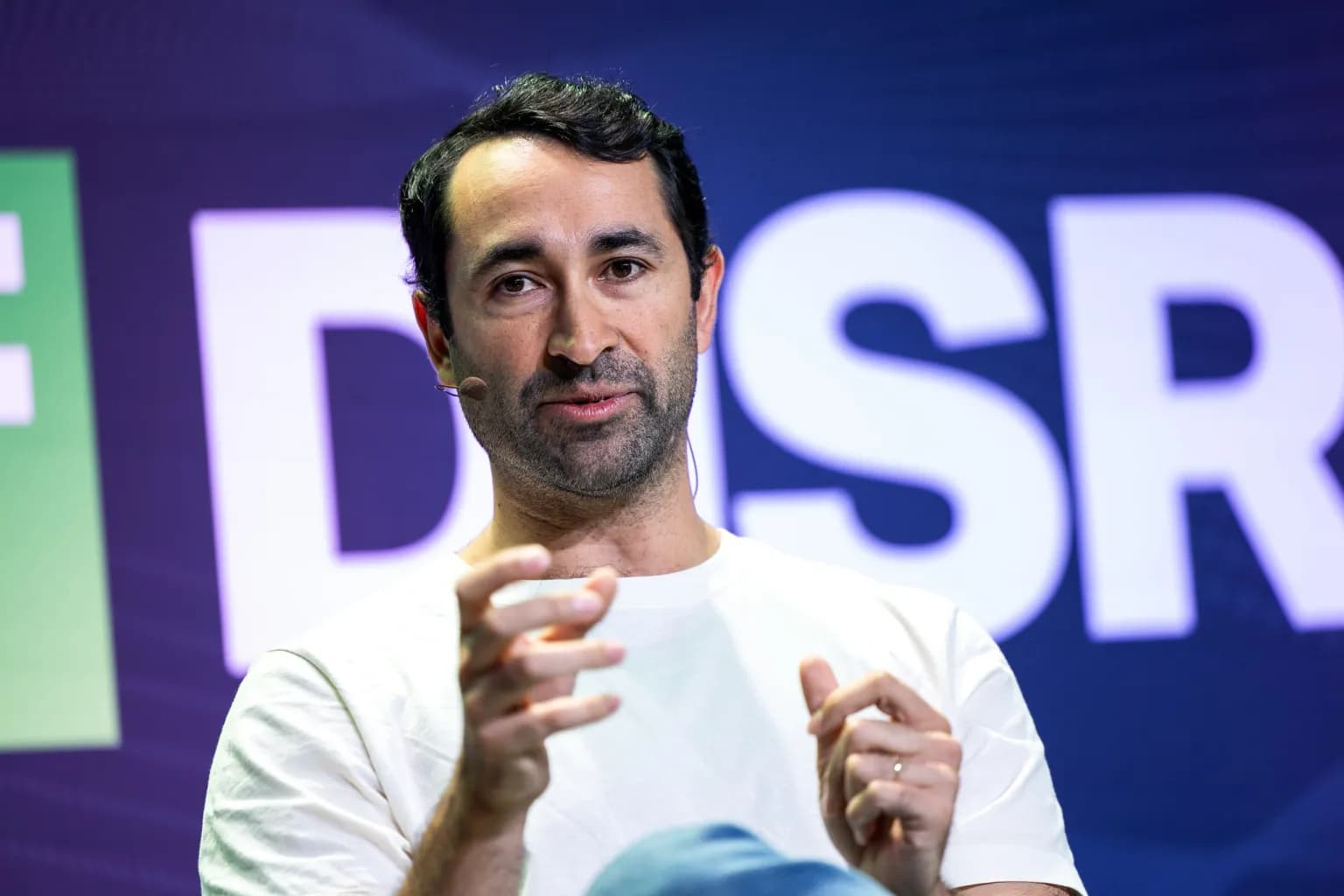
An AI assistant that runs constantly in the background has become, in TechCrunch's phrasing, this year's answer to the question of how people will actually use deep learning models: the startup Instinct became a sensation, and Meta is promoting its assistant Muse. OpenAI released its own product, dots, on developer day in late September. At TechCrunch Disrupt, the head of business product Alexander Embiricos explained the product's origins: according to him, the industry is undergoing 'a kind of convergent evolution,' and intuitiveness is achieved by presenting the assistant as 'an entity and a single conversation,' rather than a multitude of separate chats.
What dots can do and where it came from
The assistant is available in the ChatGPT desktop and mobile apps to subscribers on the Pro tier and above, with plans starting at $100 per month. After connecting a calendar, email, computer and other tools, the agent helps get work done. Embiricos notes that much of dots' functionality could already be obtained in the Codex app — the coding tool released earlier this year — but that required more manual setup. The path to the product went through spinning ChatGPT Work out of the agentic tools for programmers; the name itself — a reference to the negative space inside the OpenAI logo — is designed to 'become ubiquitous over time.' In TechCrunch's testing, the assistant's proactivity is noticeable and useful, but not yet perfect: it flags calendar conflicts and deadlines, not always on time — Embiricos recalled how, early in development, his dot reported a conflict three minutes before the event.
Privacy and data
Like other agents, dots faces a tension between the amount of personal data needed to be useful and what the user hands over to the company. Meta was criticized for the profiles of friends and family that Muse builds; TechCrunch cites a Wired story about those profiles. OpenAI described a built-in 'proactive research' feature: on a regular basis, the agent analyzes what it knows about the user and what it has access to, explores how it can be more helpful, and offers that. According to the company, dots has the same privacy settings as ChatGPT: you can opt out of training on your data and control access to resources. However, as TechCrunch writes, the settings are not granular, the app can be pushy, and it refuses to accept read-only access to cloud drives. Embiricos admitted that after launch he received criticism for overly conservative defaults and frequent permission requests, and said that 'super-granular' controls need to be built.
Scaling and payments
An open question is agents' ability to scale: businesses are not necessarily ready to interact with agents, and people often do not want to. Embiricos himself keeps a human assistant, because OpenAI's corporate partners want to talk to a person, and stated: 'I personally never intend to have a meeting with someone else's agent.' On the future of payments, he said that OpenAI 'does not always move faster than everyone else' in enabling the agent to act in the world and is having 'deep conversations with payment processors.' TechCrunch notes that allowing the assistant to spend money through partnerships with payment companies would be a potentially lucrative first for OpenAI, but a big ask of consumers.