The key facts
- Arteta, Alonso, Iraola and Emery are Premier League coaches from Gipuzkoa, a province of 1,980 km² with a population of about 730,000
- All three of the first-mentioned played in midfield as children for the same club, Antiguoko Kirol Elkartea, in San Sebastián
- This season, more than 500 people have enrolled in the Gipuzkoa federation's coaching school — more than ever before
Four coaches from one province
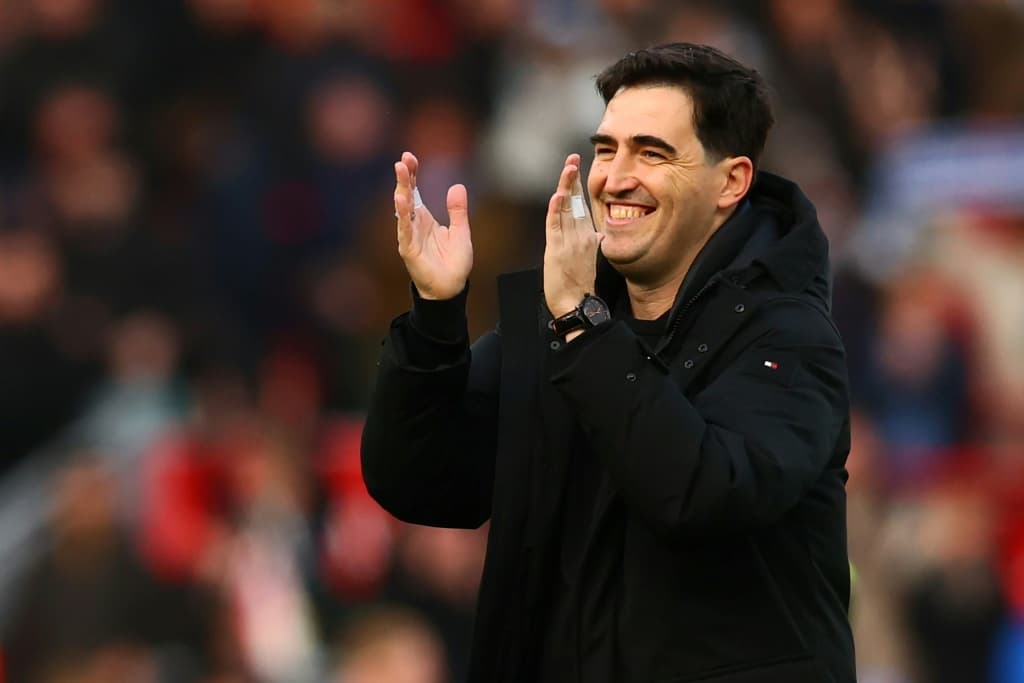
This week, English football features clubs linked by an unexpected common trait: their head coaches come from Gipuzkoa, the smallest province of the Basque Country, covering 1,980 km² with a population of about 730,000. Andoni Iraola's Liverpool faces Xabi Alonso's Chelsea in the League Cup on Wednesday, while on Sunday Mikel Arteta's side — the reigning English champions — play Arsenal in the Premier League. The fourth coach from Gipuzkoa, Unai Emery, will lead Aston Villa against Barcelona in the Champions League on 3 November. Thus, the province has produced 20% of Premier League head coaches, AFP notes.
A teacher of teachers and a shared childhood
The starting point of the phenomenon, according to the outlet, is 80-year-old Mikel Echarri, a man little known outside the region who has spread his ideas for more than half a century and after whom the Gipuzkoa federation's coaching school is named. The school's coach training director, Josu Zubia Ramos, called him 'a sage and a master of football, a teacher of teachers'. In October, Echarri was honoured at a friendly match between Real Sociedad and Athletic from Bilbao. The shared past of the head coaches is also telling: at the age of eight, Arteta, Iraola and Alonso all played in midfield for the youth club Antiguoko Kirol Elkartea from San Sebastián — their shirts hang in the club's office. Another product of the club is Arsenal midfielder Martín Zubimendi. Echarri himself, as sporting director of Real Sociedad in 1999, signed Alonso, and also worked with Eibar and the Basque national team.
Culture, academies and a 'virtuous cycle'
The outlet links the region's success to several factors. Historically, the foundation of Basque football is set by Real Sociedad and Athletic: the Bilbao club maintains its famous policy of fielding only local players, while Real Sociedad dropped restrictions on outside players back in 1989, yet its academy remains a vital source. The path from academy to first team is more transparent here than at other clubs, and fans expect success despite resources inferior to the Madrid and Barcelona giants — the gap is partly offset by work rate and competitive spirit; both teams have won the Copa del Rey and played in the Champions League in recent years. Echarri describes the established system as a 'virtuous cycle': good coaching makes players better, a deep understanding of the game pushes them towards a coaching career, and they pass the ideas on. 'There is no envy — people want to perform, want knowledge, want information,' he told AFP, adding that a Basque coach is demanding of himself in any field. Zubia Ramos links the success to local culture, teamwork and club identity, noting similarities with England in climate and philosophy towards football. Beyond football, the region is also notable: San Sebastián has the world's highest concentration of Michelin-starred restaurants per capita, and children under ten in Gipuzkoa take up several disciplines without specialising in one; traditional pursuits such as stone lifting and wood chopping remain part of the culture.
The flow does not dry up
A sign of the system's resilience is the figures of the local coaching school: this season more than 500 people have enrolled — more than ever before — despite the province's small population. 'This shows a genuine interest in education and self-improvement,' Zubia Ramos noted. According to AFP, these figures suggest the coaching 'pipeline' is unlikely to dry up, and the next Arteta, Alonso or Iraola is probably sitting in one of those classrooms right now.