The key facts
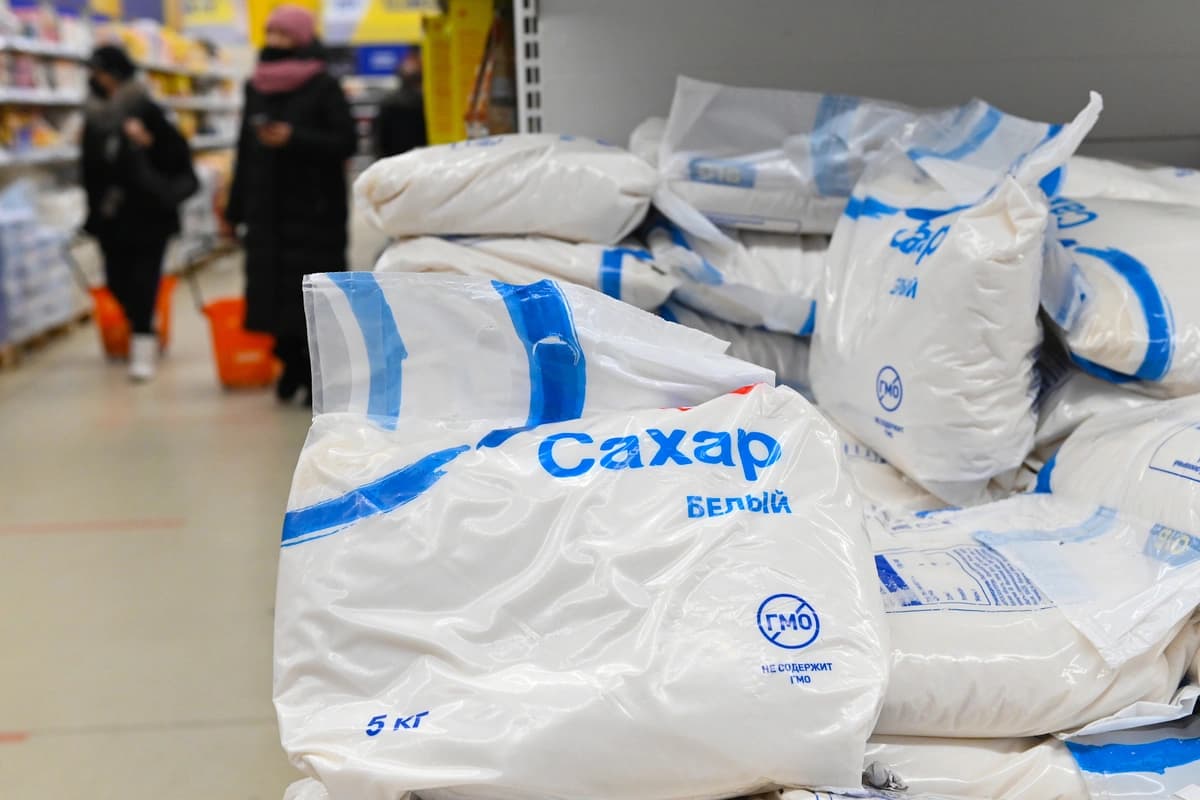
- From January 1, 2027, imports of white sugar for the food industry will be limited to a quota of 300,000 tons per year, to be distributed through online auctions by December 1, 2026.
- From January 1, 2027, imports of white sugar for the food industry will be limited to a quota of 300,000 tonnes per year, with allocation through online auctions by December 1, 2026.
- Local producers are provided exemption from the profit tax until 2031, extension of loans from Uzpromstroybank, and compensation of up to 50% of interest expenses on foreign currency loans.
- Imports of sugar and raw materials grew 36% in physical volume in the first nine months of 2026; economist Otabek Bakirov criticized the quota over risks of price increases and corruption.
- Imports of sugar and raw material in the first nine months of 2026 grew 36% in physical volume; economist Otabek Bakirov criticized the quota over risks of price increases and corruption.
A closed resolution on quotas
In Uzbekistan, starting from January 1, 2027, a quota on imports of white sugar for food industry enterprises will be introduced, with a total volume of 300,000 tons per year. This is provided for by a Cabinet of Ministers resolution dated July 30–31, 2026 (PCM-417) on developing local sugar production, ensuring food security and stabilizing the sugar market. The document is marked for restricted distribution and is closed to the public: it is absent from the national legislation database Lex.uz, but a copy is in Spot's possession, and an informed source confirmed the authenticity of the resolution to the editorial team. The newspaper Gazeta.uz also reports having a copy of the document. Oversight of implementation has been assigned to Deputy Prime Minister Jamshid Khojaev.
How the quota will be distributed
The quota is divided into three areas of 100,000 tons each: for producers of beverages, confectionery and other food products. The government will approve the volume for the following year in November based on proposals from the Ministry of Economy and Finance, the Competition Development Committee and the National Statistics Committee. The size of the quota may be revised every six months taking into account domestic consumption, capacity utilization, and import and domestic prices. The quotas are to be distributed through electronic online auctions: the system is to be launched by December 1, 2026 and integrated with the Customs Committee's 'Single Window' information system, and auction results will be published openly. At the same time, as Gazeta.uz notes, the resolution does not explain how sugar supplies exceeding 300,000 tons will be arranged or whether restrictions or a special tariff regime will be introduced for other importers.
Support for local plants
The resolution provides a package of support measures for local producers. The repayment period for credit debt to Uzpromstroybank is extended to five years with a grace period of up to two years; repayment schedules and interest rates are subject to revision. From August 1, 2026 to August 1, 2031, the Entrepreneurship Development Company will compensate up to 50% of interest expenses on foreign currency loans, but no more than 5 percentage points, regardless of the sustainability rating and loan classification. By the end of 2026, enterprises must fully repay accounts receivable and attract $50 million in foreign direct investment. The Ministry of Economy and Finance has been instructed to prepare amendments to the Tax Code within one month: it is proposed to exempt local sugar producers from the profit tax and to set the property tax rate at 50% until January 1, 2031, with the savings to be used exclusively for loan repayment.
State procurement, the exchange and strict financial control
From January 1, 2027, state organizations and enterprises must give priority to meeting their white sugar needs through local producers. All products of local plants will be sold through the commodity exchange, and exports are allowed without restrictions; free issuance of a local production certificate and inclusion in the local products registry are provided for. The State Reserves Management Committee has been instructed to build up sugar stocks using products of local enterprises. At the same time, enhanced financial control is being introduced: producers are recommended to appoint financial directors from among representatives of the creditor bank, who will be able to attend general meetings and block decisions that worsen the borrower's financial position. Free liquid funds must be directed toward early loan repayment; until loans are fully repaid, distributing profit as dividends is prohibited, and pledged property may be transferred to the bank's balance sheet if conditions are violated. Also provided are video surveillance with online monitoring of processes for banks, engagement of foreign consultants for auditing and rehabilitating enterprises, and the Customs Committee must publish data on imports of socially significant food products quarterly.
Criticism and context: imports are growing, production is falling
Economist Otabek Bakirov criticized the decision, expressing concern that restricting imports could lead to higher sugar prices, increased costs for producers of beverages, confectionery and other products, as well as reduced production and export opportunities. In his assessment, in 2026 Uzbekistan may import at least 750,000–800,000 tonnes of sugar, so the 300,000-tonne quota creates a risk of substantially limiting competition. He also believes that returning to administrative allocation of imports carries the risk of corruption and of market concentration in the hands of a limited number of players. The new measures come against the backdrop of growing imports: according to Customs Committee data cited by Gazeta.uz, in January–September 2026, 652,800 tonnes of sugar and sugar raw material were imported worth $440.1 million — 36% more in physical volume and 37% more in value than in the same period of 2025 (480,100 tonnes worth $321.3 million). However, customs statistics also include raw material for processing, so the total imports cannot be directly compared with the 300,000-tonne quota of white sugar for certain categories of industrial consumers. According to the Statistics Agency, in the first half of 2025 the country produced 165,500 tonnes of sugar compared with 227,800 tonnes a year earlier and 332,600 tonnes in the first half of 2023 — a drop of more than half in two years. The main producers are Angren Shakar in Tashkent region and Xorazm Shakar in Khorezm region, while raw material has traditionally been mostly imported, including from Brazil and India. In 2025, according to Russia's federal center Agroexport, Russia supplied Uzbekistan with 417,000 tonnes of sugar — 170,000 tonnes more than a year earlier, which is attributed in part to the abolition, from October 1, 2025, of the 20% excise tax on imports of white sugar (the 20% customs duty remains in place). In February 2026, it was reported that Egypt's Nile Sugar plans to implement a sugar plant project in Jizzakh worth $450 million with a capacity of up to 200,000 tonnes per year and a full cycle of growing and processing sugar beet.
Why it matters
The decision directly affects producers of beverages and confectionery, who from 2027 will be able to import white sugar only within auction quotas, as well as end consumers, who, according to critics of the resolution, may face price increases. For local plants, the quota is combined with tax benefits and debt restructuring to Uzpromstroybank, but at the same time with strict banking control, up to a ban on dividends and the transfer of pledged property. In practice, the auction platform must be operational by December 1, 2026, and a draft of amendments to the Tax Code within a month; meanwhile, it remains unclear how imports above the quota will be regulated, since the resolution remains closed to the public.