The key facts
- At a Michigan rally, Trump called El-Sayed a 'jihadist' and said he should have to pass through a metal detector before entering the Senate
- El-Sayed denies ties to the 'Muslim Brotherhood' and responded: 'I'll be Senator Mohamed for you, bro'
- Criticism also came from Bishara Bahbah, founder of the group Arab Americans for Trump
Trump's attack on a Senate candidate
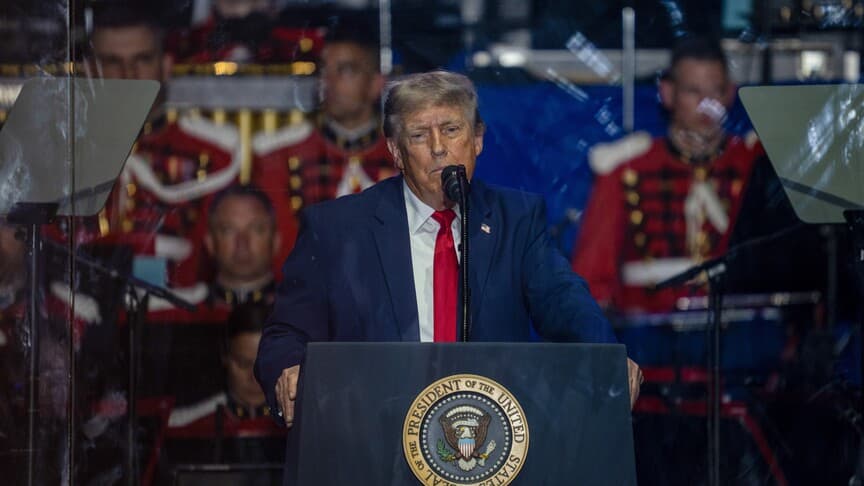
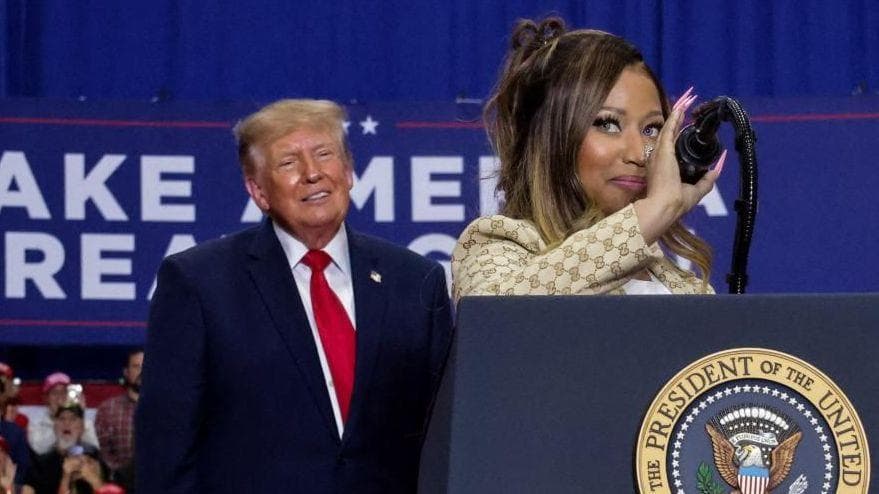
US President Donald Trump faced a wave of criticism after, at a rally in Michigan on Sunday, he accused Abdul El-Sayed, the Democratic Party's Senate candidate in that state, of being a 'jihadist'. According to BBC News, Trump said that if El-Sayed and the Democrats won, they would 'open the floodgates and invite hordes of jihadists to our shores,' and also suggested that El-Sayed 'would have to go through a metal detector before being allowed into the Senate.' As a guest, Trump introduced the father of Todd Beamer — a passenger on United Airlines Flight 93 who took part in resisting the hijackers on September 11, 2001. 'Michigan must rise up and fight, just as Todd did, to keep a jihadist out of the Capitol,' Trump said.
Accusations surrounding the Muslim Brotherhood
El-Sayed's opponents are trying to link him to the Muslim Brotherhood — an Islamist organization founded in Egypt; earlier this year Trump designated a number of its branches as foreign terrorist organizations. Some of the claims concern texts more than a decade old: in a 2012 social media post, the candidate's half-sister Eman Abdelhadi, according to the BBC, mentioned the movement, writing that her family had 'been in the MB for a long time.' Critics also cite El-Sayed's 2011 article in the Huffington Post, in which he mentioned concerns that 'supporting democracy in Egypt could allow the country to fall into the hands of the Muslim Brotherhood,' as well as a 2012 open letter from Egyptian Americans calling on President Mohamed Morsi to 'cleanse the media and the police' — El-Sayed himself has not commented on that letter. At the same time, the candidate denies any connection to the organization and emphasizes his loyalty to the United States: at a recent event, when asked whether he would renounce the organization, he replied: 'Absolutely.' Notably, his current Republican rival Mike Rogers in 2012, according to the BBC citing Reuters, himself entertained cautious contacts with the Muslim Brotherhood, speaking of 'moderate people' in the organization with whom one 'would have to engage.'
Reaction and context of the race
Critics called Trump's remarks Islamophobic. El-Sayed responded at a rally: 'I'll be Senator Mohamed for you, bro,' playing on the fact that Trump had referred to him by his middle name, and added that his opponents 'point to my name and my faith' to distract from problems with gasoline prices, groceries and access to doctors. Standing beside him, Senator Bernie Sanders said Islamophobia is used 'because they have nothing to say about the real issues.' Condemnation also came from Bishara Bahbah, founder of the group Arab Americans for Trump, who called the president's statements beyond the pale and racist. The BBC notes that Trump won the 2024 election partly thanks to Michigan, which has a notable Arab American community. The November 3 election, in which El-Sayed faces Republican Mike Rogers, is expected to be one of the closest contests in the midterm elections; the seat is currently held by the Democrats and is among the few capable of determining the balance of power in Congress. If El-Sayed wins, he will become the first Muslim elected to the US Senate. The White House did not respond to a request for comment from the BBC.
Why this matters
The Michigan race is one of the few contests that will determine control of the Senate, so campaign rhetoric has direct political consequences. For the state's Arab American community, which played a notable role in Trump's 2024 victory, the public condemnation of his statements by the founder of Arab Americans for Trump is a significant signal of a split within his own electoral base. Almost everything will be decided on November 3: the outcome of the vote will determine who represents Michigan in the Senate and will affect the balance of power in Congress.