The key facts
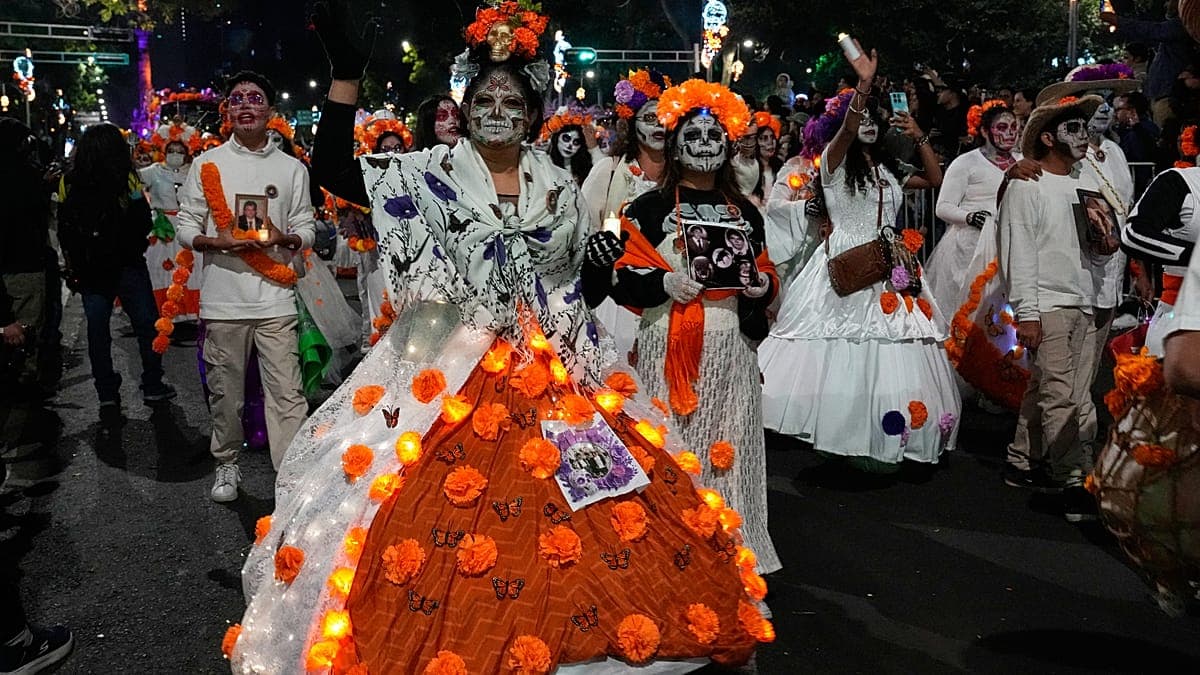
- The annual Catrina parade took place in Mexico City on October 25, with thousands of people taking part
- A full Catrina makeup takes makeup artists 20–40 minutes
- On October 31, a parade with more than 4,000 performers, 12 floats and two giant balloons is expected; a 32-metre Catrina statue will be installed on the Zócalo
A colourful procession along Paseo de la Reforma
On Sunday, October 25, Mexico City's central thoroughfare, Paseo de la Reforma, turned into a colourful procession: thousands of participants in the annual Catrina parade appeared in extravagant headwear, glittering outfits and with faces painted as skulls. According to Euronews, dancers, couples dressed as skeleton brides and grooms, and even dogs in costumes marched past cheering spectators; some wore glowing outfits, while others displayed intricate embroidery and large headpieces. Behind the scenes, makeup artists created the recognisable Catrina look — a full face of makeup took 20 to 40 minutes.
From satire to a national symbol
The procession is dedicated to La Catrina — a skeletal figure created by illustrator José Guadalupe Posada more than a century ago and later popularised by the artist Diego Rivera. Originally a satire on European fashion, Catrina has today become one of Mexico's most recognisable cultural symbols. The parade is part of a series of events leading up to the Day of the Dead, celebrated mainly on November 1 and 2, when families honour deceased relatives with altars, flowers, candles and offerings.
What Mexico City has in store next
The main event is still to come: on October 31, the capital is expected to host an even larger parade featuring more than 4,000 performers, 12 floats and two giant balloons. A 32-metre Catrina statue surrounded by millions of marigolds will be installed on the Zócalo square. Thus, the October 25 procession was merely a warm-up before the main parade: the organisers are clearly counting on the holiday's growing audience, which, as Euronews puts it, brings together music, creativity and remembrance, turning the commemoration of the dead into a celebration of life.