The key facts
- The Israeli army reported launching an interceptor at a suspicious aerial target in southern Lebanon; details about the target were not disclosed
- According to NNA, strikes hit Kfar Tebnit, Barashit, and Wadi al-Hujayr; a controlled demolition was carried out in Deir Mimas
- Since March 2, according to Anadolu, at least 4,386 people have been killed and more than 1 million displaced
Interception and a series of strikes
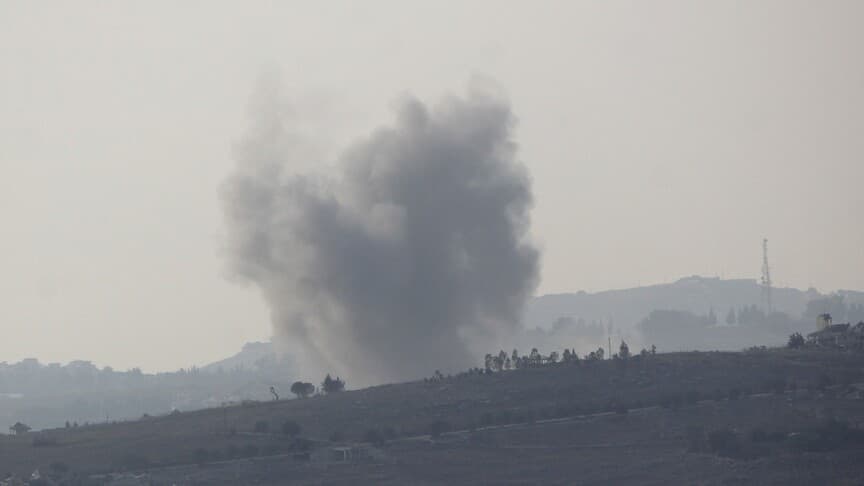
The Israeli army said on Wednesday evening that it launched an interceptor missile at a suspicious aerial target detected near its troops in southern Lebanon. In a statement on the social network X, the army indicated that warning sirens were not activated — in line with its policy — but did not disclose details about the nature of the target or whether the interception was successful. This was reported by the Turkish agency Anadolu.
What was happening in southern Lebanon
The report of the interception came against the backdrop of a series of attacks reported by the Lebanese state agency NNA. According to its data, Israeli aircraft carried out two consecutive strikes on Kfar Tebnit, as well as targets in the vicinity of Barashit and the Wadi al-Hujayr area. In the town of Deir Mimas, Israeli troops carried out a controlled demolition of a structure. In addition, two explosive-laden drones, flying at low altitude over Mansouri and the neighboring Qlayleh and Buyut al-Sayyad, exploded over the town. Israeli aircraft also flew at low altitude over southern Lebanon, simulating raids and dropping flares.
Context of the agreement and casualties
According to Anadolu, the US-sponsored arrangement between Lebanon and Israel, reached on June 26, provides for the gradual withdrawal of Israeli troops from occupied Lebanese territories in exchange for the deployment of the Lebanese army and the disarmament of armed groups. Despite the agreement, Israeli attacks continue: since March 2, according to figures cited by the agency, at least 4,386 people have been killed and 12,407 wounded, and more than 1 million people have been displaced. Israel continues to hold territories in southern Lebanon — some of them for decades, others captured during the 2023–2024 war; in the latter conflict, Israeli forces advanced roughly 10 km deep into Lebanese territory.