The key facts
- Rock paintings made with natural ochre, provisionally attributed to the Mesolithic and Neolithic eras, have been found in the Koshrabad district
- Bronze Age ceramic fragments and a settlement with a 60 cm cultural layer have been discovered at three locations near the village of Kumolokli
- The institute notes the need for large-scale excavations at the discovered settlement
Finds in the mountainous areas of Koshrabad
During archaeological surveys in the section of the Nurata Range located in the Koshrabad district of the Samarkand region, rock paintings from the Mesolithic and Neolithic eras have been discovered, along with a Bronze Age settlement. This was reported by the community of the Yahyo Gulyamov Samarkand Institute of Archaeology, to which Gazeta.uz refers.
Petroglyphs and Bronze Age ceramics
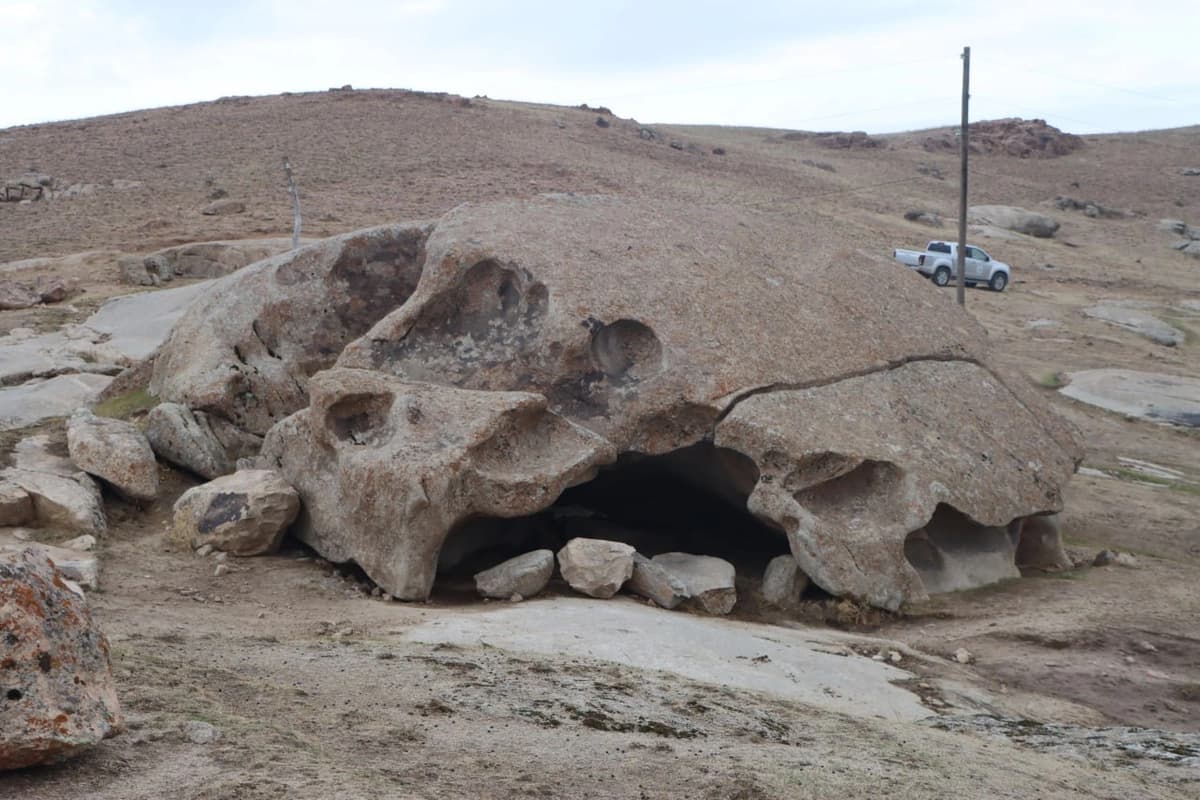
According to the institute's field research plan for 2026, in October researchers carried out archaeological surveys in the mountainous and foothill zones of the Koshrabad district. On the territory of the Okchobsoy citizens' assembly — in the tracts of Egrijorsoy, Khojasoy (Badimin), Galadjinsoy and Sumbulsoy — paintings were found on the walls and ceilings of rock shelters, made with natural ochre. According to the institute, they are provisionally dated to the Mesolithic (12th–7th millennia BCE) and the Neolithic (6th–3rd millennia BCE).
Settlement near the village of Kumolokli
In addition, during surveys on the territory of the Pangat citizens' assembly, Bronze Age ceramic fragments — from the 3rd millennium to the beginning of the 1st millennium BCE — were found and studied at three locations. At the first site, located 700–800 meters east of the village of Kumolokli, a test pit measuring 2×1 meters was laid out. As a result, a Bronze Age settlement with a cultural layer 60 centimeters thick was identified; numerous ceramic fragments and bone remains were recorded during the excavations.
Significance and next steps
According to the institute, the materials found at the settlement indicate the need for large-scale excavations. A comparative analysis of the finds, the institution notes, will help study the stages of settlement of the Nurata Range territories by ancient populations and the development of cultural ties with tribes from other regions; the results of the research should form the basis for new scientific conclusions about these processes.
Context: earlier finds in the region
Earlier, in the Urgut district of the Samarkand region, at the Kurgantepa site, a gypsum head of a sculpture was found among the remains of an early medieval temple. Specialists stressed at the time that the find was important for the study of ancient Sogdian art. The new discoveries in the Koshrabad district expand the picture of the settlement of the Samarkand region back to eras preceding written history. For science, they mean the emergence of new sites for field research, and for the region — a potential expansion of the list of archaeological monuments under study, if large-scale excavations at the discovered settlement do indeed take place.