The key facts
- The elections take place on Tuesday; Friday's polls show near parity between the ruling coalition and the opposition.
- The election will take place on Tuesday; Friday's polls show near parity between the ruling coalition and the opposition.
- Centrist Gadi Eisenkot and his Yashar party have consistently outpolled Netanyahu's Likud in recent surveys.
- A deadlocked outcome is possible, in which Arab parties would hold decisive influence, but almost all Jewish opposition parties have refused to cooperate with them.
- A deadlock is possible, in which the Arab parties would hold decisive influence, but almost all Jewish opposition parties have refused to cooperate with them.
Elections against a backdrop of deep division
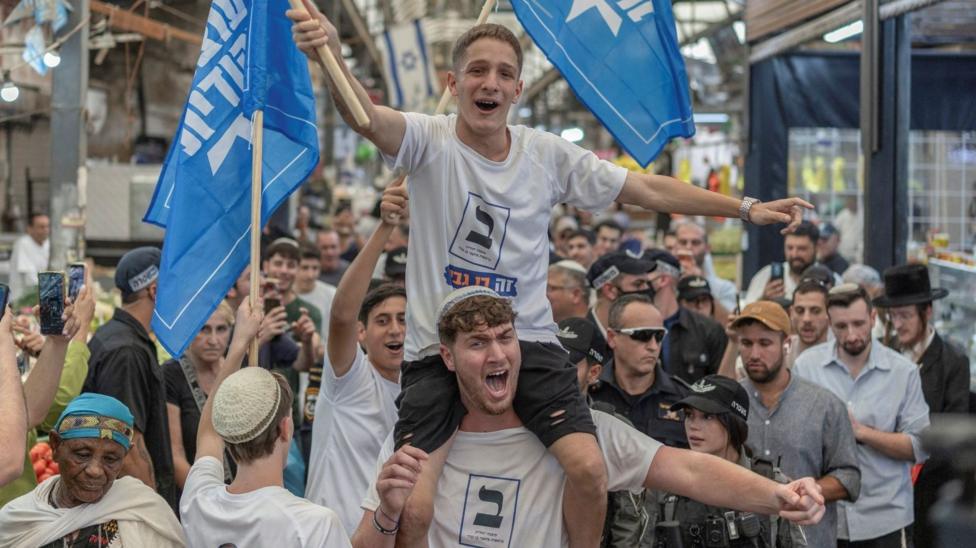
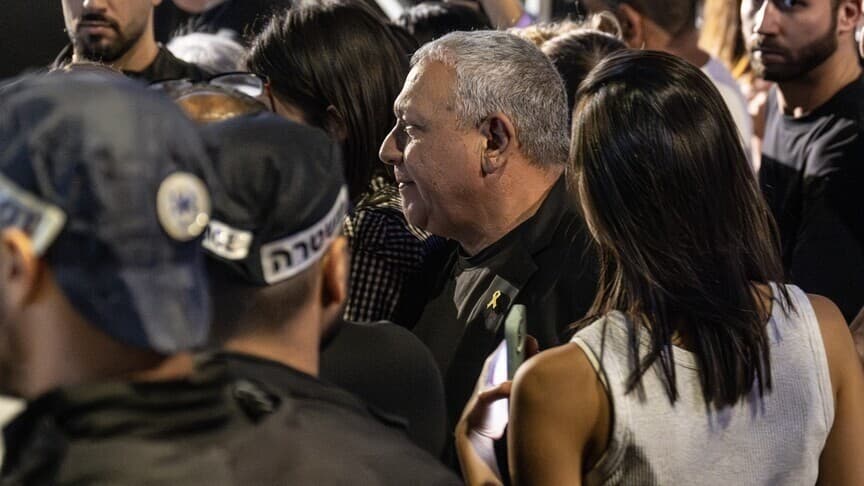
On Tuesday, Israel holds general elections, which local commentators call among the most important in the country's history. According to BBC correspondent Lucy Williamson, the campaign is taking place in a deeply divided society after three years of regional war. Polls published on Friday (the last date permitted under Israeli law) put the ruling coalition and the main opposition bloc almost level. Half a million first-time voters are expected, and some 70,000 Israelis are reported to be flying in specially from abroad to vote. On Saturday evening, large crowds of opposition supporters gathered in central Tel Aviv demanding a change of government.
The 'non-politician' versus the veteran
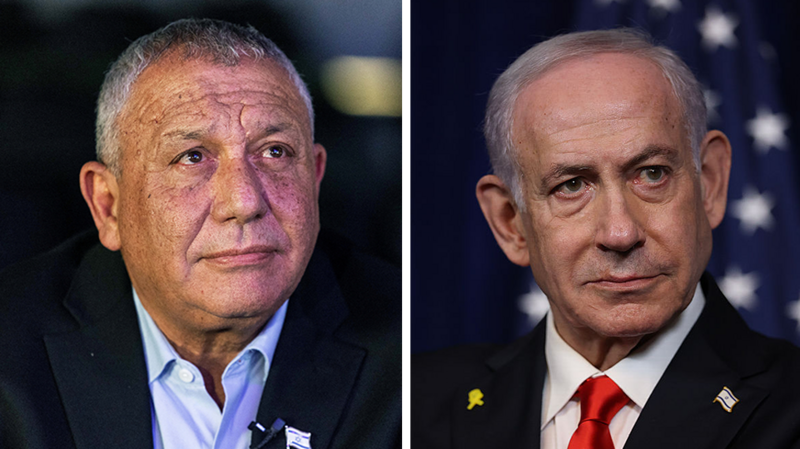
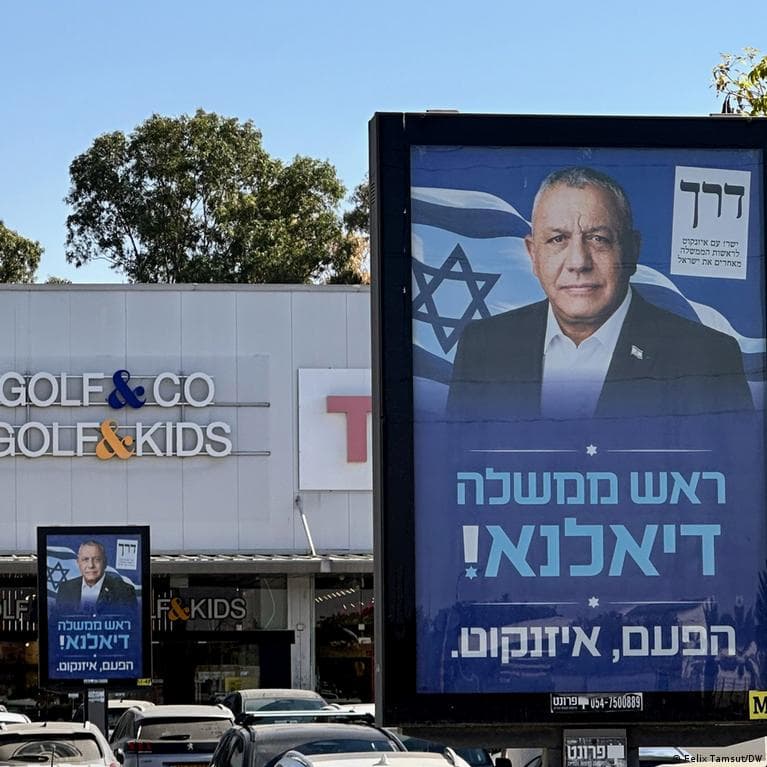
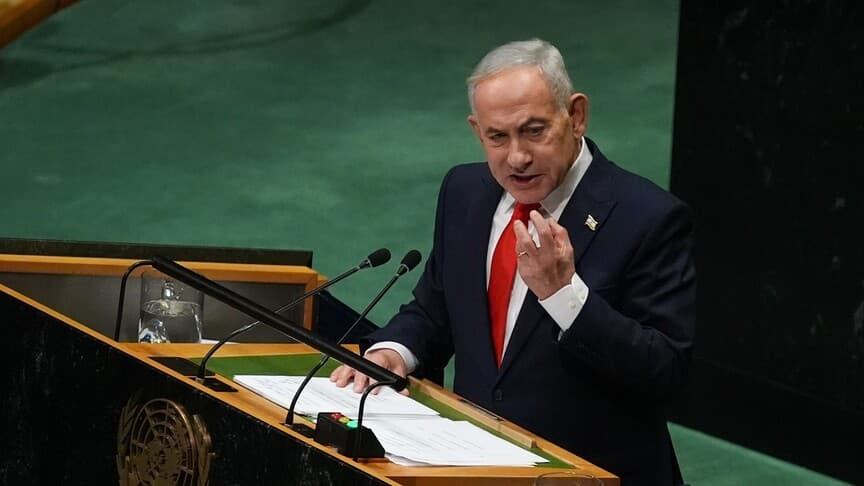
The main new face of the campaign is Gadi Eisenkot — a former chief of the general staff who entered politics relatively recently, from a Moroccan working-class family, known for his calm manner and nicknamed the 'non-politician'. His centrist party Yashar has consistently outpolled Benjamin Netanyahu's Likud in recent surveys — the country's longest-serving prime minister. Eisenkot's strength lies in his personal image: a softly spoken soldier whose son was killed in the Gaza war, he positions himself as a man 'from the periphery' rather than from the wealthy urban elite. Earlier this month the campaign was rocked by a scandal: a Netanyahu supporter called Eisenkot a racist slur on live television — a Moroccan 'monkey'. Eisenkot himself frames the stakes this way: the election is 'above all about the identity of the State of Israel' — a Jewish, democratic, liberal and egalitarian state.
The main lines of confrontation
The opposition accuses Netanyahu's government of threatening democracy, pointing to attempts to curtail the powers of the judiciary and the refusal to establish a state commission of inquiry into the 7 October 2023 attacks — the prime minister argues the Supreme Court would be biased against him. Eisenkot and other opposition leaders have promised such a commission; according to a recent poll, more than 70% of Jewish Israelis support it. Eisenkot has also vowed to enforce court rulings on drafting ultra-Orthodox Jews into military service — a measure popular with both the right and the opposition. Netanyahu responds with a campaign under the slogan 'No capitulation', presenting himself as the sole guarantor of security and warning that Jewish opposition parties could form an alliance with Arab parties.
The shadow of 7 October and shifts in the electorate
These are the first elections since the 7 October attacks, when Hamas fighters burst across the Gaza border, killing nearly 1,200 people and taking 251 hostages. Despite the acknowledged security failure, some voters continue to support Netanyahu: as Jerusalem resident Shlomi Bashar put it, the prime minister 'will bear a certain responsibility', but 'after 7 October he changed the entire Middle East'. At the same time, polls show the prime minister's right-wing base eroding: some voters are moving to the opposition, while others are shifting further right. Thus Lieutenant Colonel (res.) Eyal Hajbi from Sderot, who had always voted Likud, said he would now give his vote to Itamar Ben-Gvir's far-right Jewish Power party. According to an Yedioth Ahronoth poll of 9 October, more than 16% of first-time voters are ready to choose far-right parties. According to the Hamas-run health ministry, whose figures the UN considers reliable, more than 74,000 Palestinians have been killed in Gaza since 7 October.
A possible deadlock and the role of Arab parties
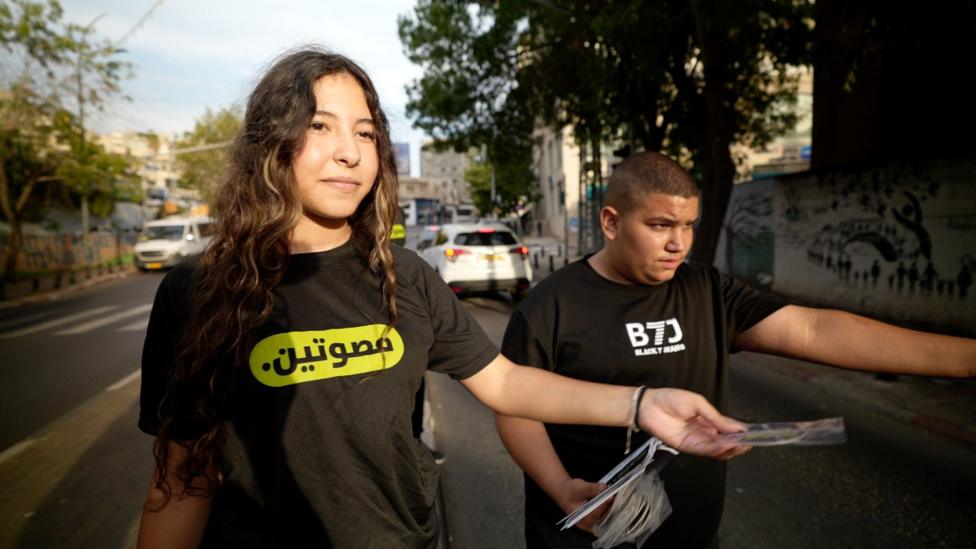
The election could end in a deadlock: neither the coalition nor the opposition would be able to form a majority without the support of Arab partieswhich, according to polls, could win enough seats to become 'kingmakers'. However, almost all Jewish opposition parties (with one exception) have so far refused to cooperate with the two Arab party blocs. On major international issues, the gap between the camps is smaller than it appears: Eisenkot has pledged to end Hamas rule in Gaza within 18 months — either through a US-led peace plan or through 'military and operational capabilities'; all major opposition leaders have backed one form or another of Israeli settlement in the occupied West Bank, and none has openly committed to full Palestinian statehood, which Netanyahu vows to block. The editorial conclusion from these facts: with such a narrow gap and the parties' hard red lines, a prolonged coalition crisis after Tuesday is likely, although the sources themselves do not predict the outcome.
Why this matters
The result will determine the composition of the government of a country that is simultaneously at war in Gaza and facing threats that Netanyahu has warned about again — meaning it will directly affect the security of Israel's residents, the fate of the October 7 investigation, and the question of ultra-Orthodox conscription. Practically immediately after the election, it will be decided whether a state commission of inquiry into the attacks will be established and whether court rulings on ultra-Orthodox military service will be enforced — both measures enjoy broad public support, according to polls. It is not yet known which coalition will receive the mandate to form a government: with a projected tie, negotiations with small parties, including the Arab blocs, will become a key factor.
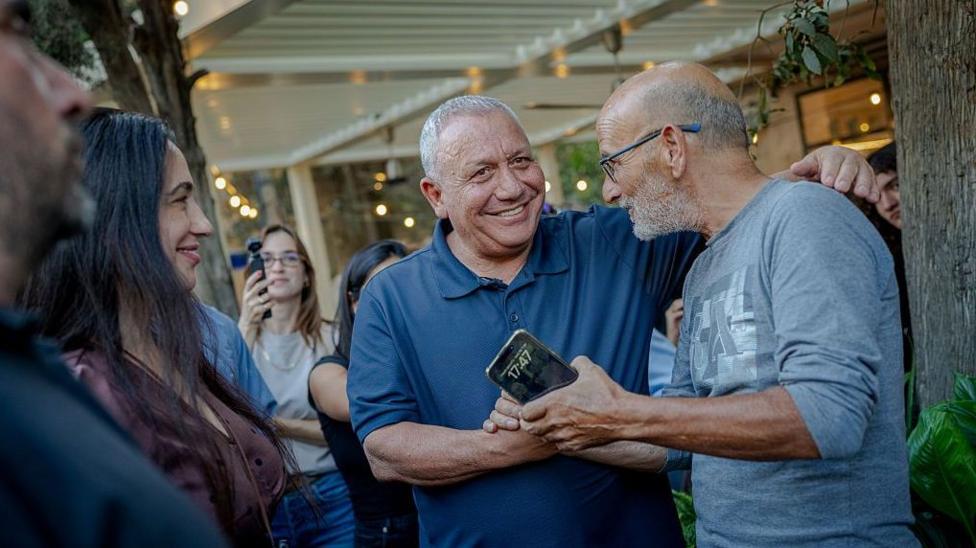 Image source, Getty Images
Eisenkot's image as a 'non-politician' has proved popular
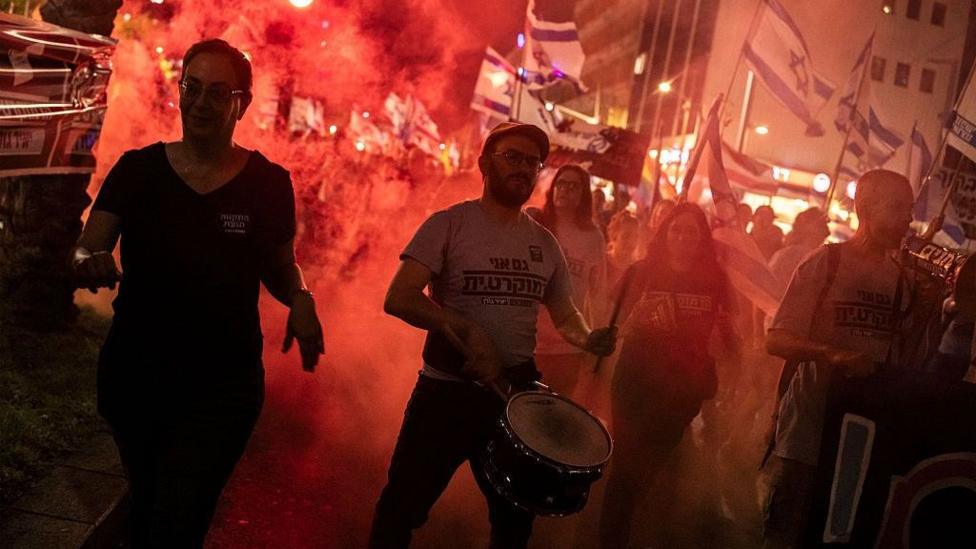 Image source, AFP via Getty Images
Protesters gathered in Tel Aviv on Saturday to demand a state commission of inquiry into the October 7 attacks
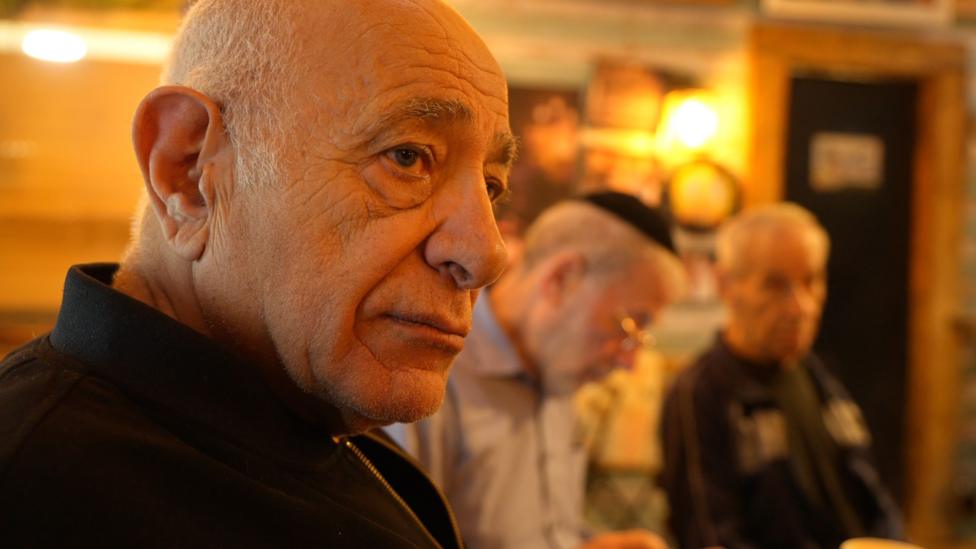
Shlomi Bashar is a long-time Netanyahu supporter
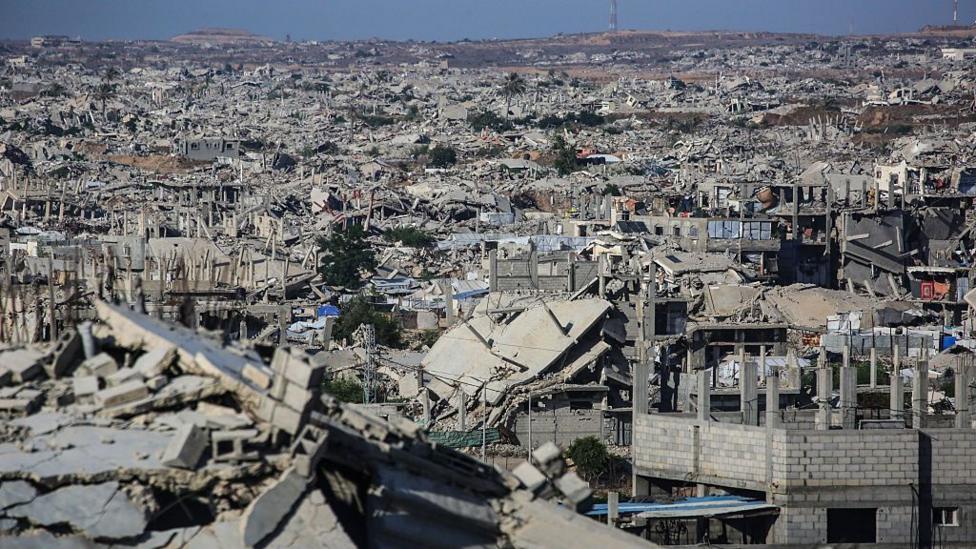 Image source, AFP via Getty Images
Israel's military campaign in Gaza has left much of the territory in ruins
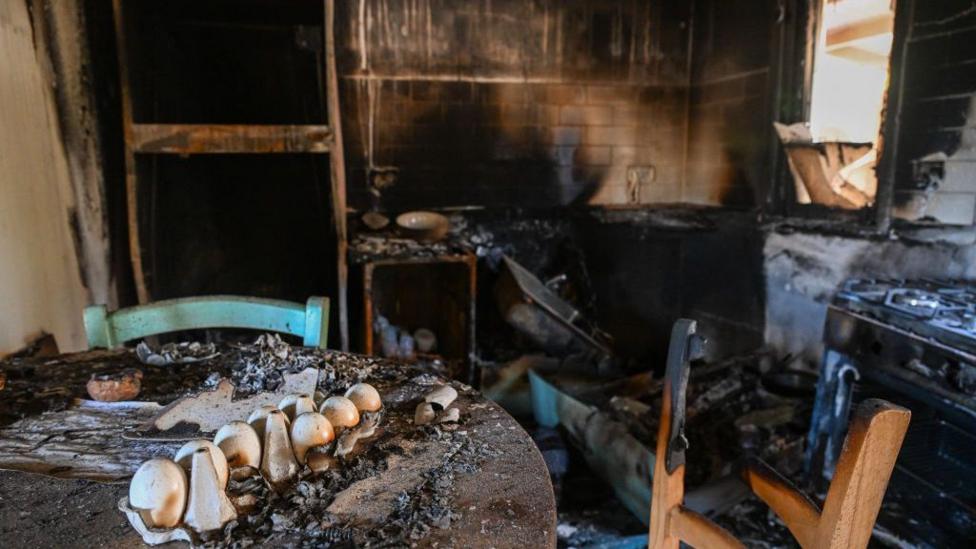 Image source, Getty Images
Nir Oz was one of the worst hit kibbutzim on 7 October