The key facts
- The ECO FLOW project in Gallipoli (Apulia, Italy) compares three ways of irrigating olive trees: well water, treated wastewater, and water with additional treatment using hydrogen peroxide and UV radiation.
- The ECO FLOW project in Gallipoli (Apulia, Italy) compares three ways of irrigating olive trees: well water, treated wastewater, and water with additional treatment using hydrogen peroxide and UV light.
- The budget exceeds 1.5 million euros: 75% comes from EU cohesion policy and 25% from Greece and Italy; the project is designed for two years.
- The varieties Favolosa and Lecciana are used, which are resistant to Xylella fastidiosa, the bacterium that has destroyed a significant portion of the region's olive groves.
- The Favolosa and Lecciana varieties are used, which are resistant to Xylella fastidiosa, the bacterium that has destroyed a significant part of the region’s olive groves.
An experiment next to the Gallipoli wastewater treatment plant
Agriculture in southern Europe is suffering from water shortages, and in the Adriatic basin, as Euronews put it, 'every drop counts.' In Italy's Apulia region, water scarcity has been worsened by climate change, while the bacterium Xylella fastidiosa has destroyed a significant portion of the region's olive groves. The response has been the European project ECO FLOW, which brought together specialists from Greece and Italy: it proposes using treated wastewater from the city of Gallipoli for irrigation — water that would otherwise be discharged into the sea.
Three irrigation methods and special attention to 'emerging contaminants'
The experimental plot is located next to the Gallipoli wastewater treatment plant. Three rows of olive trees resistant to the bacterium have been planted here, and three irrigation methods are being used: the traditional one with water from a well, water from the treatment plant, and water that has undergone additional treatment to reduce contaminant content. Rocco Protopapa of the Regional Agency for Irrigation and Forestry (ARIF) explained that the goal is to 'compare the trees watered with well water with the trees receiving treated water, and with those irrigated with water additionally treated with hydrogen peroxide,' and to find out how much fruit they yield. The researchers pay particular attention to so-called emerging contaminants — substances of chemical, material, or biological origin resulting from human activity, primarily industrial processes, which are present in urban wastewater and in runoff from medical facilities.
The advanced treatment technology
The water for the project undergoes additional treatment at the Gallipoli plant beyond the standard process, using a patented technology of a compact unit developed under another European project, RE-WATER. Fabrizio Dell'Anna, responsible for the project's technical coordination at the company Acquedotto Pugliese, explained that the method is based on hydrogen peroxide combined with ultraviolet radiation: the combination produces 'an extremely reactive molecule capable of destroying contaminants.' The necessary equipment, he said, did not exist on the market. The reactor is thermally insulated to avoid temperature fluctuations that would disrupt the action of the peroxide, and the researchers found that as the water circulates, the number of reactive molecules increases, so they added a recirculation system to the unit. 'Technologies of this kind already existed in other countries, but the real originality of our unit lies in the recirculation system,' Dell'Anna noted.
Budget, division of tasks and open questions
The ECO FLOW budget exceeds one and a half million euros: 75% is funded under EU cohesion policy, with the remaining 25% coming from Greece and Italy. Greece worked on a physical membrane for more effective treatment and filtration of wastewater, while Italy worked on the chemical method; the specialists emphasize that the two solutions complement each other. Acquedotto Pugliese receives technical and scientific support from the laboratory of the Polytechnic University of Bari. Professor Danilo Spasiano said that monitoring began only recently: the water, plant development, soil characteristics, and the accumulation of substances in the soil are being studied. 'One of the main questions we have to examine is the amount of salts that can accumulate in the soil. We will also investigate the possible presence of micropollutants or emerging contaminants that may accumulate in the olives,' he said. The project is designed for two years, meaning that no conclusions about safety and effectiveness have yet been drawn.
First observations from farmers
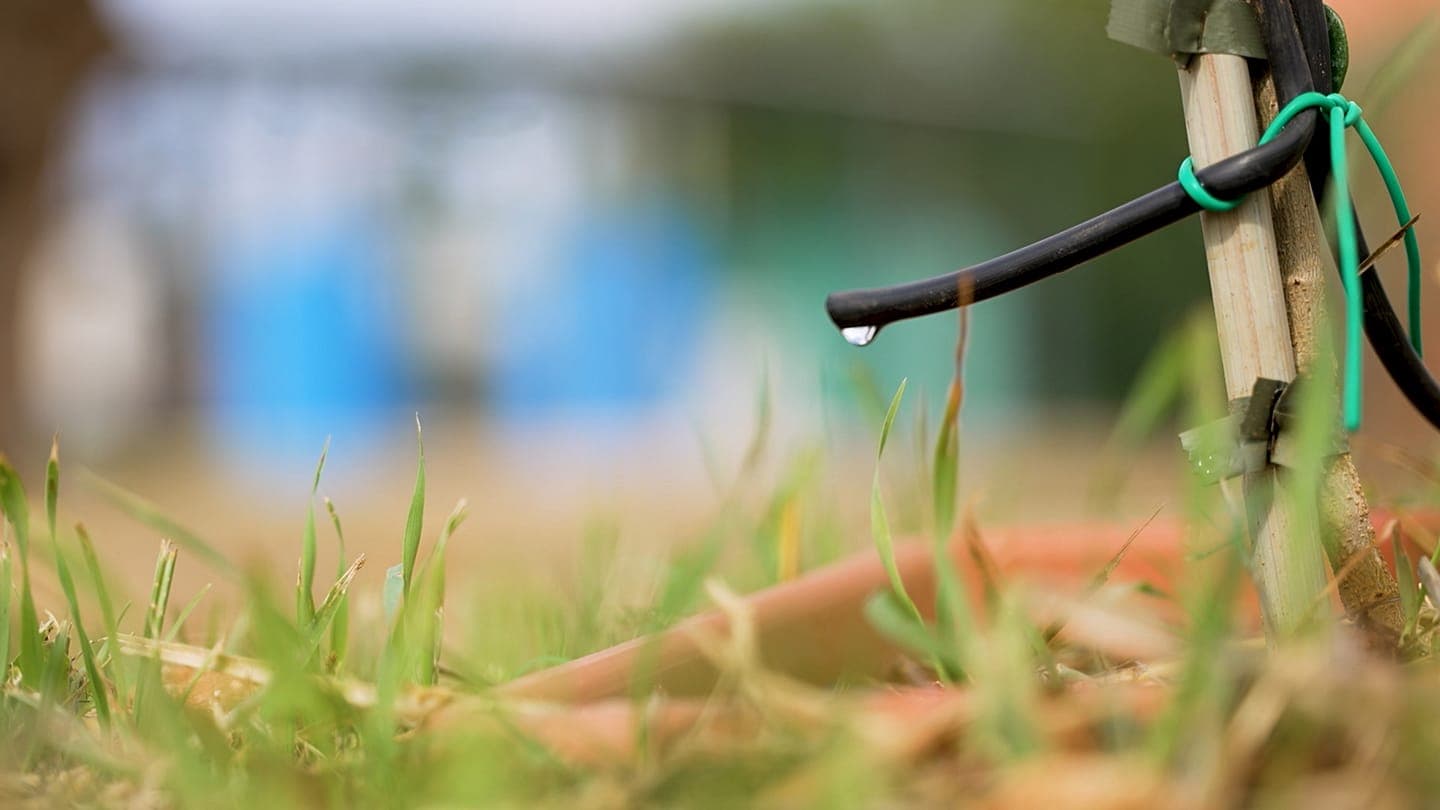
In addition to the scientific plot, the method is already being applied by the Francesca Stajano farm, which produces more than 60 tons of olives annually. Its owner, Antonio Astuto, waters part of the plantations with water from his own well, while the younger grove is irrigated with water treated at the Gallipoli facilities. “We did not expect four-year-old trees to start producing already. So we were very pleased to see that the plants were growing faster, probably thanks to the quality of the water being used,” Euronews quotes him as saying. The farm uses drip irrigation to “achieve good results with minimal water consumption.” Note that this is the farmer’s own observation about growth rate, not the result of scientific monitoring, which has only just begun.
 View Gallery 4 Photos