The key facts
- Starlink's slowdown in Ukraine has been restored, but who authorized the restrictions is unclear: the Pentagon, Trump and Musk blame each other
- The Starlink slowdown in Ukraine has been restored, but who authorised the restrictions is unclear: the Pentagon, Trump and Musk blame each other
- Eutelsat/OneWeb has about 600 active satellites versus more than 10,000 at Starlink; Eutelsat terminals are larger and roughly five times more expensive
- The European Iris² network will only become operational in 2029; Ukraine is guaranteed access to it from day one
- The European Iris² network will only come online in 2029; Ukraine is guaranteed access to it from day one
A slowdown that exposed vulnerability
Ukraine urgently needs an alternative to Starlink satellite internet, but no fast and reliable replacement yet exists, BBC News reports. The sudden slowdown of the service last week, which affected Kyiv's ability to defend itself against Russian attacks, was only recently restored — and it has sharply raised the urgency for Europe of building its own military satellite network. Who exactly authorized the restrictions remains unclear: a 'confused blame game' continues between the Pentagon, Donald Trump and Musk, BBC News notes. The situation has worsened against the backdrop of the continuing deterioration of relations between Kyiv and Washington. As Kari Bingen, director of the aerospace security project at CSIS, put it, this is 'a critical military capability that Ukraine depends on but does not control.'
Why Starlink is critical on the battlefield
Starlink and its military version Starshield, owned by Musk's company SpaceX, dominate the global satellite market. Ukraine uses Starlink for battlefield communications and Starshield for military tasks such as drone control; the network provides fast real-time connectivity that is vital for defense and intercepting Russian attacks. 'Without such high-speed internet, you cannot wage a drone war', said Vincent Tourret, a researcher at the French Institute of International Relations. Ukrainian servicemen, interviewed by BBC anonymously, confirm the advantage: according to one of them, even one or two seconds in transmitting data and orders is critical. Musk himself on Saturday accused Ukraine of violating the terms of service by using Starlink for 'drone strikes to kill people' and said this loophole had been closed last week: 'Violating these terms will result in the termination of service'. He also wrote: 'If Starlink were shut down, the Ukrainian front would collapse immediately.'
What Europe can offer right now
The main alternative — France's Eutelsat with its OneWeb service — has only about 600 active satellites compared with more than 10,000 at Starlink. The company's former CEO, Eva Berneke, noted that Eutelsat terminals are larger: they can be mounted on the roof of a vehicle or a tank, but not necessarily on a small drone, and they are roughly five times more expensive. The nearest option for Ukraine is joining Govsatcom, an EU network for sharing existing satellites created in January; Kyiv is not a full participant, but the European Commission is negotiating its accession. However, even once connected, the network cannot be used for combat operations such as drone control. This may change by the beginning of next year, when the European Commission expects commercial companies like OneWeb to join. No timeline has been given for Ukraine's entry into Govsatcom; Tourret believes that as a backup it is better than nothing, but 'for strikes or interception, at this stage it will not be enough.'
Iris² and other projects
Europe's long-term answer is the Iris² network, which will only become operational in 2029. It is a defense-priority program aimed at governments, militaries and emergency services; Ukraine is guaranteed access to it from day one. The project is led by Eutelsat, SES and Hispasat in the SpaceRISE consortium. There will be 348 satellites in low and medium orbit — fewer than Starlink's, but, in Bingen's view, this is not a drawback: such satellites cover a larger area of the Earth. Tourret is more skeptical: 'I fear this is not a turning point and not a savior.' Besides Iris², Finnish companies Nokia and ICEYE announced this week that they are working on developing satellite communications for Ukraine's military defense, while a joint venture of Airbus, Leonardo and Thales called Project Bromo is being considered as a potential SpaceX competitor but is at a very early stage. Berneke stressed that space projects take many years and a lot of money: 'Even if you gave me 8 billion euros right now, I don't think I could launch anything before 2032–2033.'
Why it matters
The event matters because it clearly demonstrated that Ukraine's key military capability — communications for drone control and defence — is in the hands of a private American company, which directly affects the course of hostilities and the fate of soldiers on the front line. In practical terms, this means that in the near future Kyiv will have to rely on a combination of Starlink and backup solutions such as Govsatcom, while Europe will have to accelerate its own programmes, since Iris² will not appear until 2029. It remains unclear who exactly was behind the Starlink restrictions and whether they could happen again; according to the BBC, American senators have already called for an investigation into the imposed restrictions.
 Image source, Reuters
A man offers residents in Kherson, Ukraine, the use of his Starlink internet after a Russian strike
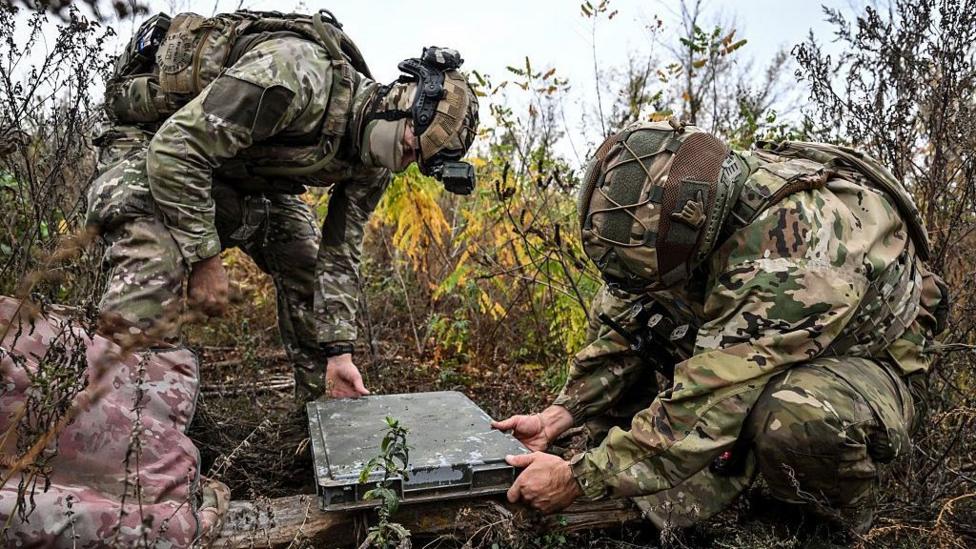 Image source, Dmytro Smolienko/ Ukrinform/ Getty Images
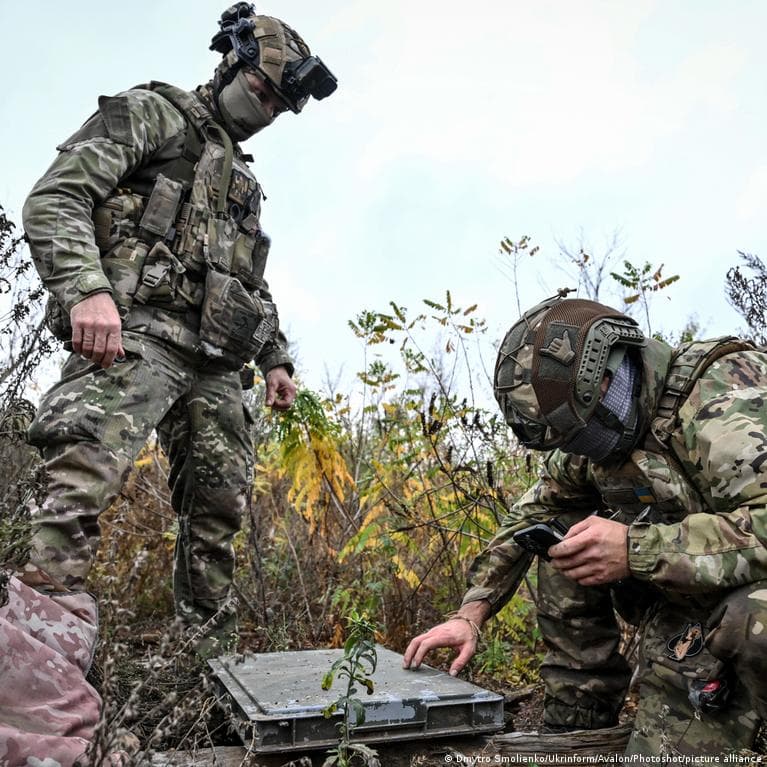
Ukrainian soldiers set up a Starlink terminal on the battlefield
 Image source, Getty Images
French President Emmanuel Macron, with a Eutelsat terminal, at the International Paris Air Show last year
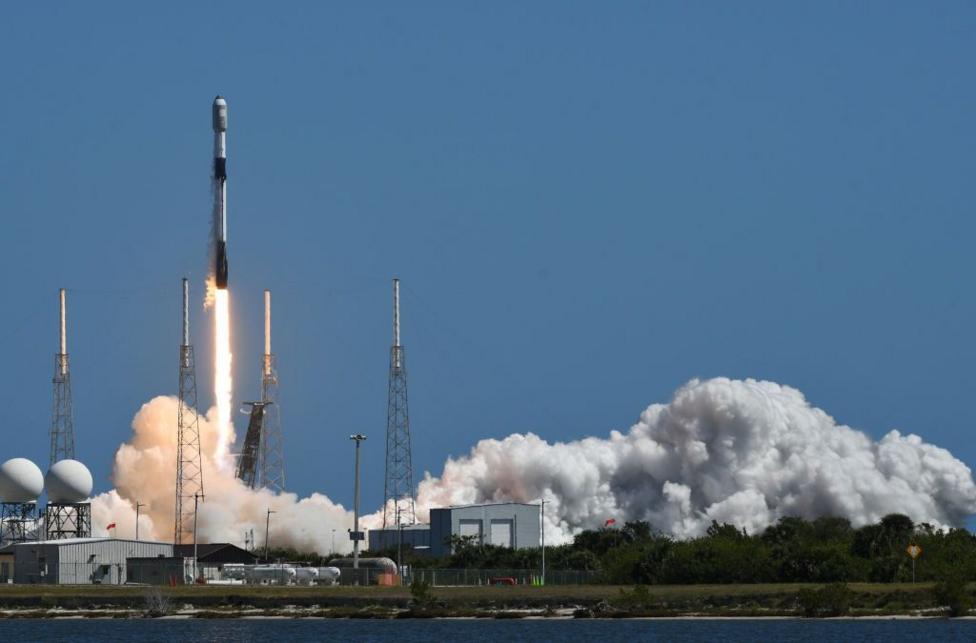 Image source, Paul Hennessy/ Getty Images
A SpaceX Falcon 9 rocket, carrying 56 Starlink satellites, takes off from Cape Canaveral in March