The key facts
- Scientists at the University of Sheffield have recreated ancient Roman glass that changes colour depending on the lighting
- The fourth-century Lycurgus Cup contains nanoparticles of gold and silver; in 2022 it was recognised as one of the seven wonders of the glass world
- Professor Ian Freestone notes that the colour depended heavily on the position in the furnace, so the Romans may simply have been lucky
Recreating ancient glass
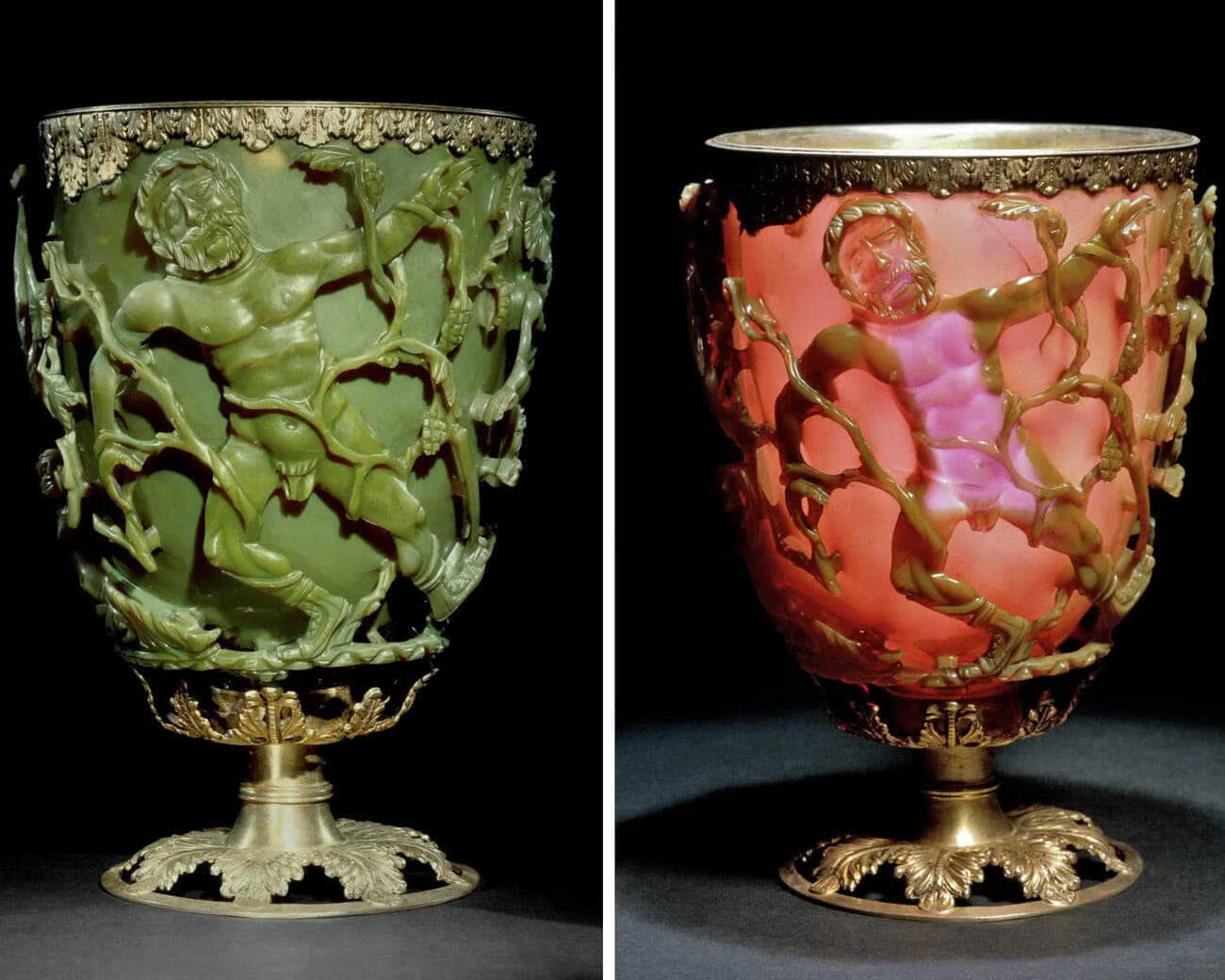
Scientists at the University of Sheffield in the UK have managed to recreate ancient Roman glass that changes colour, Kun.uz reports, citing The Guardian. The technology in question was used in the fourth-century Lycurgus Cup, which is kept in the British Museum. The vessel is made of dichroic glass and changes colour depending on the lighting: in ordinary light it looks green, while when lit from behind it appears red. The cup depicts King Lycurgus, described in the sixth song of Homer's Iliad. In 2022, the Lycurgus Cup was recognised as one of the seven wonders of the glass world.
The secret lies in nanoparticles
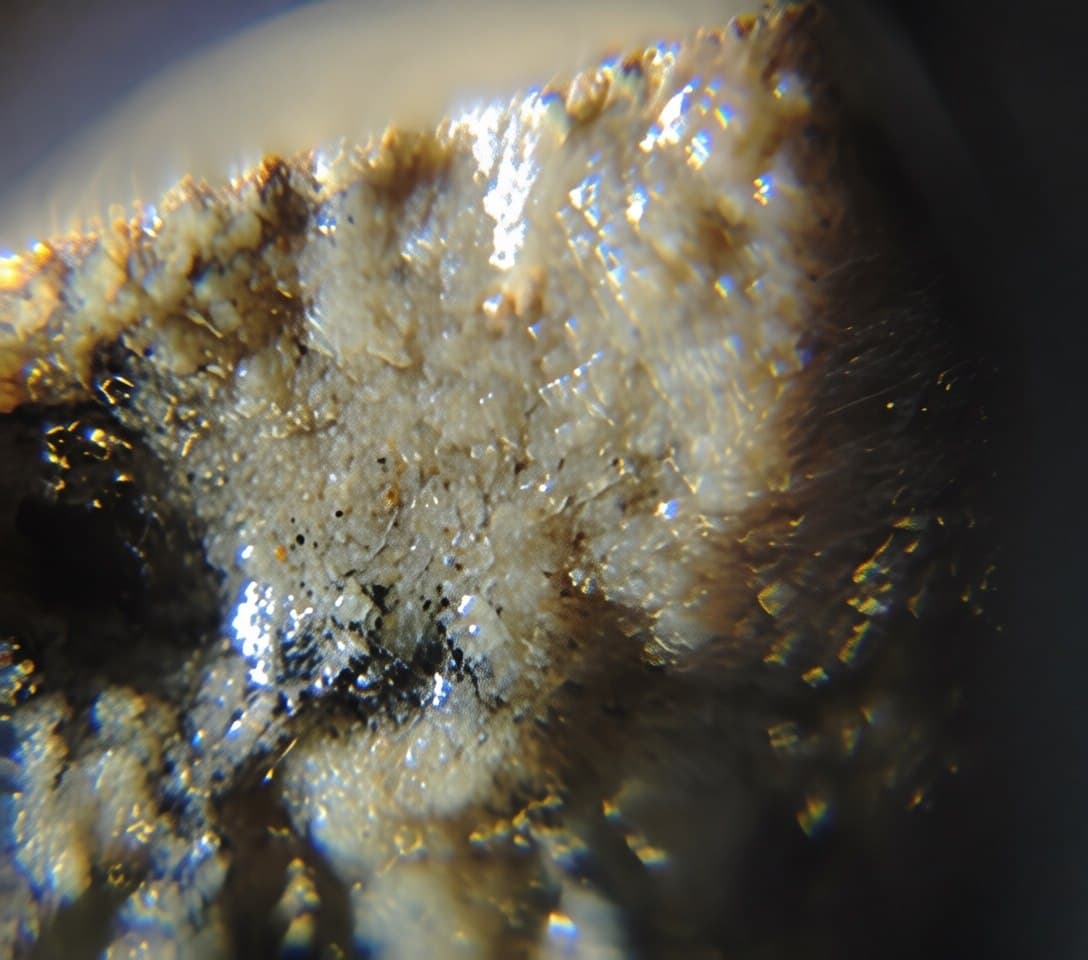
According to researcher Lisa Hollands, nanoparticles of gold and silver were added to the glass. As the molten glass mass cooled, nanocrystals of gold and silver began to grow around the particles. 'White light consists of different colours — this is visible when a rainbow appears in the sky. The nanoparticles are much smaller than the wavelength of light, and under certain conditions, due to the effect of light on the electrons in atoms, they absorb some colours,' Hollands explained. According to her, when light passes through the glass, the gold and silver particles 'hold back the blue and green rays, letting through only the red and dark yellow ones'. When light is reflected from the surface, the particles scatter it, producing the green colour that we see.
The role of chance in an ancient craft
Ian Freestone, an emeritus professor at University College London, noted that attempts to recreate ancient Roman glass were made as early as the 1960s. 'The colour depended heavily on the conditions in the furnace. If the glass had been in a different place in the furnace, its colour would have been different. Such high sensitivity of the colour to its position in the furnace shows how difficult it was for the Romans to control. This suggests that ' they may simply have been lucky when creating the Lycurgus Cup,' the publication quotes the scientist as saying.
Why this matters
The recreation of the technology shows that ancient craftsmen achieved an effect that modern science explains through nanotechnology: the colour is formed not by pigments but by the interaction of light with metal nanocrystals. This is important for historians of glassmaking and materials scientists studying the optical properties of nanostructures. At the same time, as Freestone notes, reproducing the result remains difficult because of the ' dependence of the colour on the conditions in the furnace, and the details of the University of Sheffield's experiment itself are not disclosed in the published reports.