The key facts
- Nearly 1,000 detained, two seriously injured (Toulouse, Clermont-Ferrand) — figures from Interior Minister Laurent Nuñez
- Attendance estimates diverge: Interior Ministry — 410,000, CGT union — 800,000
- Estimates of participation differ: Interior Ministry — 410,000, CGT union — 800,000
- Authorities deployed 70,000 security personnel; the 'yellow vests' announced new actions for October 31
- Authorities deployed 70,000 security personnel; the 'Yellow Vests' announced new actions for October 31
New wave of protests and heightened security measures
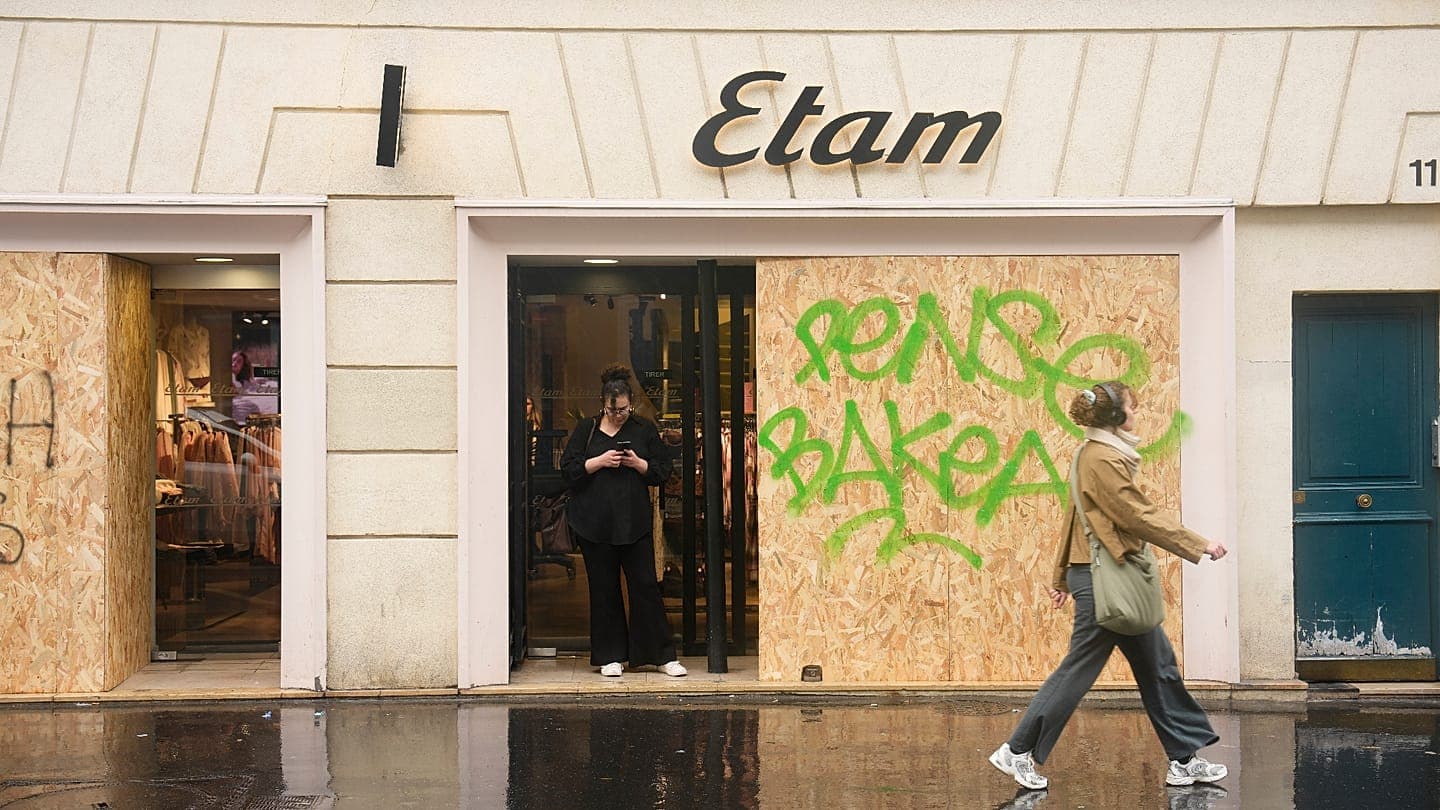
On Saturday, October 24, hundreds of demonstrations took place across France against the high cost of living, rising fuel prices, and insufficient funding for education. The actions continued a movement that began in late September with protests by high school students over learning conditions, which then spread across the country and to broader segments of society. To prevent a repeat of last weekend's riots, when hundreds of shops were looted and 2,700 people detained, the authorities deployed about 70,000 security personnel, and military Operation Sentinelle forces were brought in to guard key sites. President Emmanuel Macron had earlier ordered that only demonstrations organized by recognized trade unions be allowed, declaring all others 'illegal'.
Attendance figures: authorities and unions disagree
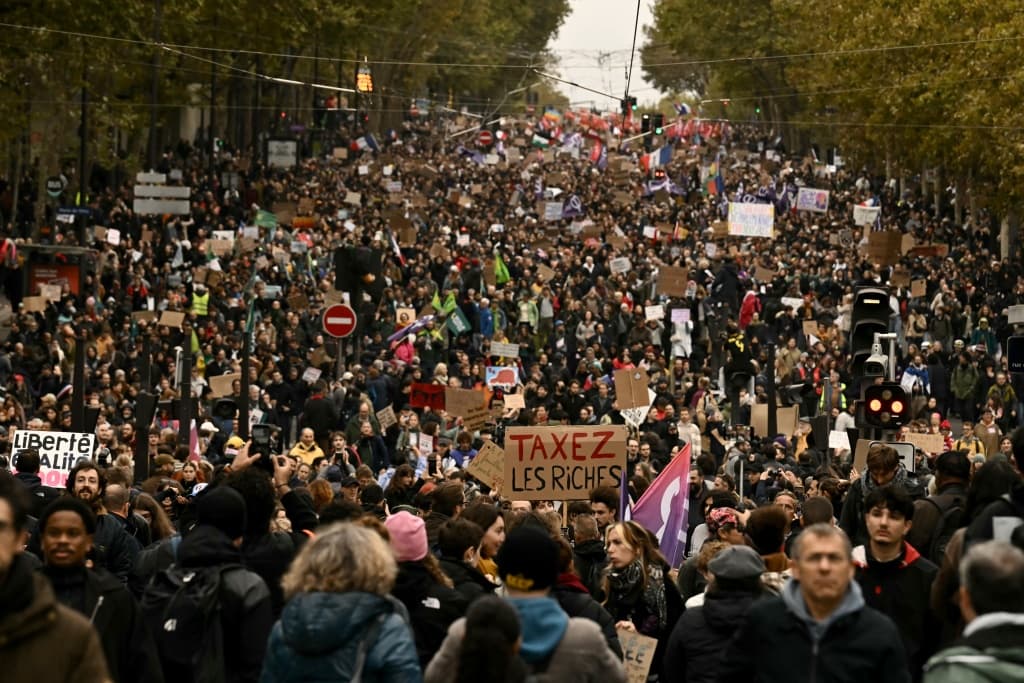
Estimates of the scale of the action differ significantly: the Interior Ministry reported about 410,000 participants nationwide and 110,000 in Paris, whereas the CGT union, which organized the march, claimed 800,000 nationwide and 250,000 in the capital. Both sources give their own counts, and the exact figure cannot be verified from these publications. In Marseille, police estimated 17,000 participants, while unions put the figure at 100,000.
Clashes and detentions
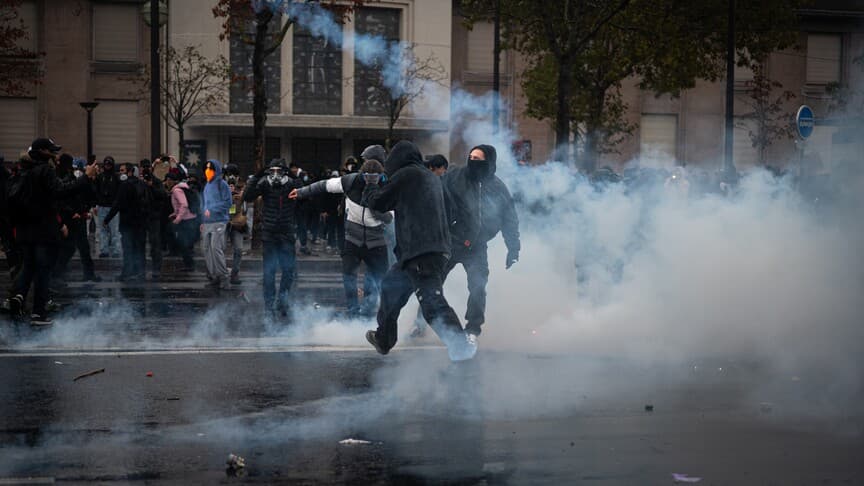
The marches themselves were mostly peaceful, but clashes broke out in Paris, Lyon, Lille, Marseille, Bordeaux, Toulouse, Montpellier, Nantes, and Rennes. In Paris, police moved the march route at the last minute from the city center (Place de la Bastille) to the southeastern outskirts — from Porte d'Italie to Porte de Vincennes — drawing criticism from unions and left-wing politicians. At the end of the march, as the crowd dispersed, police used tear gas, water cannons, and batons; AFP and Euronews journalists saw protesters firing fireworks at police and building barricades. Interior Minister Laurent Nuñez reported 'nearly 1,000' detentions and an 'extremely high level of violence' from 'ultra-left' groups, blaming about 500 'vandals' at the tail of the column. According to him, two people were seriously injured — in Toulouse (reportedly, a man had fingers torn off) and Clermont-Ferrand; he gave no details. Paris police reported more than 3,000 people checked and 65 detained during the demonstration.
Participants' voices and reaction to police toughness
Young people were prominent among the demonstrators. Zelie, 26, told the BBC that people took to the streets because they 'are really frustrated' and 'suffer a lot'; two teenagers said their generation is in despair and feels abandoned by the state. Participants interviewed by AFP complained about police conduct: 24-year-old Jessica said that 'the right to protest is being trampled on', while a demonstrator named David, with a cut on his face, claimed he was struck by a police officer's baton. Nuñez, however, assessed Saturday's outcome as more 'positive' than a week earlier, noting faster police action, more preliminary checks, and better protection of shops. Editorial interpretation: the discrepancy in attendance estimates and mutual accusations show that the picture of events remains politically polarized, and there are no confirmed independent counts in the cited publications.
Political context and other cities
Tensions are mounting ahead of the presidential election in six months. In Orléans, the far-right National Rally party is holding its congress with Marine Le Pen and Jordan Bardella; on Sunday the party will hold a rally, opening Le Pen's election campaign. About 13,000 counter-demonstrators marched peacefully against the congress under anti-fascist slogans; 3,000 security personnel were deployed there. In Cannes and Montpellier, according to the authorities, there were unprecedented clashes between far-right activists and 'ultra-left' groups. The 'Yellow Vests' called for new actions on October 31, and the leader of the far left, Jean-Luc Mélenchon, who took part in the march in Paris, said the movement 'will repeat every week.' Similar protests over inflation and education problems also took place in Italy, Belgium, Spain and Portugal; more than 100 people were detained in Barcelona. In Paris, on the day of the action, the following were closed the Louvre, the Musée d'Orsay, the Picasso Museum and the Grand Palais.
Why it matters
The event affects the entire country six months before the presidential election, in which, according to AFP, Le Pen leads in the polls, and protest activity has already caused hundreds of millions of euros in damage and more than 2,500 arrests over the previous weekend. In practical terms, this means a tightening of the rules for holding demonstrations: a ban on unauthorized union marches, partial curfews in a number of cities, and the rerouting of processions — measures that the authorities themselves consider protection of public order, while protesters and left-wing politicians view them as pressure on the right to protest. New actions have already been announced for October 31, so the confrontation, judging by the statements of its participants and organizers, will continue.