The key facts
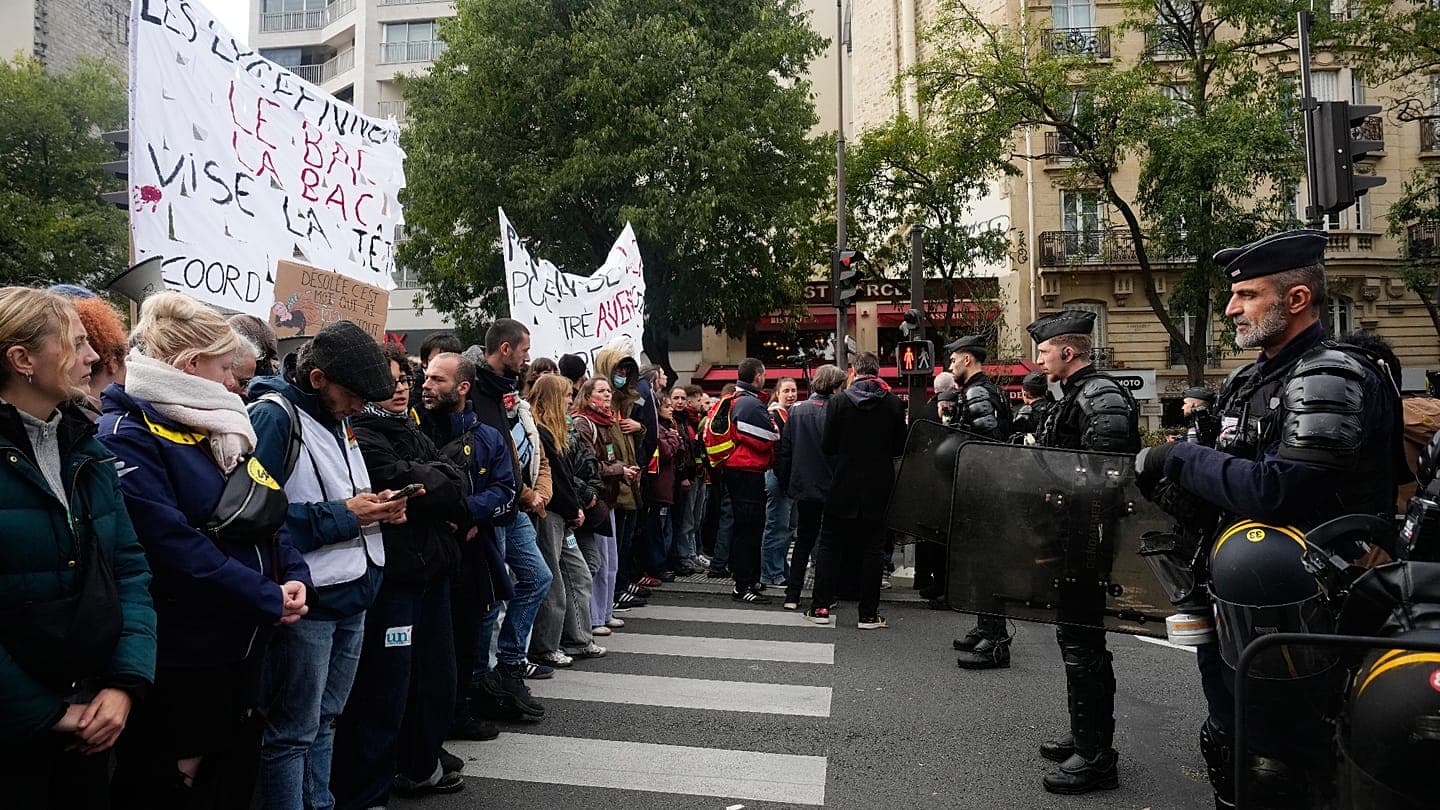
- France's Interior Ministry will deploy 70,000 police officers for Saturday's protests; a full ban on gatherings has been imposed in Lyon, Nice and Montpellier
- 232 people have been jailed for their role in the October 17 riots, and more than 1,100 have appeared in court — according to Justice Minister Darmanin
- 232 people have been jailed for their role in the October 17 riots, and more than 1,100 have appeared in court — figures from Justice Minister Darmanin
- Macron promised students measures to improve secondary education starting Monday; the “yellow vests” movement announced more than 500 actions and demands his resignation
- Macron promised students measures to improve secondary education from Monday; the 'yellow vest' movement has announced more than 500 actions and demands his resignation
The country on high alert
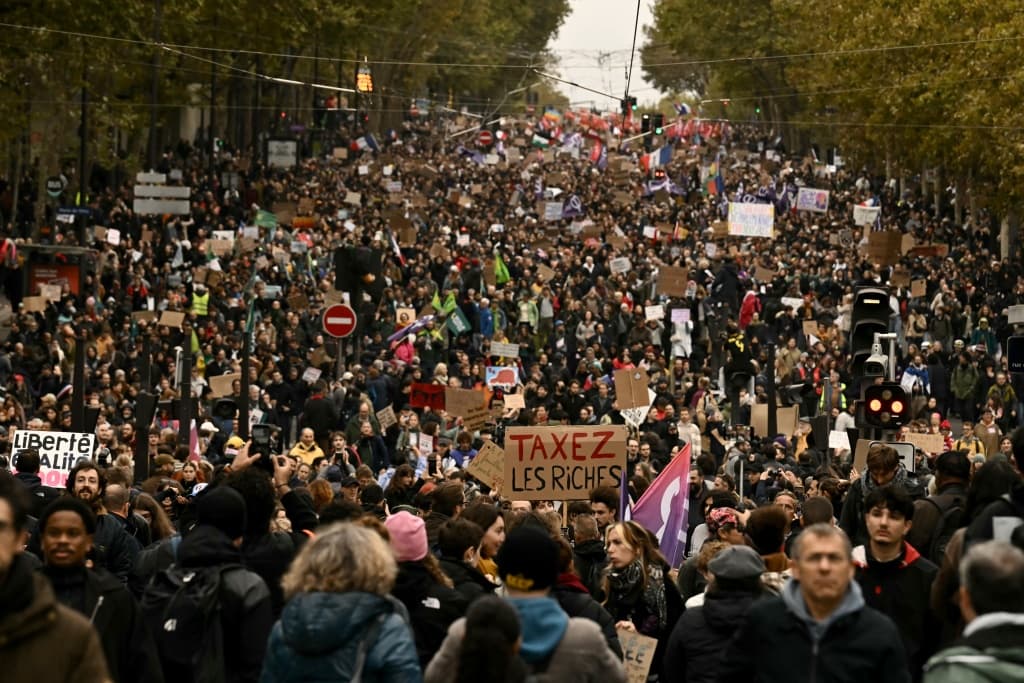
France is on high alert ahead of a new wave of nationwide protests on Saturday, one week after some of the largest riots in decades, BBC News reports. Despite sweeping restrictions on demonstrations, hundreds of thousands of people are expected to take to the streets of Paris and other cities for a second round of protests organized by students, trade unions and anti-government groups. The Interior Ministry announced the deployment of 70,000 police officers — a reinforcement following opposition accusations that the government failed to anticipate the scale of the October 17 riots. Interior Minister Laurent Nuñez said: “We will leave nothing unpunished”, adding that the authorities will show no leniency toward vandals, looters and anyone committing acts of violence. According to him, alongside the planned protests, social media had recorded calls for violence from “left-wing and radical far-left” forces.
Restrictions and bans in cities
Earlier this week Macron ruled that only demonstrations organized by recognized trade unions would be permitted on Saturday, while several key cities, including Lyon, Nice and Montpellier, went further, declaring a full ban on gatherings. However, as the BBC notes, official announcements have done little to stop the organizers: hundreds of large and small demonstrations are planned across the country. After a week in which some cities lived under partial curfew, the picture of what level of protest the authorities will allow remains inconsistent: some mayors impose sweeping bans, others permit registered events — in Marseille, for example, the previous ban on all protests was quickly lifted to allow a march organized by a trade union. In Paris, a student union march backed by workers' organizations must follow a route that avoids the city center, although preparations for possible riots in the most recognizable parts of the capital are being made regardless.
Closed museums and a postponed match
The security measures have also affected everyday life: the Louvre, the Musée d'Orsay and the Picasso Museum will be closed, the home match of the football club PSG has been moved to Monday, and some businesses have boarded up their windows. The newsroom notes that the scale of such preventive measures — from closing the largest museums to postponing sporting events — shows how seriously the authorities assess the risk of a repeat of last week's scenario, when peaceful demonstrations escalated into riots and looting.
The “yellow vests” and demands for resignation
The revived “yellow vests” movement may become a symbol of the student protest expanding into a nationwide anti-government movement, and it may take to the streets en masse across France on Saturday. The movement, which drew support from both the left and the right and staged large-scale actions during Macron's first term, has listed on its affiliated website more than 500 planned demonstrations and 200 other actions for Saturday and demanded Macron's resignation. The group stated that it “refuses to add its voice to the chorus of outrage” over the violence of October 17, and accused the police of attacking protesters.
The aftermath of last week's riots
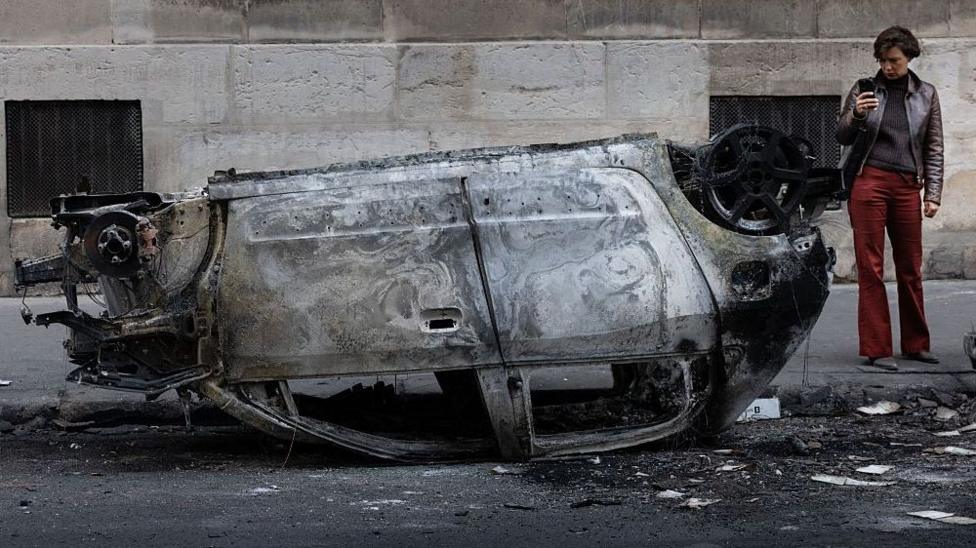
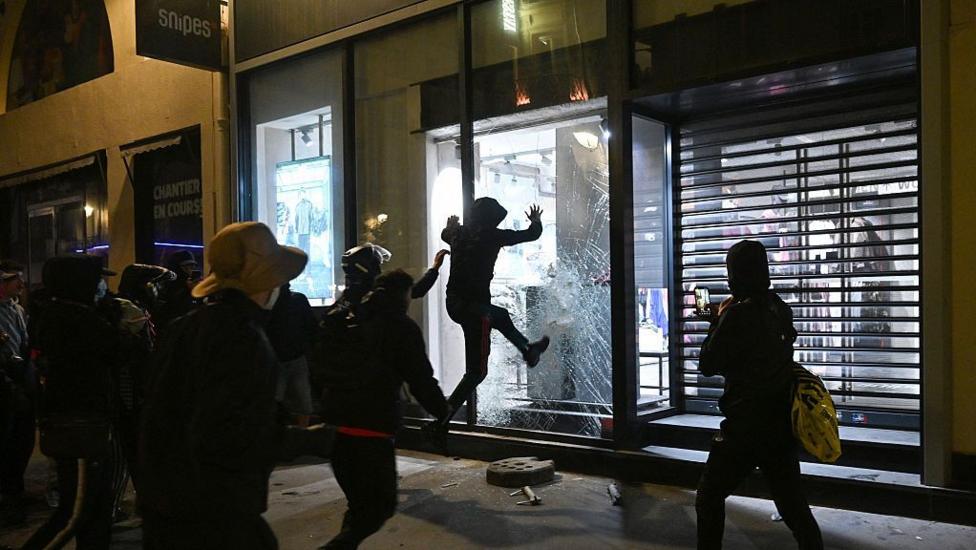
The country is still recovering from last week's riots, when police were repeatedly outnumbered by protesters, shops were looted and buildings set on fire — the most symbolic being the fire in the richly decorated 19th-century city hall of Limoges. Prime Minister Sébastien Lecornu, visiting Limoges on Friday, said the national government would pay for the restoration of the building “exactly as it was,” so as not to shift the costs onto local taxpayers. Two men, one of whom was already on the watchlist of security services, have been charged in connection with the fire. Justice Minister Gérald Darmanin reported that as of Friday 232 people have been jailed for their role in the riots October 17, and more than 1,100 others have appeared in court, with around 260 cases linked to charges of activity as part of organized groups. Darmanin ordered prosecutors to seek punitive measures against those convicted of looting or assaulting police officers, including bans on attending demonstrations, loss of voting rights, and blocking access to social media.
The political backdrop and Macron's meeting with students
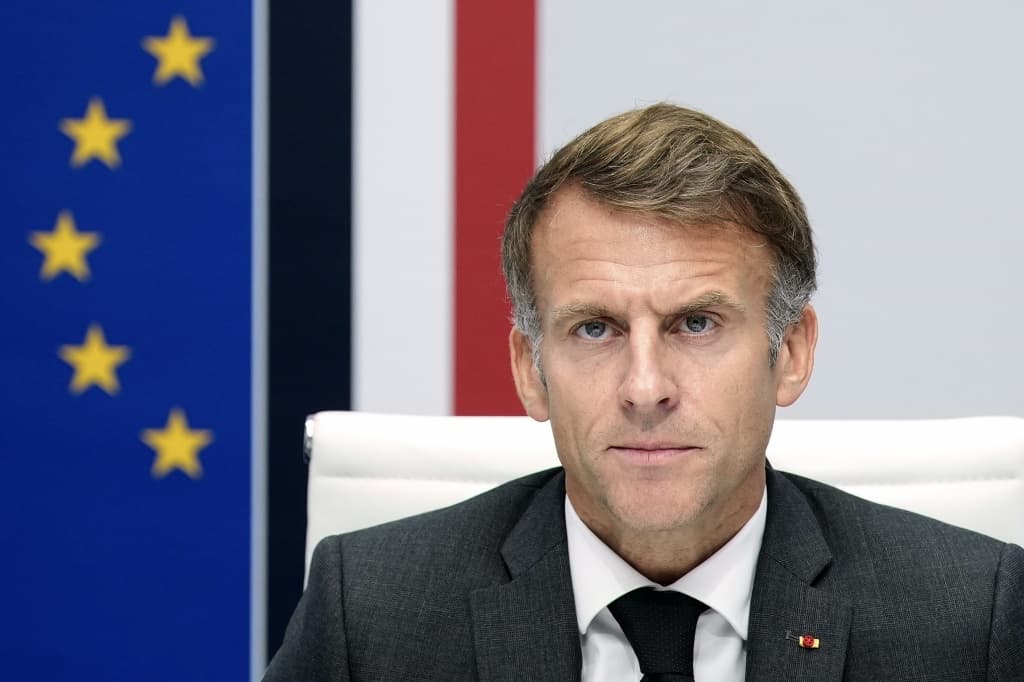
The protests began with demands from high school students to improve conditions in schools and address staff shortages, before violence broke out in a number of places. On Friday, on the eve of the protests, President Emmanuel Macron met with representatives of schoolchildren: according to his advisers, he promised that from Monday the government would adopt a series of commitments to improve secondary education, but the students themselves said that schoolchildren should 'keep up the mobilization'. The unrest is unfolding against the backdrop of a polarized political situation ahead of what may be the most divisive election period in a generation: Macron will leave office next spring, and polls suggest that the candidate of his centrist movement may fail to make it to the second round in May, leaving voters a choice between the far-right National Rally and the radical-left France Unbowed. LFI leader Jean-Luc Melenchon criticized the 'harsh' police response and accused Macron of 'destroying the republican state' by imposing restrictions, calling on his supporters to join the protests. A possible flashpoint on Saturday could be Orleans, where the National Rally is holding a two-day conference with a speech by Marine Le Pen: the city's mayor warned that the expected numbers of participants are 'unprecedented' and announced the deployment of thousands of police officers and the suspension of public transport.
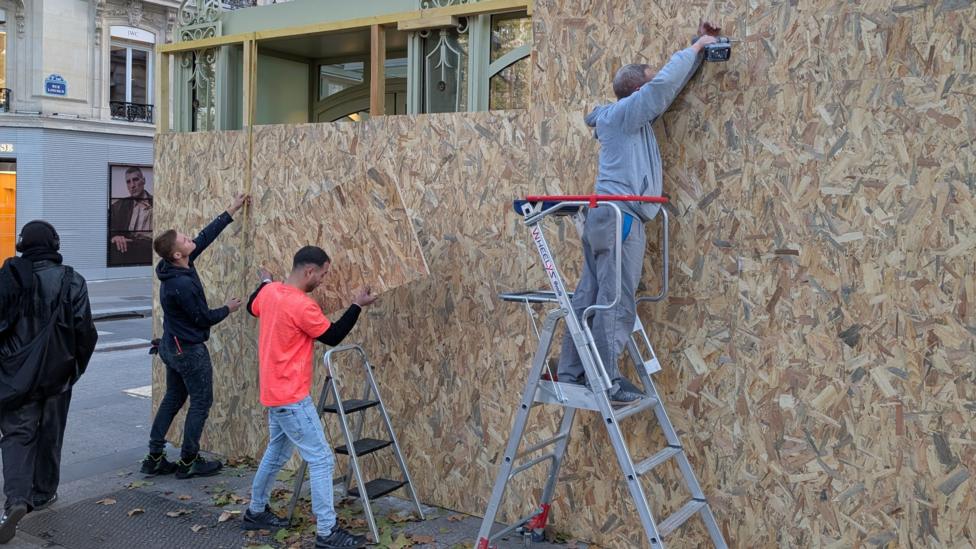 Image source, Getty Images
Some public buildings and businesses across France have been boarded up ahead of Saturday's protests
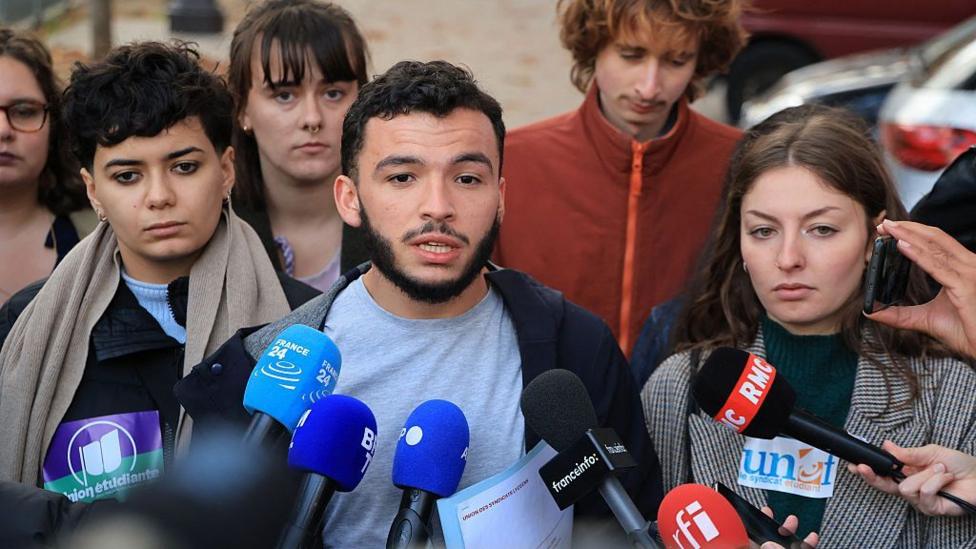 Image source, Getty Images
Leaders of student groups spoke to the media after holding talks with Macron on Friday
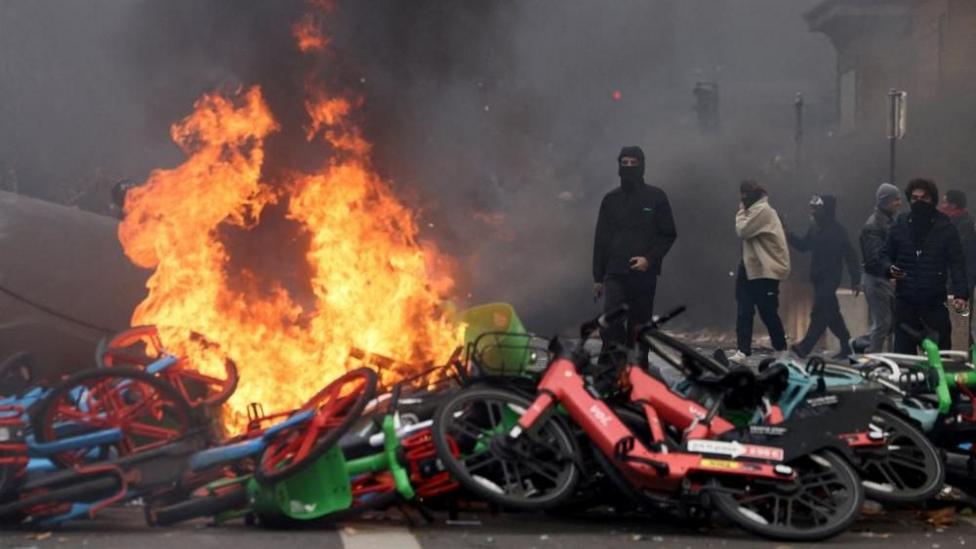 Image source, Reuters
Largely peaceful demonstrations in Paris organised by students and unions devolved into rioting and looting as last Saturday wore on
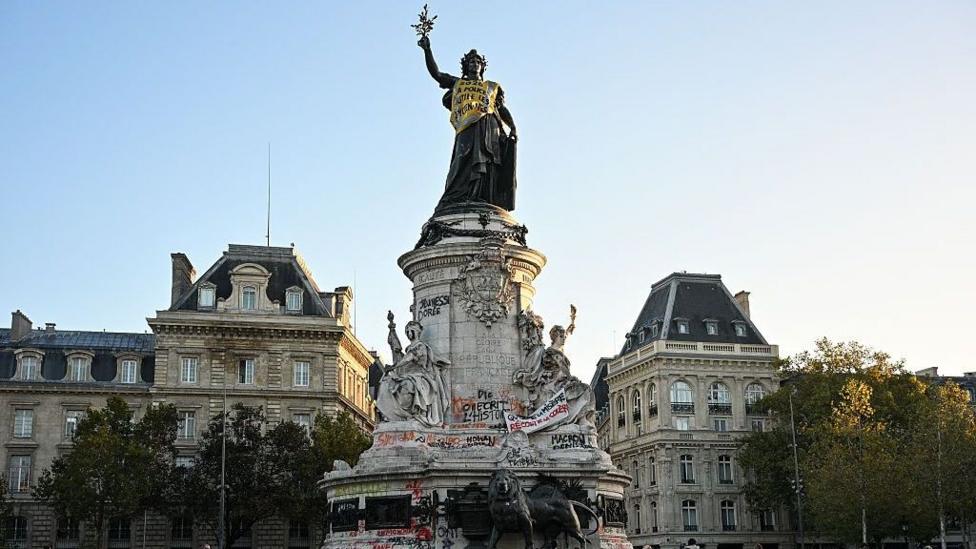 Image source, Getty Images
A yellow vest, the symbol of the gilets jaunes movements, was draped over the Monument a la Republique in Paris during last weekend's protests