The key facts
- At the first hearing in the case of 35 defendants, including Netanyahu, the Istanbul court ordered the identification of Turkish citizens whom complainants say took part in mistreating flotilla activists in Israel
- At its first hearing in the case of 35 defendants, including Netanyahu, the Istanbul court ordered the identification of Turkish citizens whom the claimants say took part in mistreating flotilla activists in Israel
- Arrest warrants and Interpol requests against all 35 defendants remain in force; the court requested ICC documents and a UN report via the Ministry of Justice
- Complainants described confiscation of medicines, strip searches and a ban on sleeping; the hearing was adjourned until 30 March 2027
- The claimants described the confiscation of medicines, searches and sleep deprivation; the hearing was adjourned until March 30, 2027
First hearing in the flotilla case
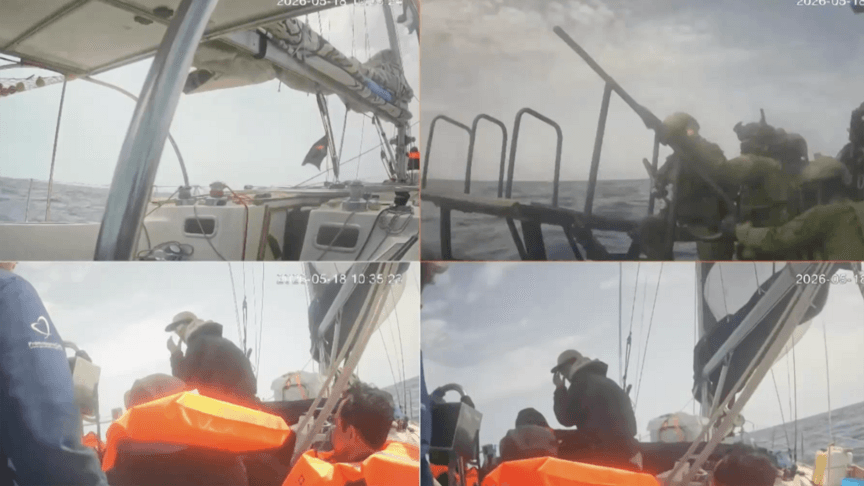
The Istanbul High Criminal Court (11th High Criminal Court), at the first hearing in the case against 35 defendants, among them Israeli Prime Minister Benjamin Netanyahu, ordered that individuals whom the complainants identified as Turkish citizens who, according to them, took part in mistreating them while in Israeli custody be identified and referred to prosecutors for legal action. The court also ruled to keep in force the existing arrest warrants and Interpol 'red notice' requests against all 35 defendants. The case concerns Israel's armed interception of the Global Sumud flotilla, which was carrying humanitarian aid to the Gaza Strip, Anadolu reports.
Testimony of the complainants
Complainant Osman Çetinkaya said he had joined the flotilla as a doctor to deliver medicines to Palestinians in Gaza: according to him, Israeli soldiers confiscated five or six boxes of medical supplies, and participants were mistreated at the port of Ashdod. He said he wished to pursue the complaint. Another complainant, Zeynep Tekocak, said she was subjected to strip searches twice and that a scuffle with Israeli soldiers broke out after she refused to remove her hijab. 'They filmed me on video in the clothes they gave me instead of my hijab and mocked me,' she told the court. According to her, one of the soldiers detaining her said he was from the Turkish province of Yozgat; her personal belongings were not returned, and she is filing a complaint.
Testimony of an MP and the lawyers' position
Turkish MP Sema Silkin Ün also testified: according to her, she and about 80 other participants were held after detention in a poorly ventilated room where they were forbidden to sleep, and an Israeli soldier insulted Islam during the reading of the Quran. She added that police who arrived the next day insulted Turkey and the detainees in Hebrew. Chair of the Istanbul Bar Association No. 2 Rıza Saka called the process historic and asked to add to the case file documents of the International Court of Justice (ICJ) on provisional measures in connection with the genocide allegations in Gaza, as well as a UN report. Lawyer Yasin Samlı said the case concerns allegations of genocide, crimes against humanity and attacks on civilians, and reported that the defence had submitted eight volumes of evidence, five of which concern alleged crimes against women and children in Gaza.
Court decisions
In an interim ruling, the court noted that the current indictment mainly describes actions relating to the flotilla, whereas the allegations of crimes against the civilian population of Gaza are set out only indirectly and in general terms. The panel stated that investigations into genocide and crimes against humanity may be conducted upon request of Turkey's Minister of Justice, and ordered prosecutors to be asked about a possible new indictment in which the alleged crimes against civilians in Gaza would be described concretely and supported by evidence. The court also ruled to take into account the evidence submitted by Bar Association No. 2 and the International Union of Jurists, to check whether the defendants own movable or immovable property in Turkey, and, through the Ministry of Justice, to request documents on the defendants' cases at the International Criminal Court (ICC) and a UN report. Applications by the complainants and organisations, including Bar Association No. 2, MAZLUMDER, the International Union of Jurists and the Earth Jurists Association, to join the proceedings were granted. The hearing was adjourned until 30 March 2027.
Significance of the trial
The decisions of the first hearing show that the case goes beyond the flotilla incident: the court has in effect laid the groundwork for a possible separate indictment over crimes against civilians in Gaza, which could broaden the scope of the case. For the flotilla participants, what matters in practical terms is the instruction to identify the alleged Turkish citizens said to be involved in the mistreatment, and the preservation of the arrest warrants and Interpol requests, which affect the defendants' legal status. At the same time, the outcome depends on future hearings and on requests made through the Ministry of Justice, and the charges against the defendants themselves remain subject to the proceedings.