The key facts
- Kakar called US and Iranian maximalism the main obstacle to settling the war
- In June, a plan to end the war was agreed in Islamabad, but the conflict continued with less intensity
- In June, a plan to end the war was agreed in Islamabad, but the conflict continued at a lower intensity
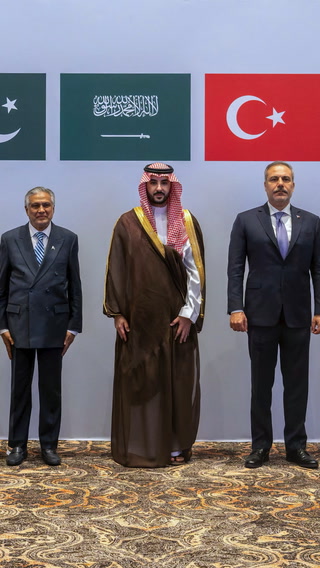
- Pakistan, Saudi Arabia and Turkey created the Mecca defence pact; for Pakistan, ratification by parliament is not required
- Pakistan, Saudi Arabia and Turkey created the Mecca defense pact; for Pakistan, parliamentary ratification is not required
Maximalism on both sides blocks negotiations
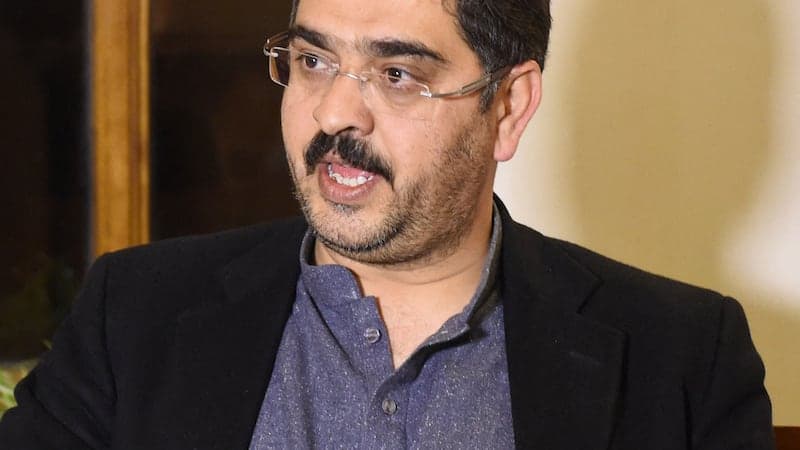
The conflict between the United States and Iran cannot be concluded because of the maximalist negotiating positions of both sides, said Anwaar-ul-Haq Kakar, Pakistan's former caretaker prime minister, in a rare interview with The National. 'When you take a maximalist position, it becomes an obstacle,' he said from Islamabad. According to him, it is precisely both sides' commitment to maximalism that is the main reason for the lack of progress in settling the conflict.
Points of contention and Pakistan's role
The US and Iran differ over the scope and timing of commitments needed to end the war: the issues include ending the American blockade of Iranian seaports, reopening the Strait of Hormuz, easing sanctions against Tehran, and guarantees of a cessation of hostilities across all fronts in the region. After the start of the US-Israeli operations against Iran in February, Pakistan arranged the highest-level diplomatic contacts between the two countries in decades. In June, the sides agreed in Islamabad on a plan to end the war, but the conflict continued, albeit with less intensity. Since then, mediators, including Pakistan, have urged both sides to return to the negotiating table amid the deadlock.
Signs of possible escalation
Pakistan's main goal, according to Kakar, is to prevent the military conflict from resuming. 'This is a wish, a wish list. Whether we can achieve it will become clear in the coming days or weeks,' he noted. He added that the withdrawal of American diplomatic personnel from the region in recent days points to possible preparations by the US and Israel to resume strikes, 'which is not a good sign.' US President Donald Trump and Israeli Prime Minister Benjamin Netanyahu have spoken in recent days about resuming military operations against Tehran; on Thursday Netanyahu said he had directed the army, Mossad and security agencies to topple the Iranian regime. According to American media reports, the US has prepared for new strikes, although Washington ruled out action before the midterm elections on November 3. Kakar believes the results of Tuesday's Israeli elections are unlikely to change the country's readiness for conflict.
Economic consequences for Pakistan
Pakistan, with a population of 260 million, has already suffered economically from the war-driven rise in energy prices: a sharp increase in world oil prices has led to a noticeable rise in fuel costs. A resumption of hostilities, in Kakar's assessment, would hit the country even harder. 'It will hurt us badly. We are talking about inflation, about petrol prices and their domino effect on other goods — we expect a negative economic impact if the escalation continues,' he said.
Diplomacy and Tehran's seven-point initiative
Pakistan is among the countries opposing a new escalation: Foreign Minister Ishaq Dar took part in meetings in Istanbul on Friday with counterparts from Turkey, Egypt, Saudi Arabia and Europe, where the ministers said they were calling on the parties to the conflict not to escalate attacks. Pakistan's military leader, Field Marshal Asim Munir, travelled to Tehran this week for meetings with senior Iranian officials, including National Security Council chief Mohsen Rezaei and parliament speaker Mohammad Bagher Ghalibaf. According to Nour News, a publication linked to Iran's Security Council, Ghalibaf told Munir that the US will not win Tehran's trust until it fulfils the seven conditions put forward in September: ending American military operations, unfreezing Iranian assets and lifting the naval blockade. Kakar called this seven-point proposal 'a purely Iranian plan,' noting that Pakistan's role was limited to influence, advice and suggestions. 'The main parties to the conflict are the US and Iran, not Pakistan. We are merely playing the role of a mediator,' he stressed.
The Mecca pact and the Afghan direction
Touching on the defence agreement signed in August by Pakistan, Saudi Arabia and Turkey in Mecca, Kakar noted that political debate over the pact is possible in Pakistan, but parliamentary approval is not required for it to enter into force — unlike Turkey, where parliamentary ratification is required. Pakistan is already stationing troops and military equipment in Saudi Arabia under long-standing agreements; a decision to send additional forces 'would be a conversation between the three parties.' He stressed Pakistan's full commitment to defending Saudi territory and called the defense of Mecca and Medina a 'red line.' According to him, against the backdrop of the shrinking role of the United States as a security guarantor in the Middle East, the pact fills the resulting 'vacuum,' and its expansion will proceed in a systematic way: interested parties will submit applications to the agreement's new secretariat and spend about a year as observers, after which the trio will make a formal decision. Speaking about the conflict with militants on the border with Afghanistan, Kakar named the elimination of the presence of Tehrik-i-Taliban Pakistan (TTP), banned in the country as a terrorist organization, as Pakistan's sole demand. 'As soon as this is addressed, the situation on Pakistan's side will normalize within 24 hours,' he said. He also pointed to the problem of the uncontrolled spread of weapons after the fall of Kabul in 2021 and the withdrawal of US and NATO forces: weapons are sold on the black market from Peshawar and Quetta to Damascus and Sanaa. Responding to criticism from the UN and human rights organizations over civilian deaths in Pakistani strikes on Afghanistan, he said that TTP militants wearing civilian clothing does not make them unlawful targets.