The key facts
- The dusky shark appeared in the Busan canal in mid-September and was named Bukangi; more than 1.6 million people visited the canal.
- A dusky shark appeared in a Busan canal in mid-September and was named Bukangi; more than 1.6 million people visited the canal.
- Several attempts to push her out failed: the shark went around nets and returned.
- On October 23, rescuers removed the outer layer of nets, and the shark headed for the open sea; there have been no new sightings, which experts consider a positive sign.
- On 23 October rescuers removed the outer layer of nets, and the shark headed for the open sea; there have been no new sightings, which experts consider a positive sign.
An unexpected guest in a port canal
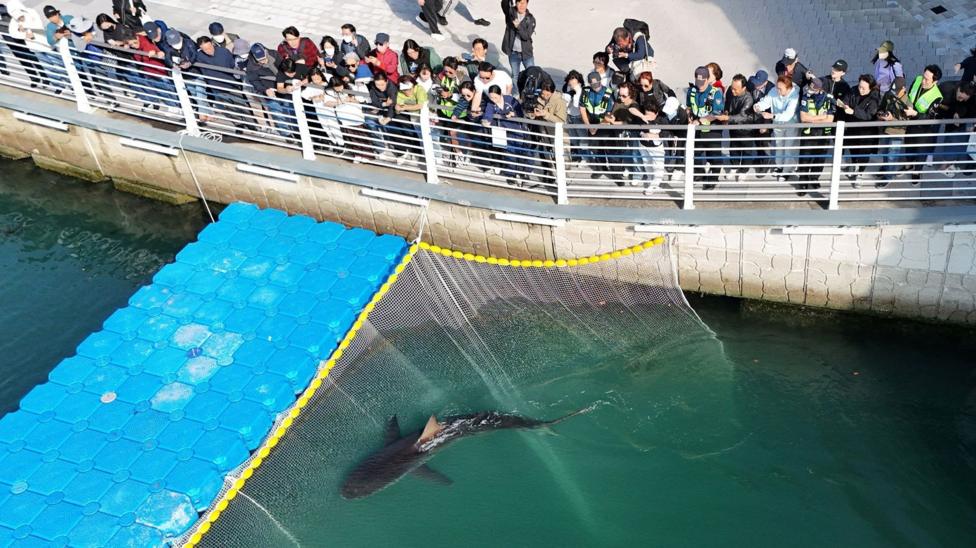
In mid-September, a large shark was spotted in a shallow concrete canal next to the port of Busan — the world's seventh-busiest port. The coast guard turned to marine biologist Kim Hyun-woo of the National Institute of Fisheries: a shark of such size had never before been seen in a canal in South Korea. Examination showed that it was a female dusky shark — a species linked to only two fatal attacks on humans. Nevertheless, the scientist feared that someone from the crowd gathered on the embankment might jump or fall into the water, BBC News reports.
Bukangi becomes a celebrity
City authorities sent residents an emergency SMS urging caution — and the park by the canal, rarely visited before, filled with onlookers. The shark was named Bukangi, after the Korean name of the neighboring harbor; within days an entrepreneur registered the name as a trademark, and badges, plush toys and T-shirts went on sale. City officials ran live broadcasts and made the shark an official mascot, and at the canal entrance they hung a banner with a petition 'on behalf of Bukangi' for the construction of a 30,000-seat baseball stadium. In total, more than 1.6 million people visited the canal, and the local mayor said the shark had brought the port publicity that 'even billions of dollars could not buy'publicity that even billions of dollars could not buy».
Failed rescue attempts
The first attempt, using an electric deterrent device, took five hours and failed: the shark proved too large and fast. In late September, Kim Hyun-woo's team tried a water-jet method modeled on a 2004 operation in Massachusetts, but the shark stubbornly returned. On October 2, a net was stretched across the canal — the shark went around it and returned within hours. By then it had not eaten for several days, and its snout was damaged from hitting the concrete walls; marine biology professor Choi Yun singled out a 'critical' injury around the eye. Kim suggested that the shark might have problems with the electromagnetic sensors on its snout used for navigation, or that noise from ships in the harbor was confusing it.
The final operation and departure to sea
The Ministry of Oceans took charge of the operation: about 40 people were mobilized, including divers from the Busan aquarium, with a veterinarian and an ambulance on standby. On Wednesday, divers installed two layers of nets and drove the shark out of the narrow canal into open water, but overnight it dove under the outer net and returned, ending up between the two barriers. On Thursday, rescuers removed the outer layer — and Bukangi swam farther and farther toward the open sea; although it occasionally returned, the operation was completed. The shark has not been seen in recent days, which experts consider a positive sign: Professor Choi believes it is adapting to wider and deeper waters, but warns that it is unlikely to have gone far and may reappear within a week.
A split among fans and a possible cause
With each failure, some fans demanded that the shark be left alone: on Thursday, several people came out with placards reading 'leave Bukangi alone' and 'remove the net'. Others, on the contrary, believed it was time for her to go home. Marine biologist Kim explained that staying in the canal is dangerous because of falling autumn temperatures, which usually prompt sharks to migrate south: 'This is a canal — hardly something that can be called a habitat. A wild animal cannot remain in a space created strictly for humans.' The Ministry of Oceans suggests that the shark's appearance in the canal may be a sign of warming seas: it may have followed fish into warmer waters — about 50 large sharks were recorded off Korea's east coast in the first half of the year, four times more than a year earlier.
Why it matters
Bukangi's story shows how a rescue operation turns into a public event with economic and organizational consequences: 1.6 million visitors, a trademark, the city's mascot and a petition for a stadium — all of this arose around one stranded shark. In practical terms, the event has already led to a change in working procedures: the operation was handed over from the fisheries institute to the Ministry of Oceans with about 40 people involved. It is still unknown whether the shark will survive its injuries and where it will head; there is no data on its current condition, and all that remains is to wait for a possible reappearance in the coming week.
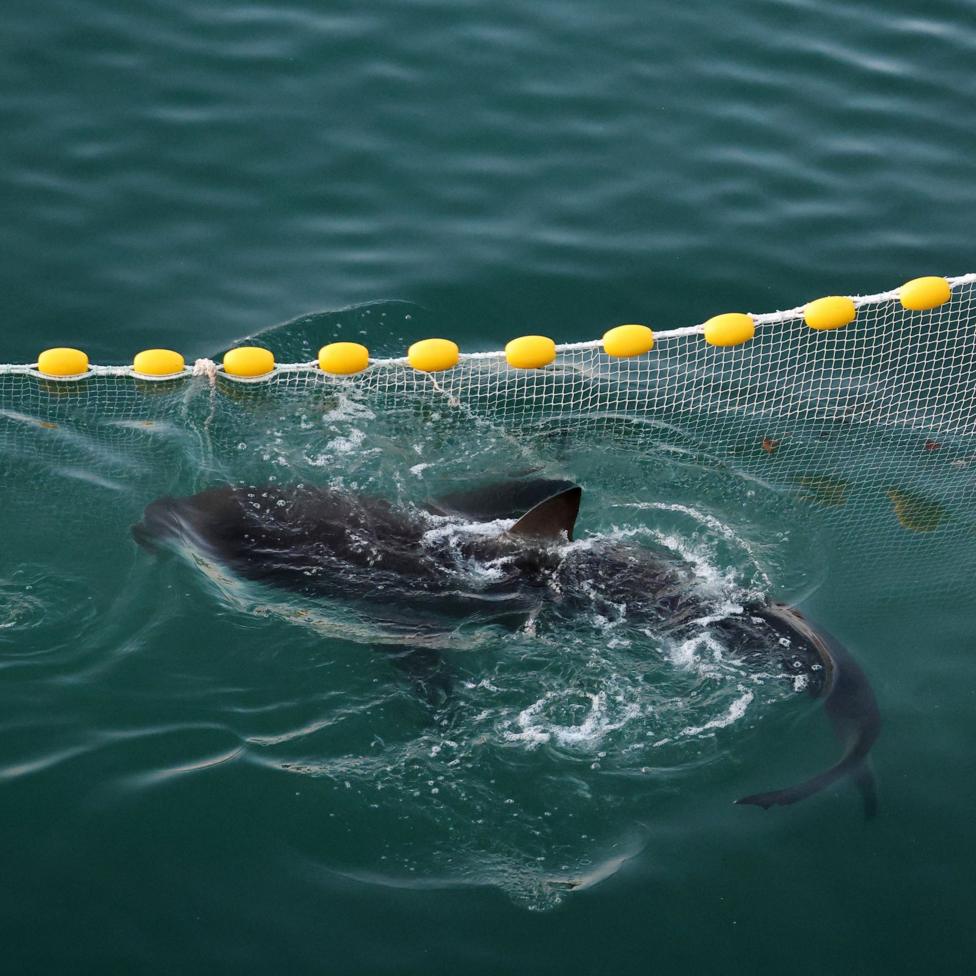 Image source, Reuters
The dusky shark was first spotted in the canal in mid-September
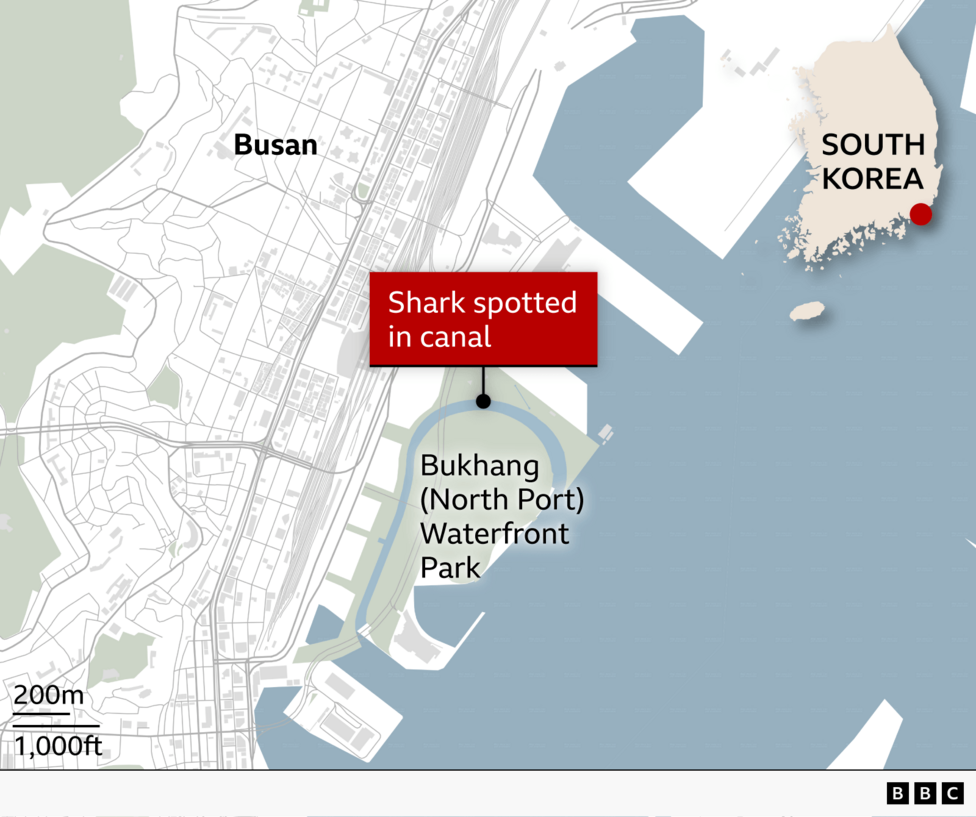
 Image source, Hosu Lee/BBC
A poster encourages support for a baseball stadium
 Image source, Hosu Lee/BBC
Kim Joo-eun and her nieces were among Bukangi's many visitors
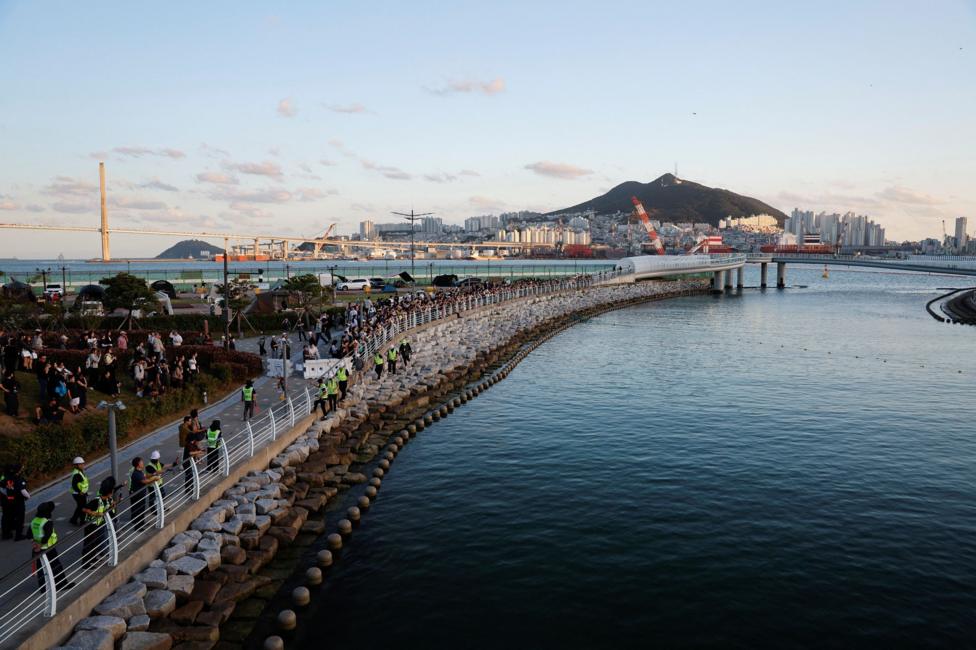 Image source, Reuters
The canal leading up to the Busan port where Bukangi was stranded
 Image source, Hosu Lee/BBC
Jeong protesting against Bukangi's
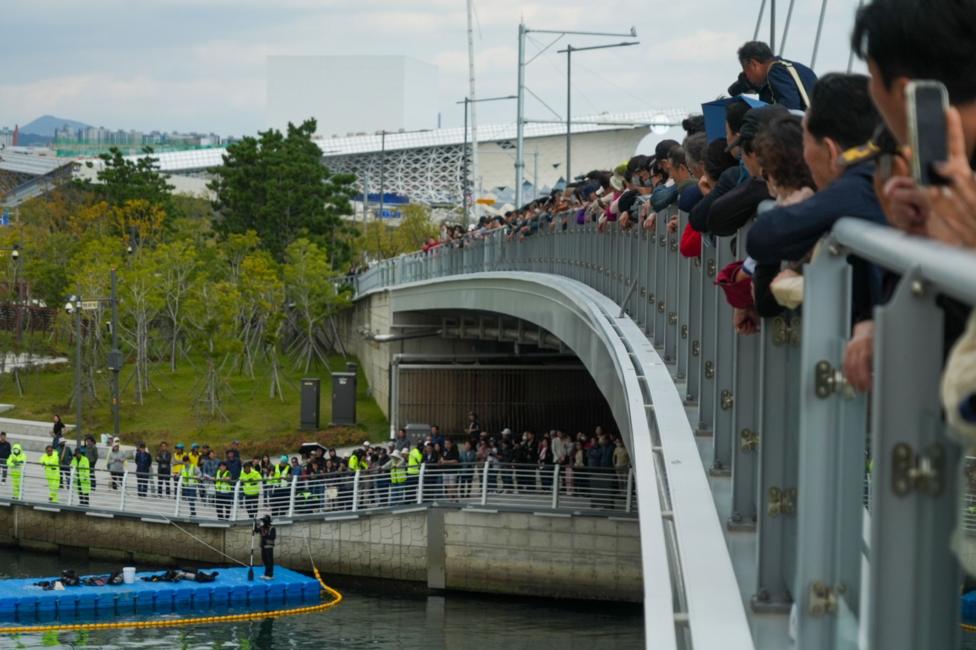 Image source, Hosu Lee/BBC
Bukangi became a sensation, drawing the curious and the concerned
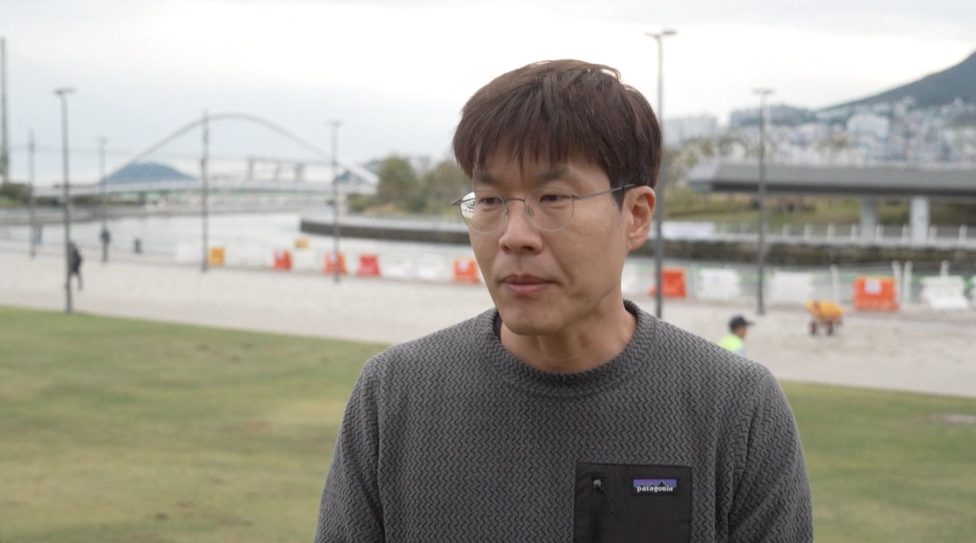 Image source, Reuters
Staying in the canal is dangerous for Bukangi, says marine biologist Kim Hyun-woo