The key facts
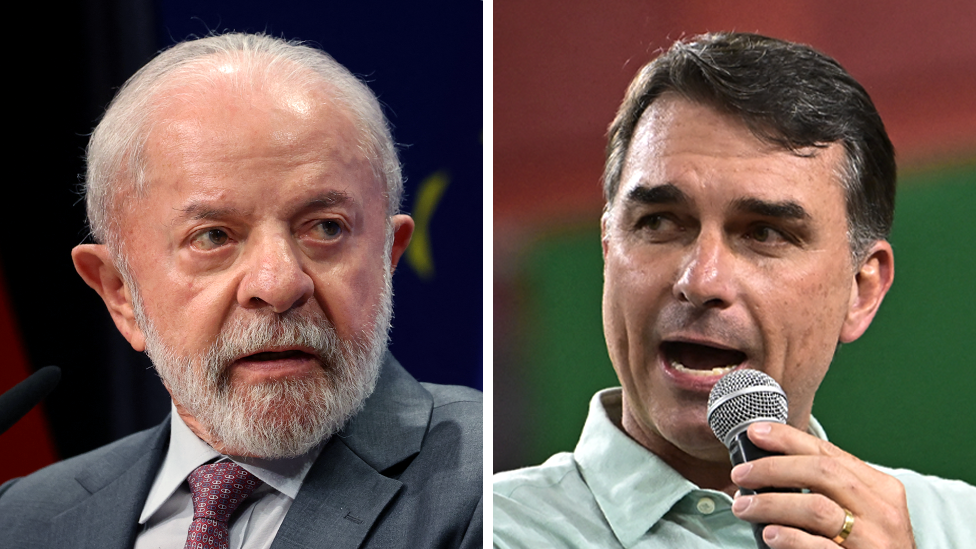
- Flávio Bolsonaro won the first round; the runoff against Lula takes place on Sunday, and since 1989 every winner of the first round has become president.
- Lula's traditional base has weakened: in Osasco, factories have given way to shopping malls and IT companies, and millions of Brazilians work in the gig economy.
- Lula's traditional base has weakened: in Osasco factories have given way to shopping malls and IT companies, and millions of Brazilians work in the gig economy.
- 33 million people did not vote in the first round — a record abstention since 1998; Lula's campaign is betting on street mobilization and social media.
- 33 million people did not vote in the first round — a record absentee turnout since 1998; Lula's campaign is betting on street mobilisation and social media.
The runoff: Bolsonaro vs Lula
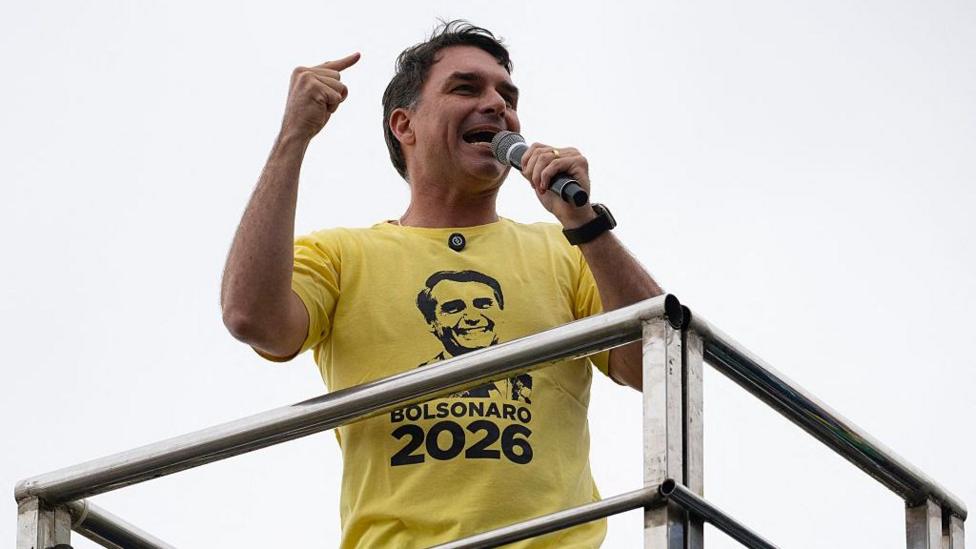
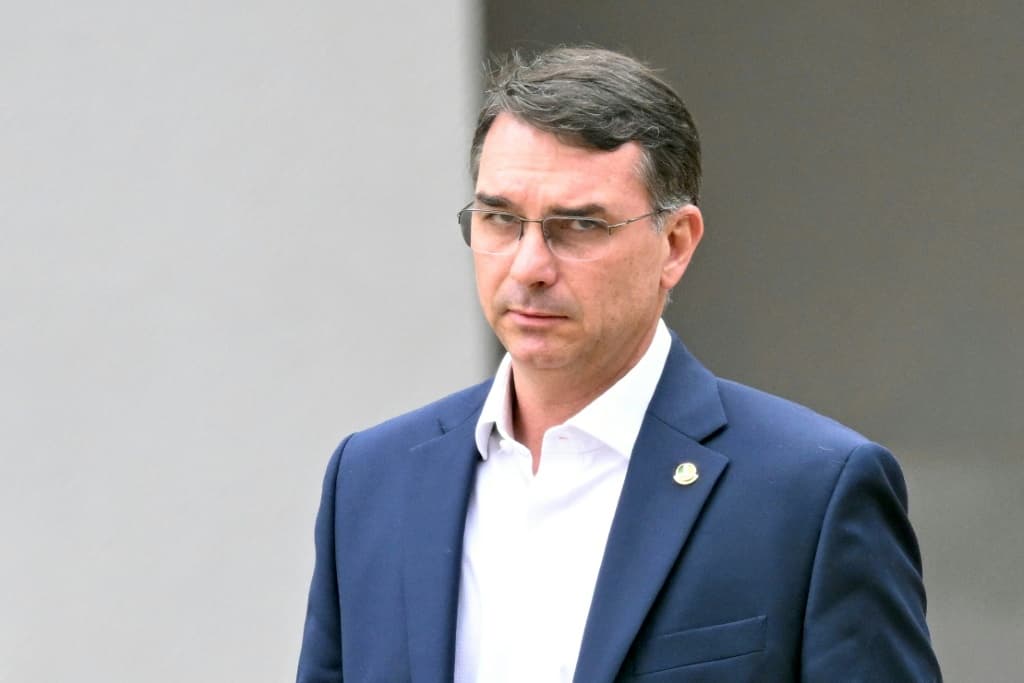
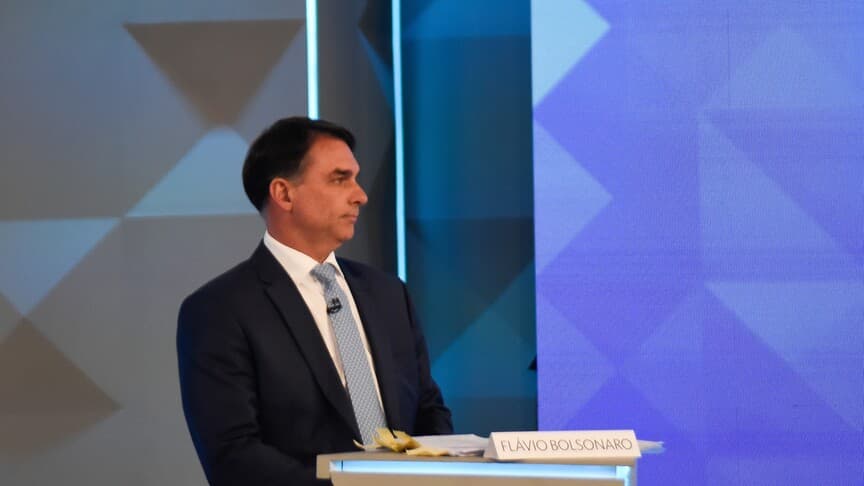
Brazil is preparing for the second round of the presidential election on Sunday: incumbent left-wing president Luiz Inácio Lula da Silva will face right-wing candidate Flávio Bolsonaro, who won the first round in early October. As BBC News notes, since 1989, every winner of the first round in Brazil has ultimately been elected president. Bolsonaro is the son of Jair Bolsonaro, who served as president from 2019 to 2022.
Osasco: a working class that no longer exists
Osasco, a former industrial city in the São Paulo metropolitan area, has become a symbol of change: it voted for Lula in 2022 but switched to Bolsonaro in this month's first round. Closed factories have given way to shopping malls and delivery service companies — the area is even called the 'Silicon Valley' of São Paulo. Gilberto Almazan, leader of the metalworkers' union, admits that the union movement, which formed the core of Lula's support, is 'stuck in the Middle Ages': 'There has been strong deindustrialization here. The profile of the working class has changed. It is no longer predominantly industrial workers, but service sector workers. The metallurgical, chemical and textile factories have disappeared. And five shopping malls have been built'.
Why voters are turning away from Lula
Among Bolsonaro's supporters in Osasco, the word 'change' comes up constantly: many struggle to name his specific measures, but are disillusioned with the economy, crime and corruption in politics — although Flávio himself has also faced corruption allegations, which he denies. Lawyer Gisele Bonfim, who voted for Lula in 2022 and now for Bolsonaro, explains: 'He carries the hope of change, that we can have a different Brazil'. Hot dog vendor Tayrin, who previously boycotted elections, intends to vote for Bolsonaro this time because of high taxes 'on everything' that make life for poor people 'so difficult' amid inflation, and believes that 'nothing has changed' since Lula's return. Bolsonaro has proposed cutting government spending, ministries and some taxes, but has promised to preserve a number of Lula's flagship social programs. Richard Lapper, biographer of both Lula and Jair Bolsonaro, describes an 'expectations crisis': people's lives have improved — unemployment fell to a record low, and Brazil was removed from the UN's 'hunger map', — but they don't feel it because of rising prices, household debt and high interest rates. Municipal employee Robson, 53, originally from the state of Pernambuco, blames Lula's government for 'mismanaging' the economy and high public spending: 'Now you have to choose: pay the car installment or buy food'.
The gig economy and a new working environment
Millions of Brazilians now work in the gig economy — driving taxis, delivering food, selling at markets or providing services in people's homes. Almazan calls this 'Uberization': 'Many workers want more freedom and flexibility in their days and hours', rather than the social guarantees and collective action that Lula offered. According to Lapper, the growth of individualized labor and the decline of industry due to globalization are not unique to Brazil, but because of late industrialization and early deindustrialization, the effects are sharper here. He calls Lula 'a victim of his own success'.
Lula's strategy: mobilization and social media
In the first round, Lula lost votes compared to 2022, even though Bolsonaro did not get more than his father did back then: 33 million people did not vote — the highest abstention rate since 1998. In response, Lula's campaign has focused on bringing hundreds of thousands of people, primarily students, onto the streets ahead of the runoff; it claims that one rally in São Paulo drew about a million people. Videos of the demonstrations are spreading on social media — a shot of a man with a Lula flag has been shared tens of millions of times. The 80-year-old Lula himself responds to criticism about his age by calling himself the 'king of selfies' and posting videos of himself running at campaign events.
Favelas, churches and the outcome of the first round
In Maré, one of Rio de Janeiro's largest favelas, controlled by rival gangs, abstention was higher than average, which undermined Lula's position, although he still won here: among the poorest, his social programmes still resonate. Victoria, an 18-year-old mother earning less than £300 a month, praises the government for raising the minimum wage, the right to two days off a week and free medicines. She is sceptical of Bolsonaro's plan to declare the Comando Vermelho gang that controls the favela a terrorist organisation — a designation he lobbied for in the US earlier this year — and fears security raids, citing last year's operation in Rio in which more than 130 people were killed. Another resident, Andrezza Dionisio, links the high abstention to the sudden relocation of polling stations and 'a sense of hopelessness about the future'. This vacuum, according to the BBC, is increasingly being filled by evangelical churches: about a quarter of Brazilians are now evangelicals, and their megachurches offer not only spiritual support but also help with childcare, employment and food. The influential pastor Silas Malafaia, who leads the Assembleia de Deus Vitória em Cristo church in Rio — he is under investigation on suspicion of obstructing the proceedings in the case over the attempted coup by Jair Bolsonaro, which he denies, calling the accusations politically motivated — told the BBC that without the evangelical church in working-class neighbourhoods the country would be 'in a worse state than you can imagine', and believes that Flávio Bolsonaro shares the church's values: family, opposition to gender 'ideology' and abortion. According to BBC correspondents, for a significant part of the new working class the first round felt more like a rejection of Lula than support for his rival.
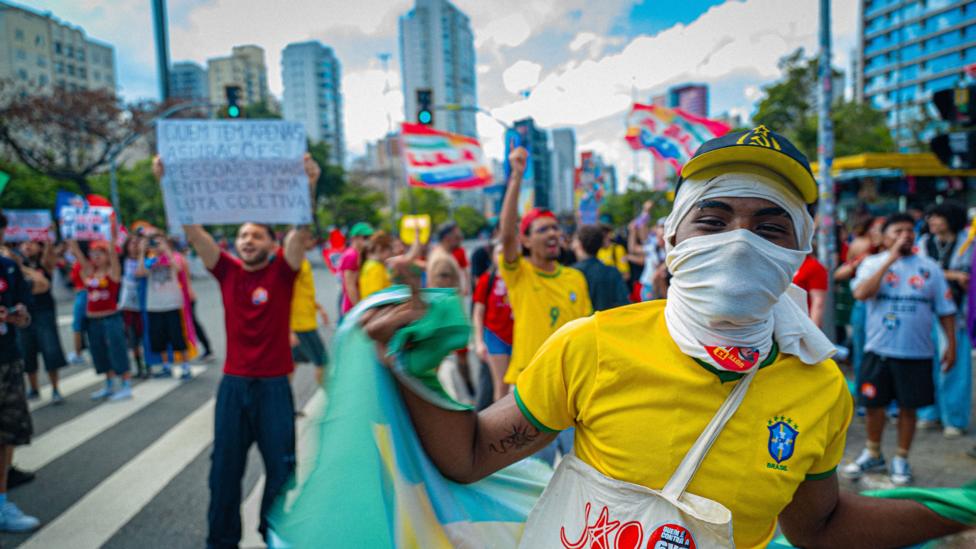
A student at a rally for President Lula da Silva
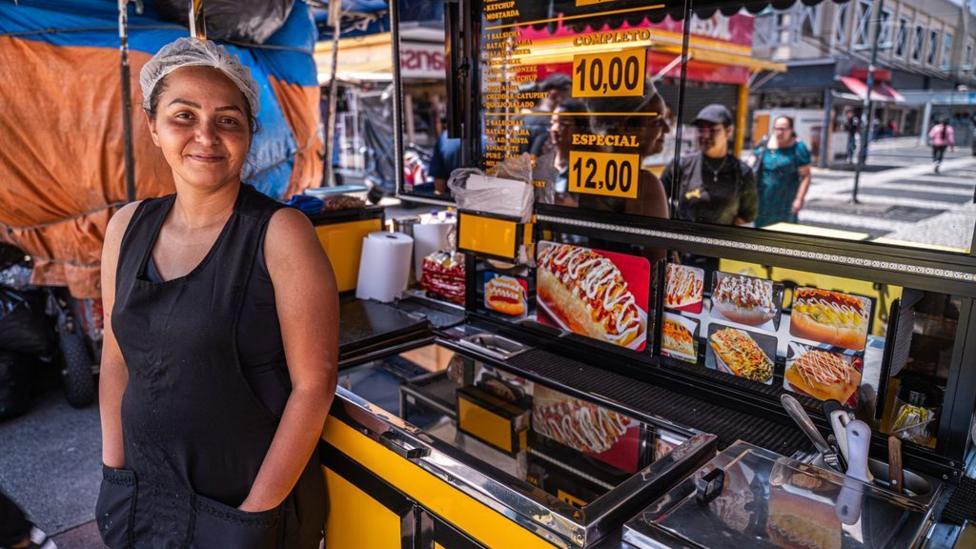
Tairine says high prices are a problem for her
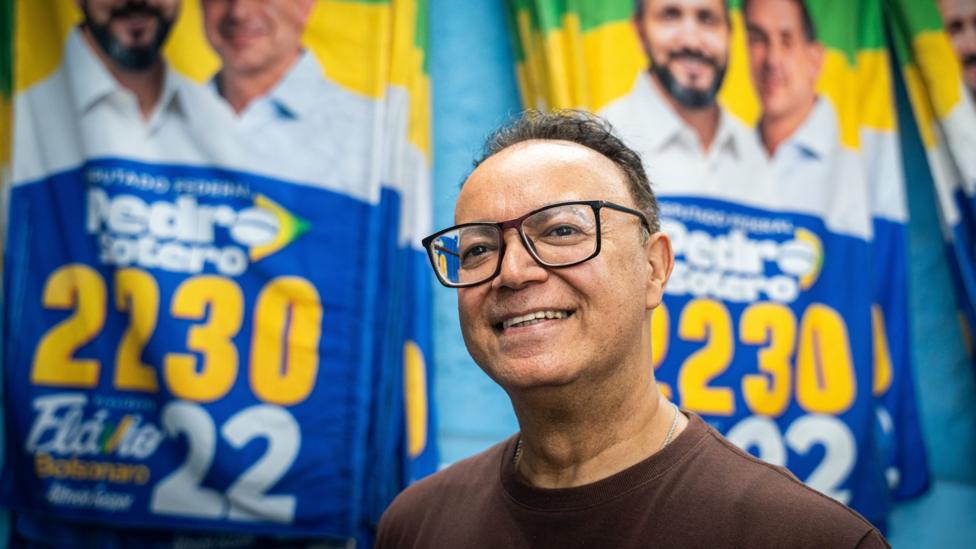
Robson used to support Lula but has since switched to support Bolsonaro
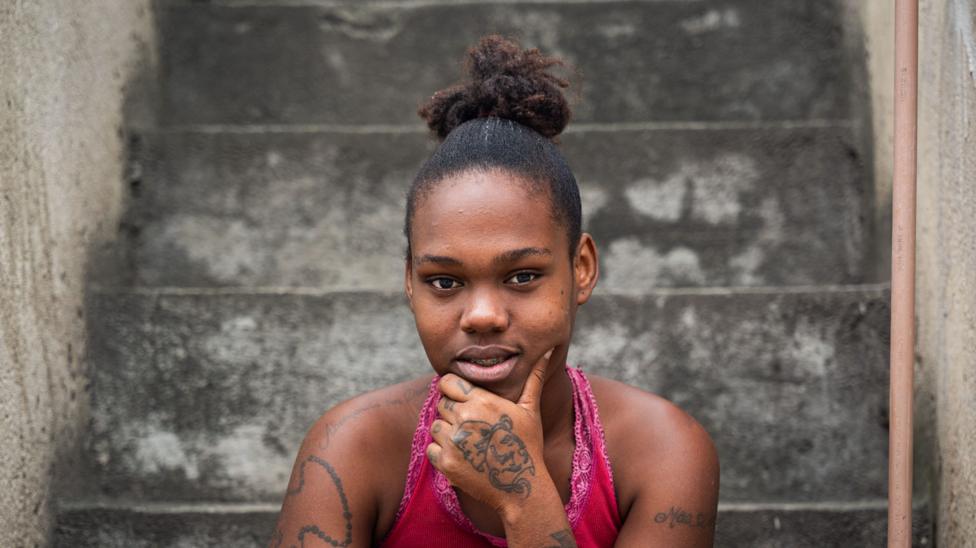
Some people who live in the favelas fear security forces entering if Bolsonaro is elected
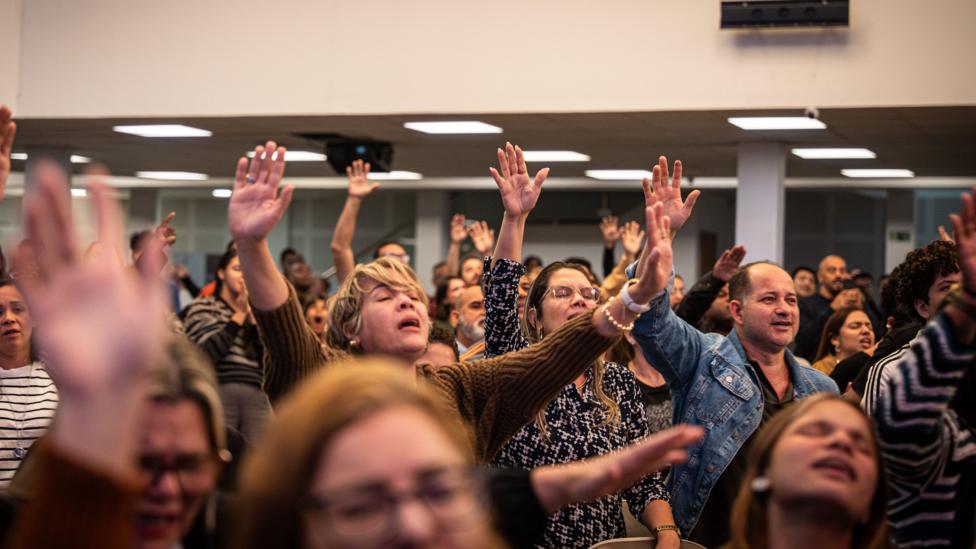
Many Brazilians now worship in evangelical churches like the Assembleia de Deus Vitória em Cristo
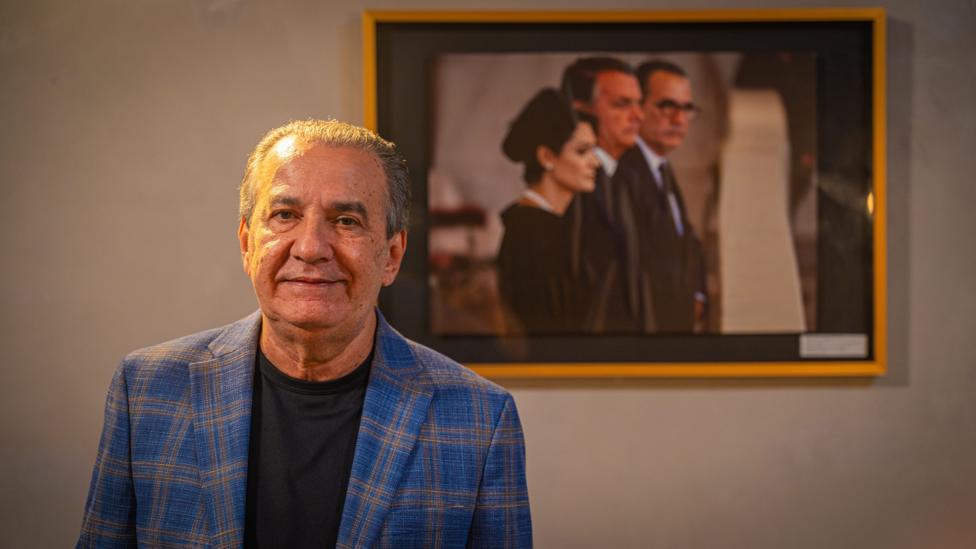
Pastor Silas Malafaia officiated at Jair Bolsonaro's wedding