The key facts
- Kavantissa — an elephant about 3.3 m tall and weighing 5.5 tonnes — was shot in the right leg and died on October 16 despite veterinary care.
- Since 2019, Sri Lanka has seen an average of 370 elephants and 125 people die annually in human-elephant conflicts.
- The country is home to about 10% of the world's Asian elephant population; about 70% of wild elephants live outside protected areas.
Death of a Famous Elephant
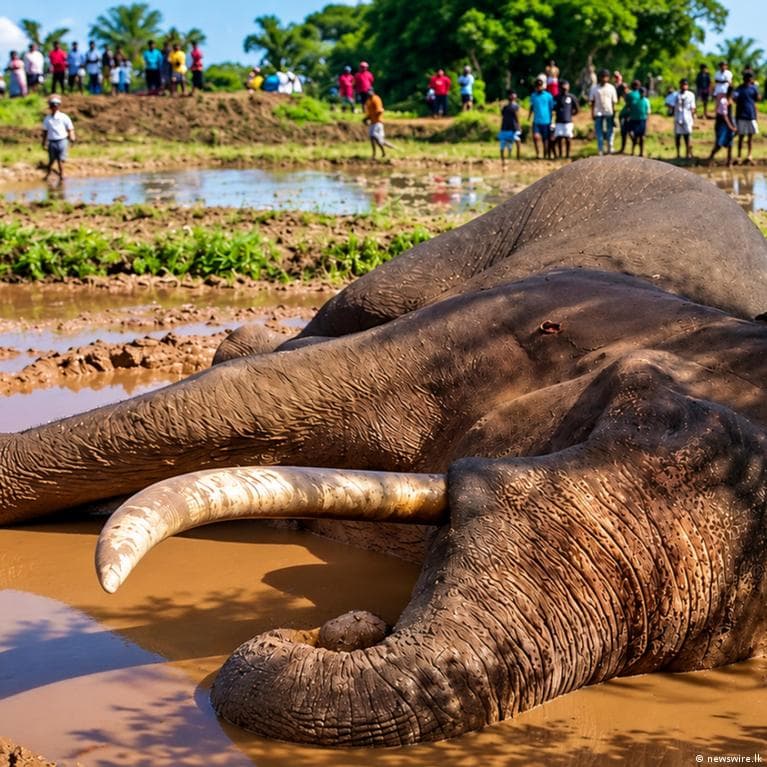
The elephant named Kavantissa was considered the tallest living male elephant in Sri Lanka: he was estimated to be about 45 years old, roughly 3.3 meters tall and weighing 5.5 tonnes. He lived in the northwest of the country near the village of Galgamuwa and was widely known for his imposing appearance. In late September, residents noticed the elephant was limping; an examination revealed a gunshot wound to his right leg. Despite the intervention of veterinary surgeons, the animal died on October 16. As Deutsche Welle notes, his death caused concern due to constant contacts between people and elephants, whose habitats are shrinking.
Scale of the Conflict
According to DW, Sri Lanka records the world's highest annual number of elephant deaths and the second-highest number of human deaths resulting from violent encounters between elephants and people, which usually occur when crop-raiding elephants enter farmland. According to official statistics, since 2019 an average of 370 elephants and 125 people have died annually in such incidents. According to the Department of Wildlife Conservation (DWC), in 2024 about 7,451 wild elephants were recorded in the country, with about 70% of them living outside protected areas. Sri Lanka, home to about 10% of the world's Asian elephant population and occupying only about 2% of their natural range, has the world's highest density of Asian elephants. The Sri Lankan elephant is listed in the IUCN Red Book as an endangered subspecies and is protected by law, which provides for fines and prison terms for offenses against wildlife.
Shrinking Habitats
Over recent decades, Sri Lanka's forest cover has declined amid rapid population growth: the rural population grew from 8.25 million in 1960 to 17.8 million in 2020. Agriculture remains the main source of income for these communities, and land is cleared for it. According to research, elephants need about 150 kg of green biomass per day, which leads them to fields. Ravi Corea, president of the Sri Lanka Wildlife Conservation Society, told DW that the conflict, driven primarily by habitat loss, expansion of agricultural land, fragmentation of elephant corridors, and growing competition for land and resources, kills hundreds of elephants and more than 100 human lives annually. He noted that crop losses can deprive a family of its main source of food and income — unlike developed countries, where encounters with wild animals usually do not threaten a household's survival. Elephants, experts say, are killed with gunshots, poisons, homemade explosive devices hidden in food, as well as in collisions with trains.
Plans and Public Initiatives
In 2020, the government of Sri Lanka developed a national action plan to mitigate the conflict. Corea believes the plan provides a valuable framework, but its recommendations need to be strengthened by a comprehensive national conservation strategy with enforceable habitat protection at its core; he named not merely a reduction in conflict but the permanent protection of ecologically connected habitats and sustainable coexistence of people and elephants as the measure of success. According to him, community programs by NGOs, complemented by elephant monitoring, scientific research, habitat assessment, education, and local deterrent methods, are effective and sustainable. The flagship 'Project Orange Elephant' initiative in the Wasgamuwa region promotes the cultivation of citrus fruits that elephants do not like to eat — this reduces crop raiding and gives farmers an alternative income; electric fences are also used. Another problem is collisions on elephant corridors connecting patches of forest and habitats, because of which children were sometimes afraid to go to school. The 'EleFriendly' service in Wasgamuwa transports schoolchildren across the corridors and, according to DW, reduced dangerous human-elephant encounters on its original route by more than 90%.
An Ethical Perspective
Sri Lankan environmental ethics researcher Kamal Shashendra told DW that an ethically justified solution must simultaneously protect people's lives and livelihoods and the elephant population. To achieve this, he said, what is needed is science-based land-use planning, protection of elephant corridors, appropriate community fencing, effective early warning systems, and fair compensation for affected families.