The key facts
- At the closing of the summit in Samarkand, the adoption of the Samarkand Declaration on investing in children's well-being was announced.
- At the closing of the summit in Samarkand, the adoption of the Samarkand Declaration on investing in children's wellbeing was announced.
- The Declaration contains eight commitments: social protection, protection from violence, online safety, early childhood development, healthcare, childhood cancer, family support, and youth skills preparation.
- The Declaration contains eight commitments: social protection, protection from violence, online safety, early development, healthcare, childhood cancer, family support, and youth preparation.
- In November, the second Global Ministerial Conference on ending violence against children will be held in Manila; in 2027, Uzbekistan plans to host a conference on maternal and child health.
Adoption of the Declaration
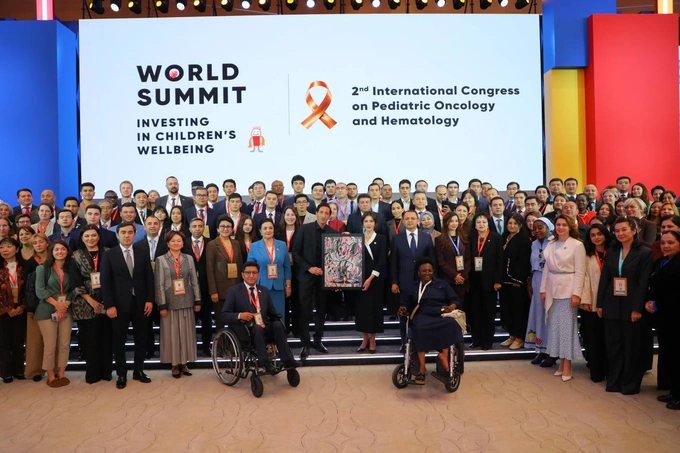
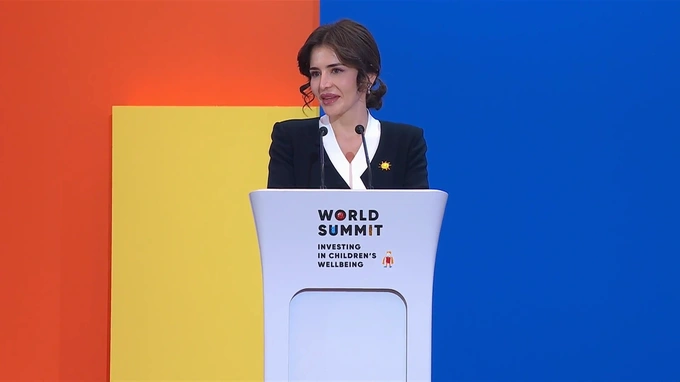
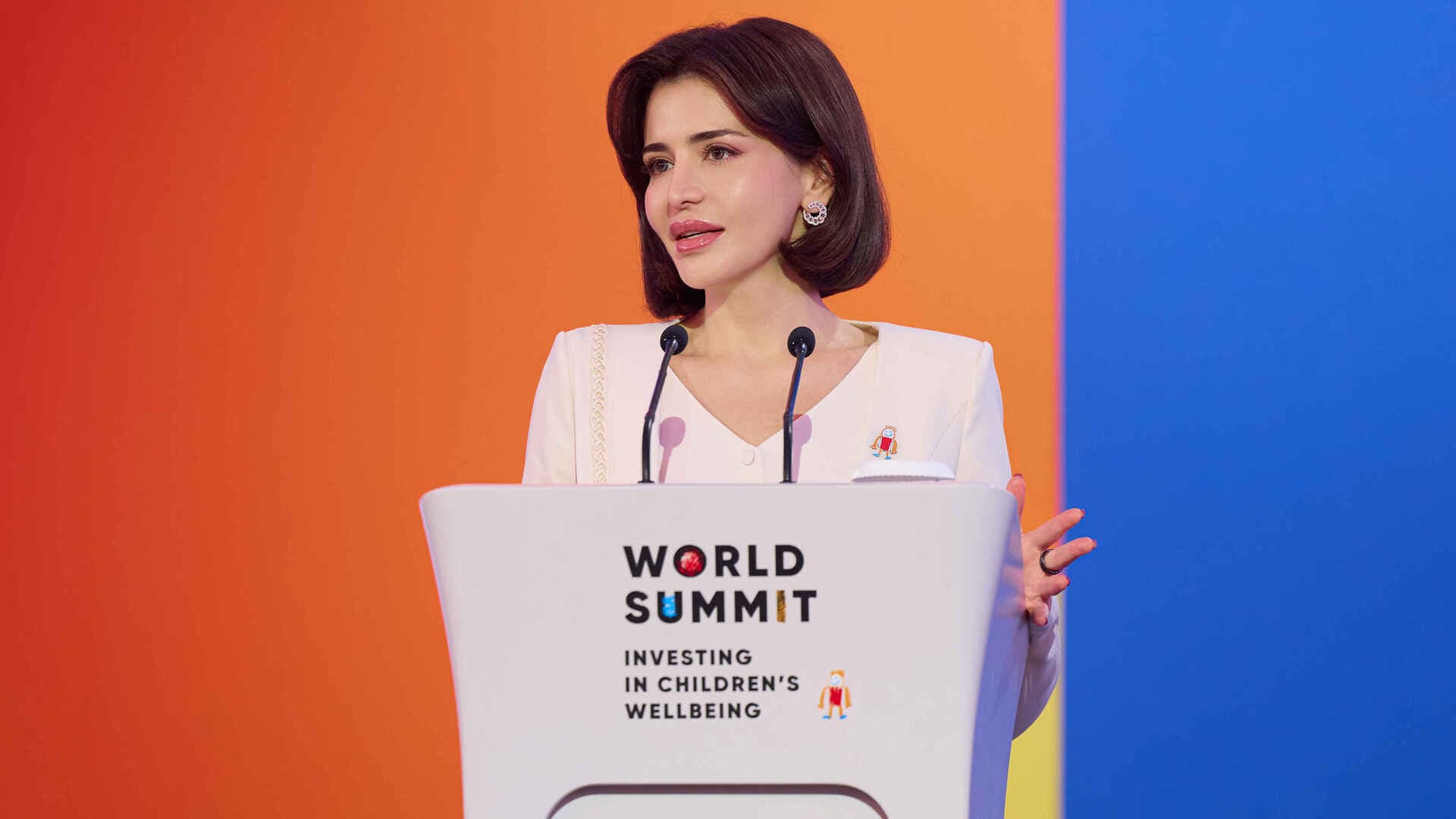
The two-day world summit 'Investing in Children's Well-Being' has concluded in Samarkand. At the closing ceremony, Shahnoza Mirziyoyeva, First Deputy Director of the National Agency for Social Protection under the President, announced the adoption of the Samarkand Declaration. The document consists of sections on general provisions, commitments of countries, financing, and cooperation.
Content of the Document
The Declaration is based on the Convention on the Rights of the Child and the 2030 Agenda for Sustainable Development with the principle of 'leaving no one behind.' Participants note that children make up a third of the world's population and suffer most from interconnected crises — climate change, conflicts, forced migration, economic pressure, and technological change — although they bear the least responsibility for them. States adopted eight commitments taking national conditions into account: expanding pension coverage and payments for families with children; protecting children from violence and exploitation, including online; preventing online sexual exploitation and cyberbullying; investing in early development and inclusive education; developing primary health care, vaccination, and mental health care; equitable access to diagnostics, treatment, and palliative care for childhood cancers; reducing unjustified separation of children from parents; and developing 'green' and digital skills of youth, including youth with disabilities. In the section on financing, participants acknowledge that political commitments must be backed by financial ones, pledge to prioritize public investment in children and gradually increase spending on social protection, early development, healthcare, education, and child protection, maintaining basic services even under constrained budgets. The need for budget transparency and expenditure tracking disaggregated by gender, age, and disability was noted. International financial institutions, donors, charitable organizations, and the private sector are called upon to increase funding, especially for low- and middle-income countries and those affected by conflicts, climate change, and natural disasters. The section on cooperation provides for the exchange of data and solutions, including the 'South–South' format, and interaction on family tracing and family reunification in cross-border situations. Children and adolescents are recognized as rights-holders and independent agents of change; it is proposed to institutionally закреп their participation in decision-making, including the implementation of the Declaration.
Speeches by Participants
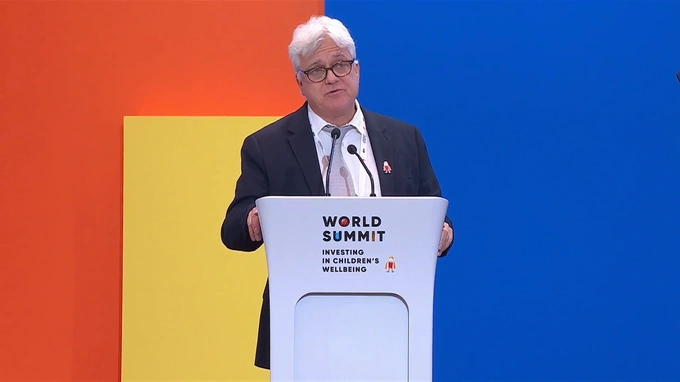
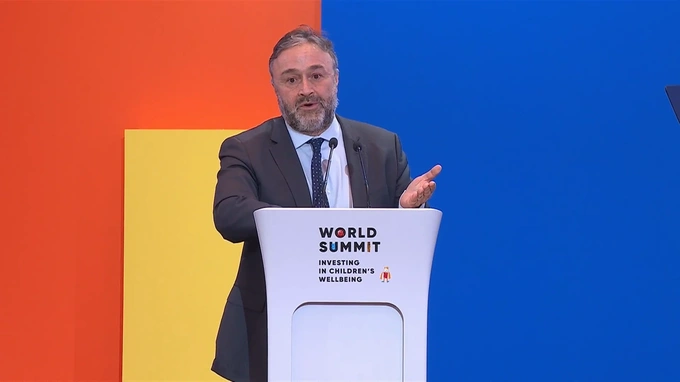
Shahnoza Mirziyoyeva stated that every child should grow up healthy and happy in a safe environment, receive an education, and achieve their goals, and she called investments in children investments in the future. 'Children should feel care and attention not tomorrow, but today. Together we are strengthening the system of social protection for children, protecting them from all forms of violence, creating opportunities for quality education, ensuring access to medical services for all children, and together fighting childhood cancer. Children expect from us not promises, but practical deeds,' she said. UNICEF Regional Director for Europe, Central Asia, the Middle East, and North Africa Edouard Beigbeder noted that the Declaration sets a common direction with an emphasis on prevention, integrated systems, qualified personnel, and sustainable financing. He named four outcomes of the summit: support for children from birth to the end of school age, the importance of service quality alongside coverage, interagency and interbudgetary interaction, and the dependence of financing on priorities and partnership. World Bank Country Director for Central Asia Najy Benhassine pointed out that governments, due to limited resources, are forced to choose areas of spending, and under such conditions investment in children's well-being is a priority; opportunities missed in the first years of life cannot later be fully compensated. He also called Samarkand and Uzbekistan a worthy place for such a Declaration, mentioning the great scholars — al-Khwarizmi, Ibn Sina, and Imam Bukhari — and recounted his visit to the Imam Bukhari mausoleum and the story of a gifted child whom his mother supported and took to study in Medina. According to him, thanks to Uzbekistan's investments in higher education, talented youth no longer have to travel to distant countries for knowledge.
Criticism: The Gap Between Promises and Implementation
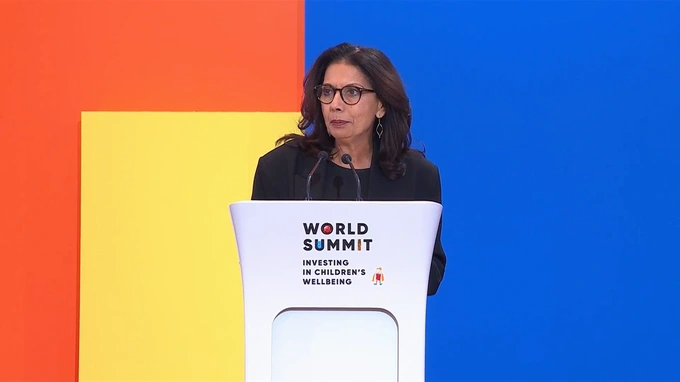
Speakers named the main problem as the gap between promises and their actual implementation. WHO Representative in Uzbekistan Dr. Ashina Halakdina emphasized that the main difficulty is not developing new commitments but fulfilling previously adopted ones. UN Special Representative of the Secretary-General on Violence against Children Najat Maalla M'jid gave examples: countries develop separate plans on violence, child marriage, and other topics, whereas national development programs should contain a single plan for child protection and well-being. She advocated for a continuous chain of services instead of numerous pilot projects, called for attention to protecting children from online threats and to their participation in decision-making — not 'showcasing' children at events, but listening to them. 'Increasing the budget is only one aspect, but it is crucial to track expenditures and make sure they actually affect people's lives. We need to ask families, caregivers, and the most vulnerable children how they assess services and how they can be improved. And finally, an equally important question is accountability. We must make sure that everyone who has taken on a commitment fulfills it,' she noted.
Outcomes and Further Plans
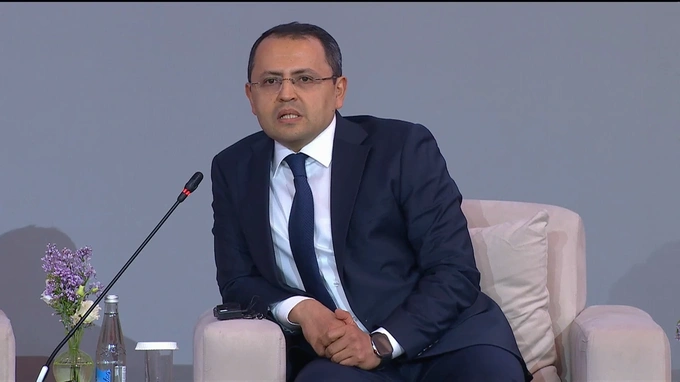
Over the two days of the summit, three panel sessions on social protection were held, separate sessions on pediatric oncology and hematology, as well as discussion of research by J-PAL, the World Bank, and UNICEF. Director of the National Agency for Social Protection Mansurbek Olloyorov reported that, within the framework of the summit, a number of documents were signed, including roadmaps and memorandums with other countries, and that Uzbekistan is preparing to begin work on a number of projects with grant funding. UNICEF Representative in Uzbekistan Regina Castillo said that foreign delegations visited the 'Inson' center; many participants showed interest in the Uzbek experience and shared their own. The next venue is Manila: in November, the second Global Ministerial Conference on ending violence against children will be held there; the first took place two years ago in Bogota (Colombia). Beigbeder and Maalla M'jid expressed hope that the Samarkand Declaration will become the foundation and a 'bridge' for that conference. In 2027, Uzbekistan plans to hold a high-level conference on maternal and child health.
Closing of the Ceremony
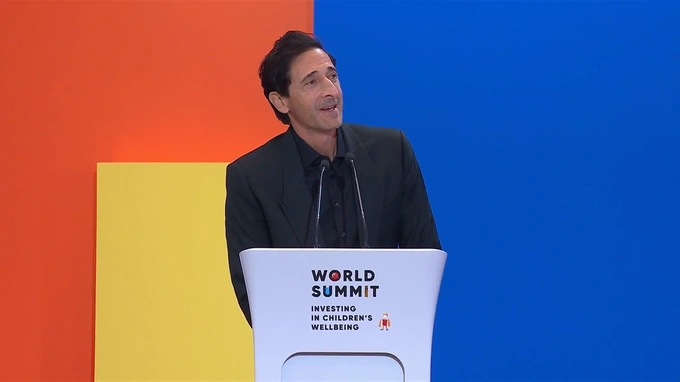
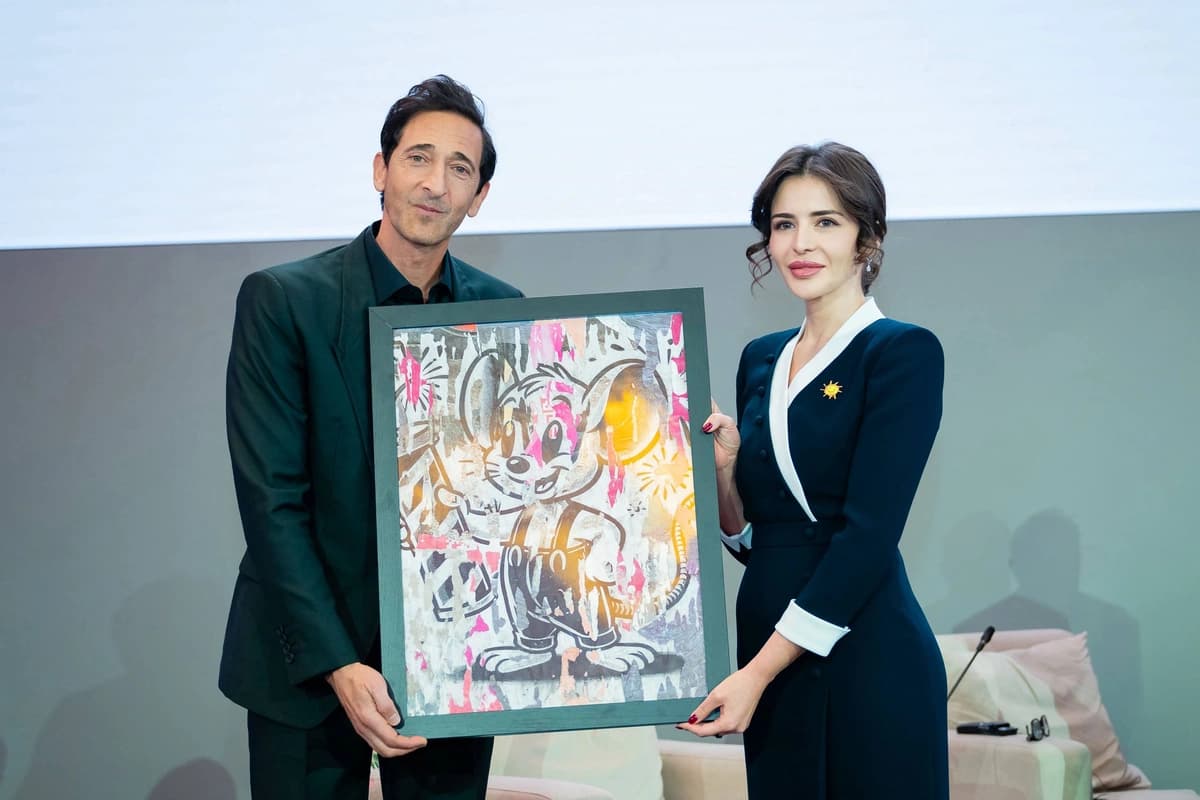
The closing ceremony was concluded by Oscar-winning actor Adrien Brody. He said that he grew up in a working-class neighborhood of New York in the family of a teacher and a photographer-artist, and that he is grateful to his parents for supporting his interest in art. According to him, this experience carries a moral responsibility and p
Details
...among other people's children: attention, recognition, the ability to listen, and patience instill in children self-confidence and hope — 'without such hope there will be neither wellbeing nor unity.' Brody presented Shahnoza Mirziyoyeva with his own painting depicting a mouse — an image through which, according to him, he speaks about people left without attention and love, linking it to the homeless, people with disabilities, and children in need of help.