The key facts
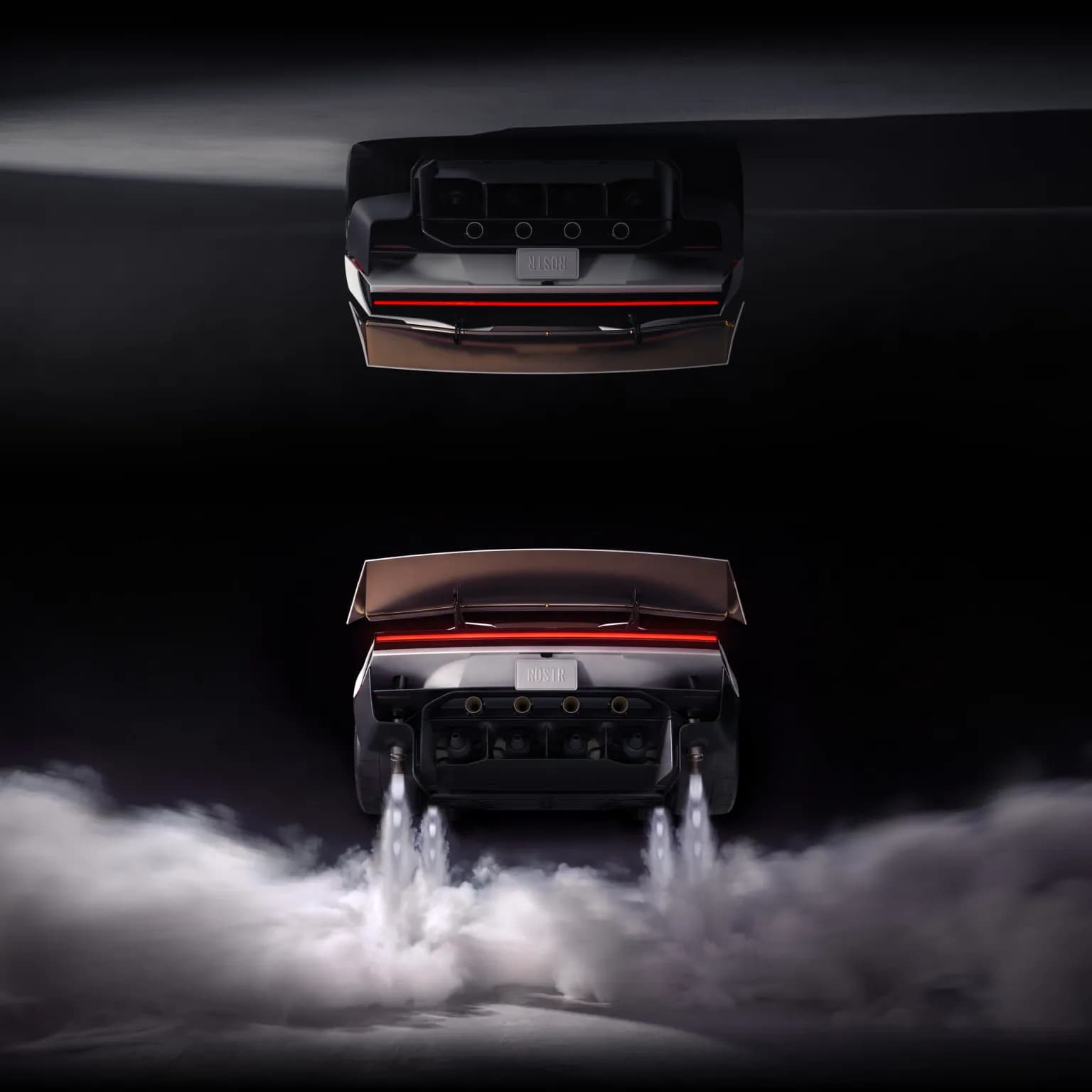
- The Roadster uses compressed air from tanks for short airborne maneuvers and fans for downforce
- Claimed specifications: 1 MW, 150 kWh, 15–85% charge in 10 minutes, at least 480 km of range, over 370 km/h
- Acceleration 0–97 km/h in 0.81 s (Rocket — 0.59 s), g-forces of about 3.4 g and 4.6 g; production — 2028
Pneumatic System and Aerodynamics
According to the Naked Science analysis cited by Kun.uz, the main feature of the new Tesla Roadster, presented on October 15, 2026, is the compressed air system. Air from high-pressure tanks exits through nozzles located at the rear, front, and underside of the car. This allows the vehicle to briefly lift off the ground and perform rotations in the air — this is not about sustained flight, but about short airborne maneuvers. Fans under the floor suck in air and increase downforce, which improves tire grip in corners.
Claimed Technical Specifications
According to the figures given in the publication, the Roadster's total powertrain output is one megawatt, the battery capacity is 150 kilowatt-hours, and charging from 15% to 85% takes 10 minutes. The range on a single charge is at least 480 kilometers, and the top speed is above 370 km/h. The most attention was drawn to the acceleration from zero to 97 km/h in 0.81 seconds; for the Rocket version, a figure of 0.59 seconds is given. The publication emphasizes that these are claims from an article and cannot be equated with results from production cars confirmed by independent testing.
Driver Load and Release Timeline
Such sharp acceleration increases the load on the driver: according to calculations in the article, it is approximately 3.4 g in the standard version and 4.6 g in the Rocket. Therefore, using the car's maximum capabilities may require special training from the driver. Serial production is scheduled for 2028, but questions about the price and approval for public roads remain open. The previously mentioned starting price of $250,000 has not been confirmed as final.
The Author's Critical Assessment
The main point of the Naked Science analysis: even an unusual supercar will not cover Tesla's mass-market needs — such cars are aimed at a narrow circle of buyers, while in the mass segment price, practicality, and new models matter. The author criticizes Tesla for placing high hopes on robotaxis and paying insufficient attention to affordable human-driven platforms. In his assessment, for the widespread adoption of autonomous transport, what matters decisively is not only the car's design but also reliable operation in complex road conditions, the need for remote assistance, and the economic efficiency of the service. The author attributes his sharp conclusions about neural networks and the prospects of robotaxis to his own analytical position.