The key facts
- The US provided funding for the KONA unmanned aircraft under the Operational Energy – Innovation program
- Range of about 1,480 km, payload of 3.8 tons; claimed fuel savings of 30%
- The aircraft is expected to fill the niche between the Cessna C-208 and the C-130, with possible operation from short runways
Funding and Its Goals
The US has allocated funds for the KONA unmanned aircraft project under the Operational Energy – Innovation program. According to Kun.uz, the funding is aimed at moving the project closer to flight testing of a full-scale aircraft and demonstrating its capabilities in military logistics. It is noted that the allocated funds are intended not for purchasing the aircraft, but for its further development and testing.
Purpose of the Aircraft
KONA is viewed as a means of delivering supply cargo between military facilities located far from each other. In particular, the possibility of using the aircraft in conditions of limited fuel refueling is being evaluated.
Design and Fuel Savings
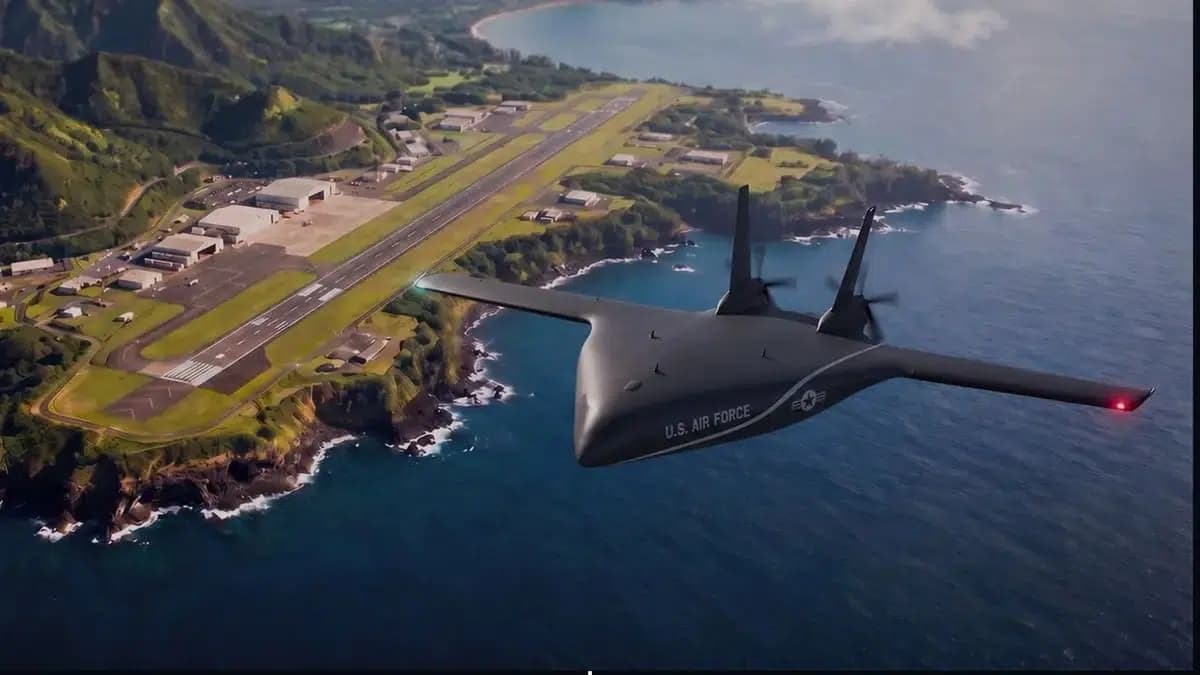
A key feature of the aircraft is the combination of the fuselage and wing into a single aerodynamic structure — in traditional aircraft, separate wings are attached to a tubular fuselage. According to Natilus, the integrated design helps reduce fuel consumption. However, the 30 percent savings is so far a figure claimed by the company, and future tests of the full-scale aircraft will be important for assessing its actual capabilities.
Characteristics and Niche in Logistics
The range of the KONA is expected to be about 1,480 kilometers, with a payload of 3.8 tons, so the aircraft is oriented primarily toward regional cargo transportation. It is expected to fill the niche between the light multipurpose Cessna C-208 and the larger tactical transport C-130.
Operational Capabilities
The project envisions the possibility of using short runways, which may allow KONA to be used at a greater number of airfields and sites. Compatibility with existing cargo infrastructure should facilitate the integration of the aircraft into existing logistics networks. According to the publication, such capabilities could help the US military reduce its dependence on large transport aircraft when supplying remote facilities.