The key facts
- Femmy is an app about reproductive health in Uzbek, Russian and English; more than 100,000 users in more than 20 countries
- The project took first place in the social track of the President Tech Award and received a $100,000 grant from IT Park Uzbekistan
- The team of six is preparing to raise investment from early 2027 and is working on integration with telemedicine and clinics
From a programmer from Andijan to a startup founder
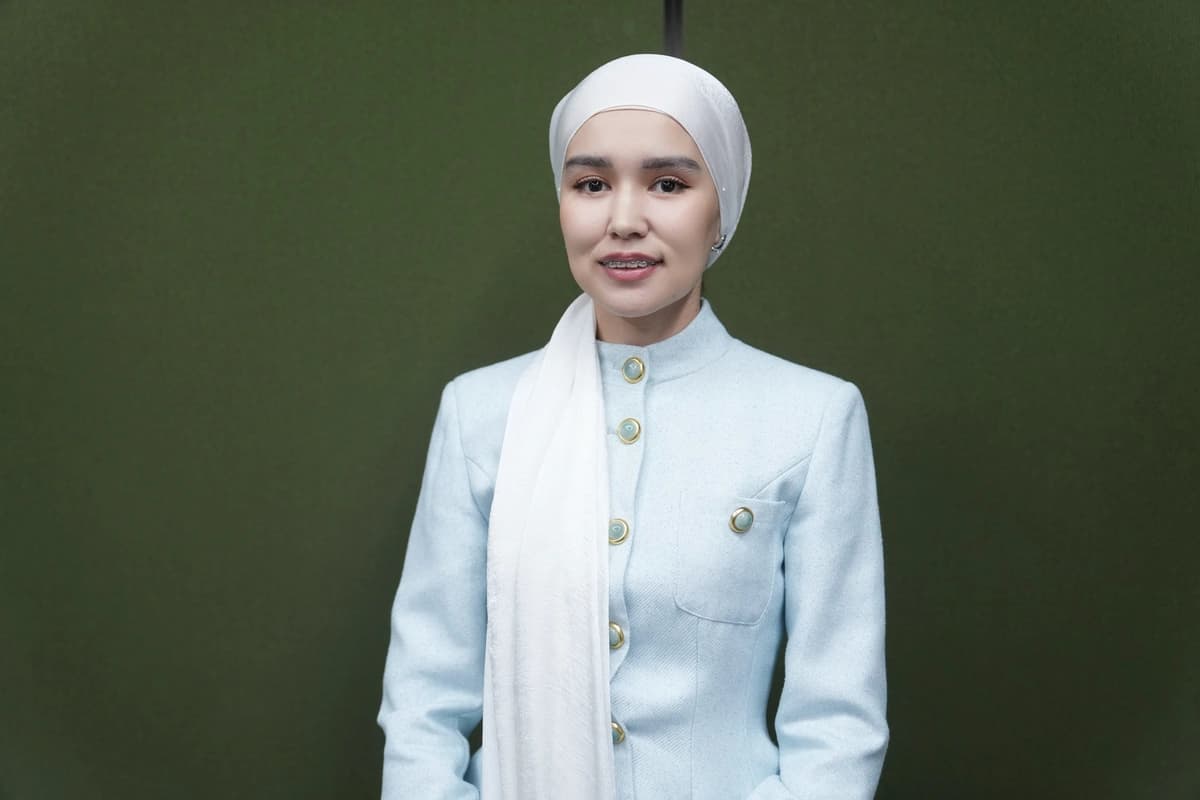
Maftuna Karimova was born in 2002 in the Asaka district of the Andijan region. She studied at boarding school No. 42 with advanced language instruction, then in the business administration program at the International University of Uzbekistan. She learned programming at school on her own, mainly through YouTube and other sources. In the late 2010s, when Digital City opened in Andijan, she found a local programmer through Facebook, came to study at his company, completed a test assignment and was hired immediately. By the time she entered university she was already working as a programmer, and by graduation she had four years of experience, including remotely for Tashkent outsourcing companies. In her fourth year, she taught programming for a year at an IT training center in Andijan. According to her, of the two development paths — engineering and management — she chose management, which later led her to startups.
The idea for Femmy was born from the experience of motherhood
After graduating from university, Karimova married at 21. The impetus for creating Femmy was the period of planning a child and pregnancy: the topics were new to her, there were no older sisters to turn to for advice, and discussing them in detail over the phone was uncomfortable. She searched for information herself, followed blogs about women’s health, and realized that there was a big gap in this field in Uzbekistan. For a UX/UI design course assignment — to choose a familiar problem and study how people encounter it — she chose the topic of women’s health. Initially, Femmy was conceived as a kind of encyclopedia: the goal was to present information clearly in the Uzbek language for women facing a language barrier. Materials translated from English platforms she published after consultations with gynecologists, whom she paid for consultations and asked to spend part of their time reviewing the materials.
Development with a baby in her arms
The decision to create the platform came in the last months of pregnancy: she prepared the design by the time of the birth, and development began after returning from the maternity hospital. Karimova herself is a web developer; she participated in the app’s architecture but relied on the team for development. At first, four female programmers worked with her; later men joined; now the team has six people. While the app was not ready, the team met once a week, and in the early stages the programmers worked without pay, believing in the idea. There was no one to help with the child — she took the baby with her to meetings in a newborn bassinet. According to her, the development itself did not cause difficulties; it turned out harder to run the project, sales and monetization — areas unfamiliar to her. She combined work with childcare, using the baby’s daytime sleep for content: studying topics, translating articles and having them checked by experts.
Localization for culture and language
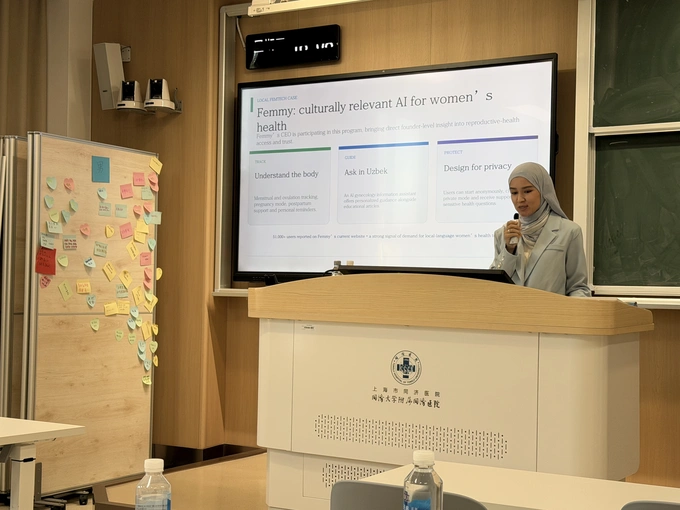
One of the first test users was Karimova’s mother, as well as the wife of her younger uncle, who had previously used an English-language pregnancy app. Because of not knowing the language, she decided that the fetus, whose size was compared to a fruit, needed to be “eaten.” According to Karimova, there are strong apps in the world, but they do not always match the lifestyle of women in Uzbekistan and Central Asia, so Femmy emphasizes not only language but also adaptation to the cultural environment. In the app, the user selects her state — menstrual cycle, pregnancy, postpartum recovery or menopause — and receives relevant information. There is a cycle and symptom diary, articles and an AI chatbot.
The path to the grant and difficulties after the victory
While looking for investment, Karimova visited many places, and the phrase “There are many such apps in the world, one more is not needed” almost broke her. The last competition before the President Tech Award was Clash of Startups within ICT WEEK 2025, where she took third place; foreign judges showed interest in the product’s localization. Then in the President Tech Award competition, established at the initiative of the President of Uzbekistan with the support of IT Park Uzbekistan, Femmy took first place in the social track and received a $100,000 grant. However, according to the founder, one of the hardest periods began precisely after the victory: Plug and Play experts set annual KPIs, and the grant was issued in stages — first $50,000, then $25,000 each after meeting the targets for two six-month periods. The first stage was completed with difficulty. Now the team is fulfilling the tasks of the second period, lives on grant funds and plans to begin raising investment from early 2027. She notes that the market is still young: the habit of paying for an app subscription among women has not formed.
Users, the Ministry of Health and plans
Motivation during periods of failed investment attempts came from messages from users: some wrote simply to thank her for the app in the Uzbek language. Karimova recalls a 14-year-old girl who could not discuss these topics with her family and learned a lot about her body through the articles, and a woman who lost a child in a previous pregnancy and used Femmy throughout the next one. After the President Tech Award, the project was connected with the Ministry of Health: the app was reviewed, parts that, as was said, did not correspond to the cultural environment were removed, and cooperation with the agency is now underway. According to Karimova, Femmy is used by more than 100,000 girls and women in more than 20 countries — the project officially operates not in all of them; people download the app wherever they are located. In addition to Uzbekistan, there are users in Germany, Kyrgyzstan, Kazakhstan, the USA, China and Tajikistan. The team is working on integration with telemedicine and clinics — online consultations with a doctor by call or video — and on a reports feature based on cycle and symptom records for doctor visits.