The key facts
- Workers at Micron's Taichung plant began a strike on October 22 after failed negotiations on profit sharing
- The union demanded a bonus of 83 monthly salaries and quarterly distribution of 15% of operating profit
- Micron and the union of the plant in Taichung signed a separate agreement, which drew condemnation from the Taichung union
Strike at the Taichung Plant
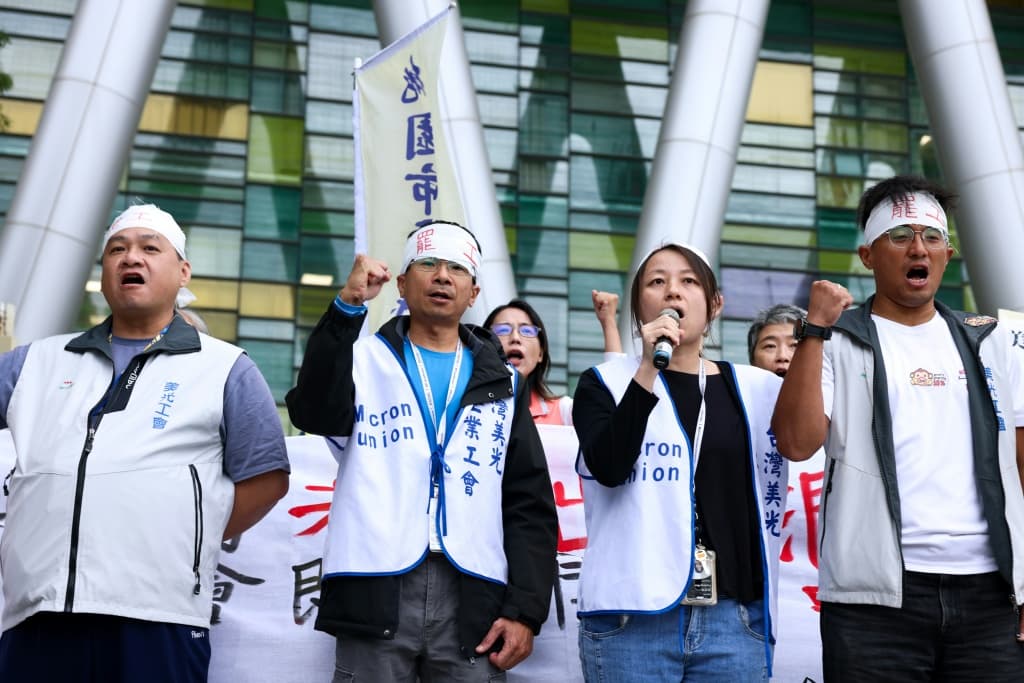
On Thursday, October 22, part of the workers at Micron Technology's plant in Taichung, Taiwan, began a strike after the union and the American chipmaker failed to agree on employees' demands for a larger share of company profits, a union representative said. Five strikers gathered outside the plant while the company held a conference call with hundreds of other employees at the site. A banner outside the plant read that Micron had not offered a profit-sharing scheme and that the Taichung union was immediately beginning a strike. According to AFP, more than 2,000 employees of the Taichung plant planned to stop work that day.
Union Demands
The unions sought a one-time payment equal to 83 monthly salaries, as well as a permanent system under which 15% of the company's operating profit would be distributed to employees as bonuses quarterly rather than annually. Last month, Micron announced a payment to employees equivalent to up to 68 monthly salaries, but the one-time payment was rejected. Taichung union chairman Jerry Lin said negotiations at the Taichung city government on October 21 did not lead to consensus, but dialogue would continue on Friday. “If you give up — that's when the game is lost,” he said. Another union figure, Wei Yu-ling, warned that more workers could join the strike if the company does not present a “sincere proposal.”
Conflict Over the Taichung Agreement
The strike was supposed to coincide with mediation talks between Micron and the union of the company's larger plant in Taichung. However, on Wednesday Micron and the Taichung union announced in a joint statement that they had “reached consensus on a number of issues and officially signed a labor agreement.” Micron Taiwan chairman Lu Dong-hui said on Thursday that the company had agreed to switch to a system of quarterly profit-based bonuses and to increase pension contributions. He called the strike decision “sad,” but stressed that the company is “fully committed to continuing sincere communications.” Jerry Lin, however, condemned the unilateral agreement with the Taichung union, saying the views of Taichung workers had not been properly taken into account, and called on the company to disclose details it had refused to disclose, citing a confidentiality agreement.
Context and Workers' Reaction
The dispute is taking place against the backdrop of rising revenues for chipmakers thanks to enormous global demand for microchips for AI data centers, which is prompting workers to demand a larger share of profits. AFP notes that the Micron conflict follows recent labor disputes in South Korea, where Samsung Electronics averted a strike by agreeing to distribute bonuses equal to 10.5% of operating profit among semiconductor division employees. Engineer Xu Feng-ting, who has 26 years of experience at Micron, said she is “quite disappointed” by the company's lack of response to employees' demands and considers it wrong that the agreement was signed only with the Taichung union and under a confidentiality agreement. After meeting with Micron on Thursday, Taichung workers are to voice whether they support the company's proposal, according to union documents seen by AFP.