The key facts
- A recent strike with three aerial bombs on a residential quarter of Sloviansk wounded seven people; then a aid center and the Red Cross were attacked, eight wounded.
- Of about 100,000 residents of the city, around 20,000 remain, mostly elderly; public transport has been halted after an attack on two buses in Kramatorsk that killed 30 people.
- Many refuse to evacuate because animals cannot be taken along, and renting housing (up to €400) is unaffordable on a pension of about €67.
Strikes on residential quarters and an aid center
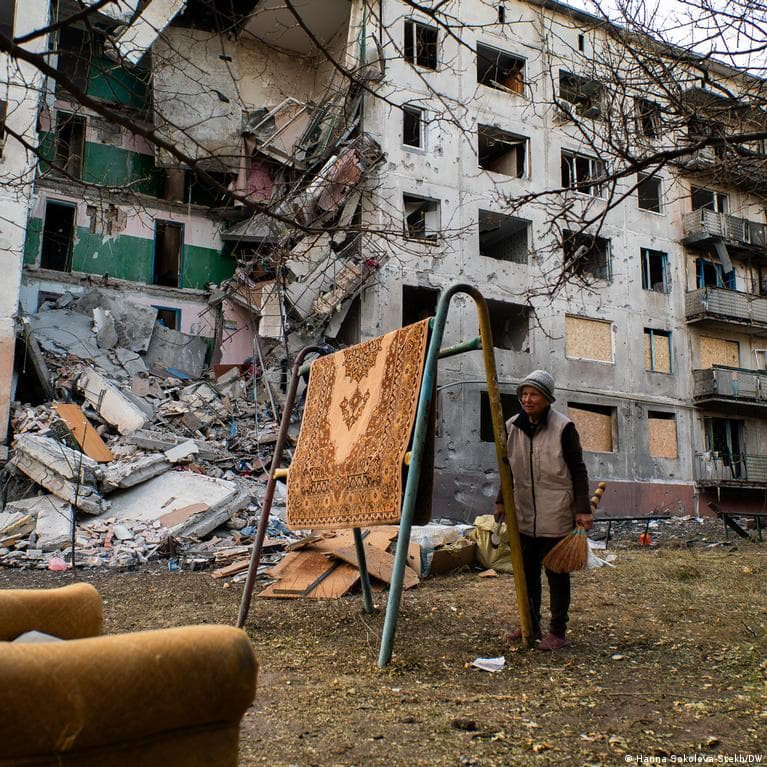
A few days ago, three Russian aerial bombs hit a residential quarter on the outskirts of Sloviansk. One of them struck a five-story building, and seven people were injured. A few days later, while the remaining residents were clearing the rubble, a new strike was carried out — on the building housing the state emergency aid center and the Red Cross; eight people were wounded. Sloviansk, together with neighboring Kramatorsk, is one of the last major cities of Donetsk region under Ukrainian control, and since summer it has become a combat zone.
Why people are not leaving
Retiree Tetiana, whose home was damaged in the strike, refused evacuation: renting housing can cost up to €400 per month, while her pension is about €67 and relocation assistance is roughly €40. 'I cannot live on that. Nowhere!' she told DW. Her neighborhood still has electricity and water, but gas is cut off. Another retiree, Natalia, cares for her bedridden twin sister and also cannot leave: animals are forbidden to be taken during evacuation, and both women have dogs. 'I cannot abandon my sister,' she says.
A city where life has almost stopped
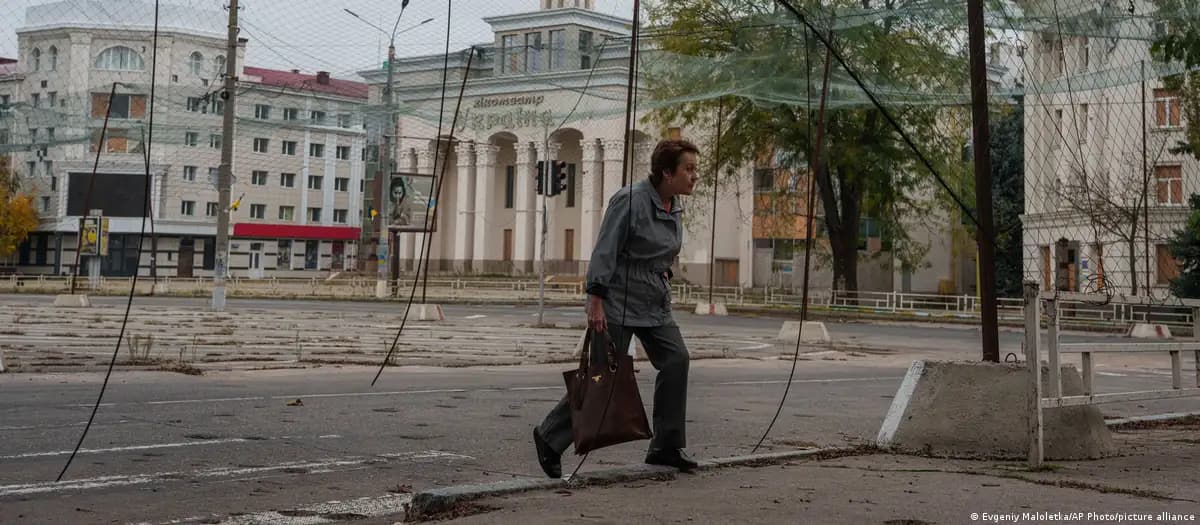
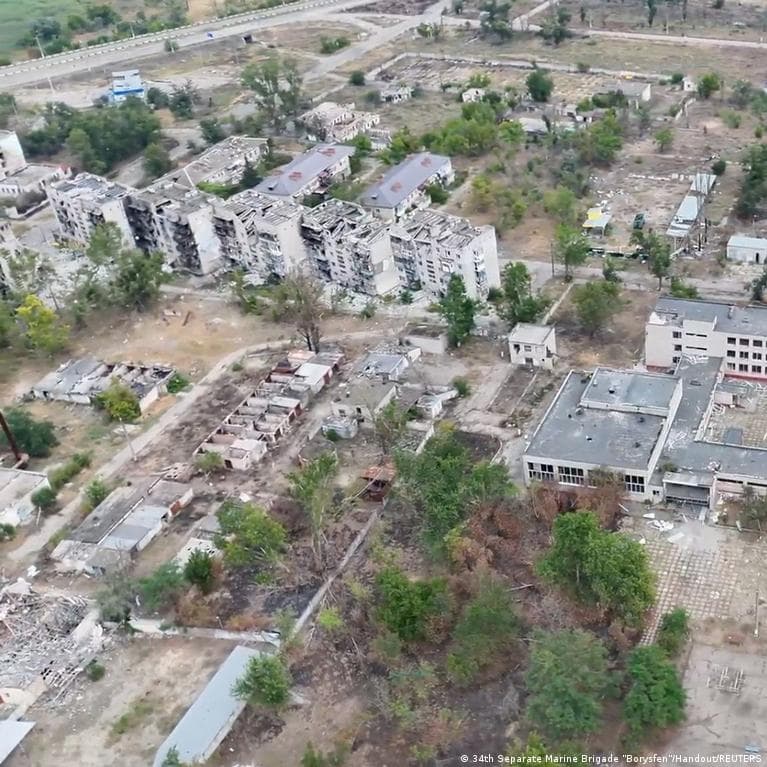
The center of Sloviansk is heavily damaged, there are few people on the streets, and only a few shops are open. Of the roughly 100,000 residents, about 20,000 remain — mostly elderly people who cannot leave. Public transport has been halted after the attack on two buses in Kramatorsk, in which 30 people were killed. Bread at the market is not available every day; a few weeks ago Russian drones attacked the central market, at least three people were injured, after which there were fewer sellers and buyers.
'We are used to living under fire'
Retiree Vasyl from the village of Maiaky, who came to the city center, told DW: 'We are already used to living under fire. But it is a bad habit. We should have gotten rid of it long ago.' He wants peace but rejects Russian President Vladimir Putin's demand to hand over to Moscow the part of Donetsk region controlled by Ukraine. Retiree Iryna said she does not remember the last time she slept through the night: 'We can only hide, trembling, and pray to God that everything will be okay.'
Families at the market and evacuation plans
Valeriia, who sells women's underwear, has to take her five-year-old daughter Sofiia with her, as kindergartens are closed; their neighborhood is not yet subject to the mandatory evacuation of families with children. The family already evacuated in 2022 but returned, and now they are waiting for a new evacuation. Nearby, trader Tetiana looks after her six-year-old granddaughter Anya, whose mother is a servicewoman defending her hometown. Tetiana is sending belongings to Dnipropetrovsk region while the post office still works, and she hopes to return one day.
Fear of repeating Bakhmut's fate
Tetiana recalls Bakhmut, located about 50 km from Sloviansk and taken under the control of Russian forces in 2023 after months of heavy fighting: 'Look at Bakhmut. There are no houses left there.' She hopes the Ukrainian military will hold the cities and believes Russia must leave Ukrainian territory. 'Putin does not want a ceasefire. And our young generation will ask us what we were even fighting for,' she said. Drones hum over the city: 'It is hard for our guys to shoot them down. But they are doing everything possible.'