The key facts
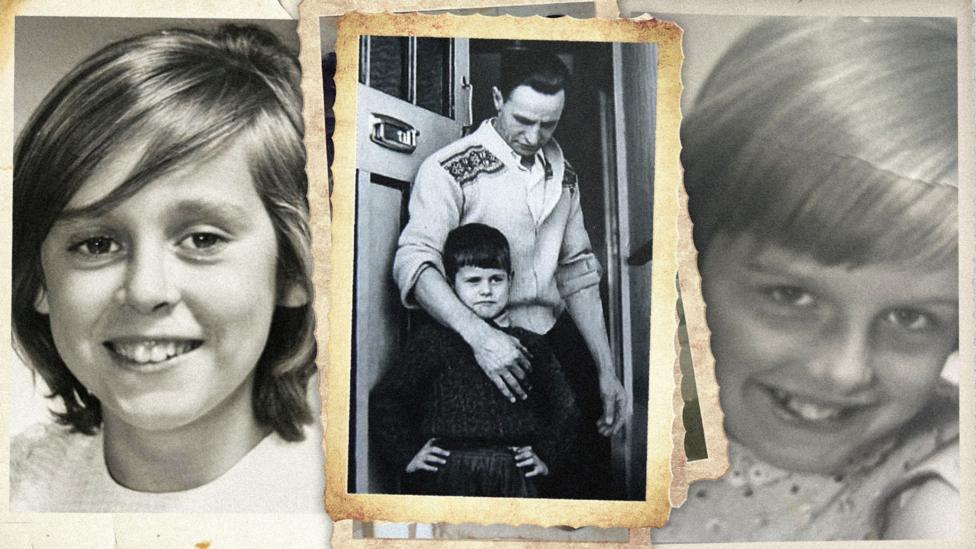
- On 21 October 1966, a coal waste landslide engulfed Pantglas school in Aberfan: 116 children and 28 adults were killed.
- King Charles III called the tragedy 'the most tragic day imaginable' and honoured the strength and resilience of the community.
- A 1967 inquiry placed responsibility on the National Coal Board, but no one was prosecuted.
The Royal Family honoured the memory of those killed in Aberfan
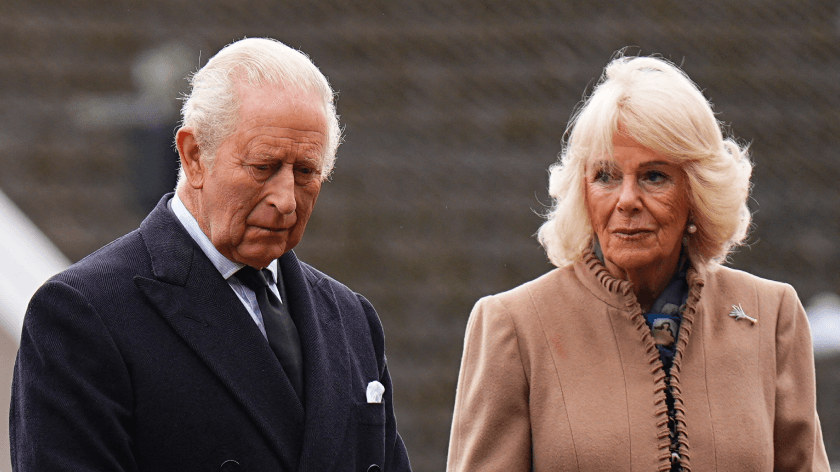
On the 60th anniversary of the Aberfan disaster, King Charles III, Queen Camilla and the Prince of Wales, William, joined survivors and the families of the victims. In the memorial garden, located on the site of the school, they laid wreaths and a bouquet together with the last surviving teacher. First Minister Eluned Morgan also greeted those gathered in Aberfan; flowers were chosen for the wreaths that the victims of the tragedy might have seen in their gardens.
What happened on 21 October 1966
On 21 October 1966, a tip at the Merthyr Vale Colliery collapsed, and around 150,000 tonnes of coal waste engulfed the village of Aberfan near Merthyr Tydfil in south Wales, burying Pantglas Junior School and several neighbouring houses. 116 children and 28 adults were killed — about half of the school's pupils. Emergency services, miners and local residents carried out a round-the-clock effort to dig through the debris in search of those trapped beneath it.
Responsibility and injustice
The official inquiry of 1967 established the responsibility of the National Coal Board, yet no one was held criminally liable. Survivors and the families of the victims point to a series of injustices: money was taken from a public charitable fund for the victims to remove the remaining tips, compensation was limited, survivors underwent repeated assessments, and support in dealing with trauma was minimal. Professor Iain McLean, co-author of the book 'Aberfan — Government and Disaster', said on BBC Radio Wales that the government of the time's refusal to dismiss Lord Robens and his senior directors was incomprehensible. Robens, chairman of the National Coal Board, had previously received numerous complaints about the danger of the tips, including a petition from Pantglas school in 1963 — three years before the tragedy. According to McLean, in 1997 three barristers from the 1967 tribunal explained to him that the absence of prosecution was because 'nobody thought of it at the time'.
The King's speech and the words of survivors
At the Aberfan and Merthyr Vale community centre, King Charles said that the disaster 'was and always will be the saddest and most tragic day imaginable'. He noted that it had been deeply moving to hear the testimonies of survivors, relatives of the victims and rescuers, and added: 'Your unconquerable spirit shines the brighter for the darkness it has overcome'. Jeff Edwards, an eight-year-old pupil who survived the disaster, said in his speech that 21 October 1966 'is forever etched in our memory — a day of unthinkable tragedy and loss that forever changed the lives of families and the community', and noted that the presence of members of the Royal Family in those difficult years became a valuable part of Aberfan's history.
The memorial tree at Ynysowen school
Prince William also visited Ynysowen Community Primary School, built as a continuation of the legacy of Pantglas, where he unveiled the sculpture 'The Aberfan Memorial Tree', created by the family-run company ArtMetal from Rhayader in Powys. The concept was developed by the school's headteacher, Siân Roden, and Edwards, deputy chair of the school's board of governors; at an early stage, pupils took part in the design, sharing drawings and ideas. The Prince listened to the children's poems about the disaster and recordings of survivors' recollections, praised them with the words 'Well done, guys', and remarked that this shows the next generation cares about the victims, and that this matters. Before the unveiling of the sculpture, pupils performed the Aberfan Song and the children's song Everyone Belongs.
A minute's silence and the ringing of bells
On Friday morning at 09:15 British time — the moment when the coal waste engulfed the village — a minute's silence was observed, and church bells rang 144 times — one for each child and adult who died. Pupils of Ynysowen school also gathered to honour the memory of the victims.
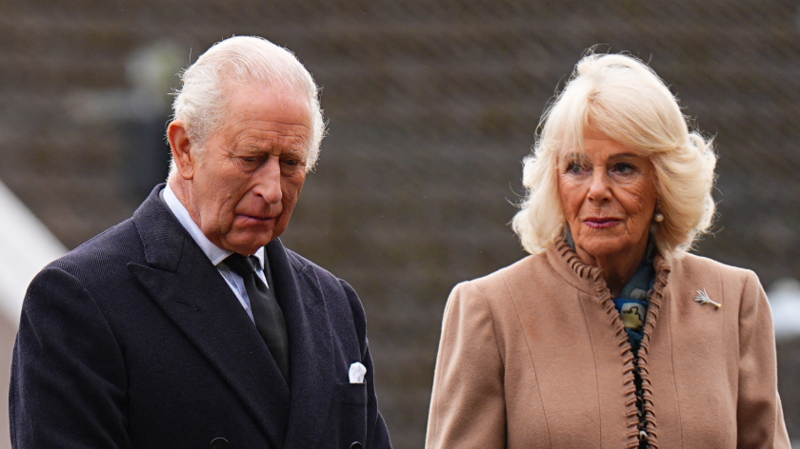 Image source, Getty Images
King Charles paid tribute to the Aberfan community's strength, resilience and
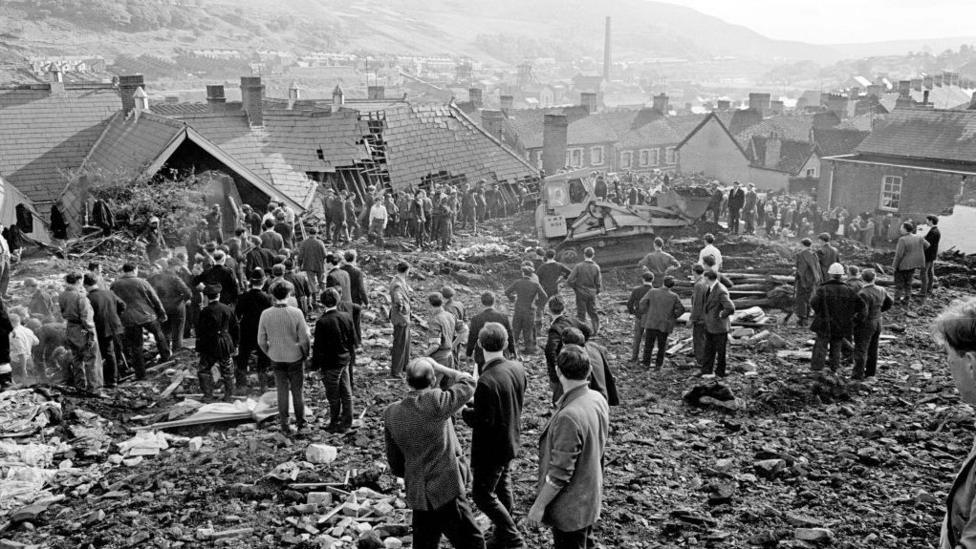 Image source, Getty Images
Coal slurry crashed into Pantglas Junior School in Aberfan when a colliery waste tip collapsed in 1966
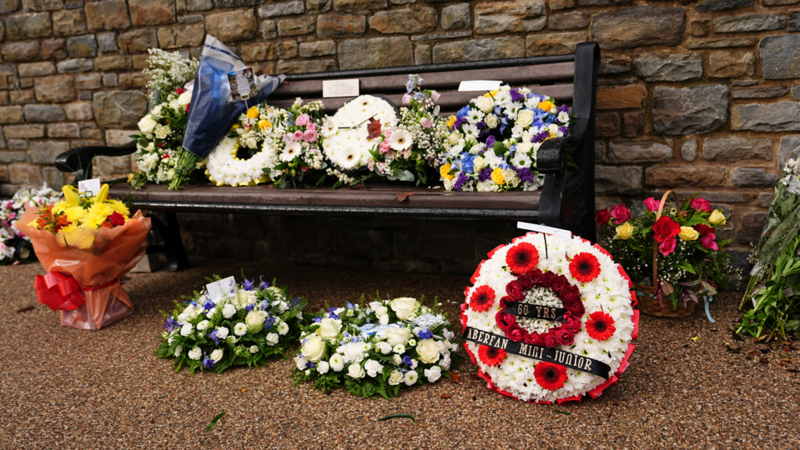 Image source, Press Association
Flowers that Aberfan victims would have seen in their gardens were chosen for wreaths to be laid at the memorial garden
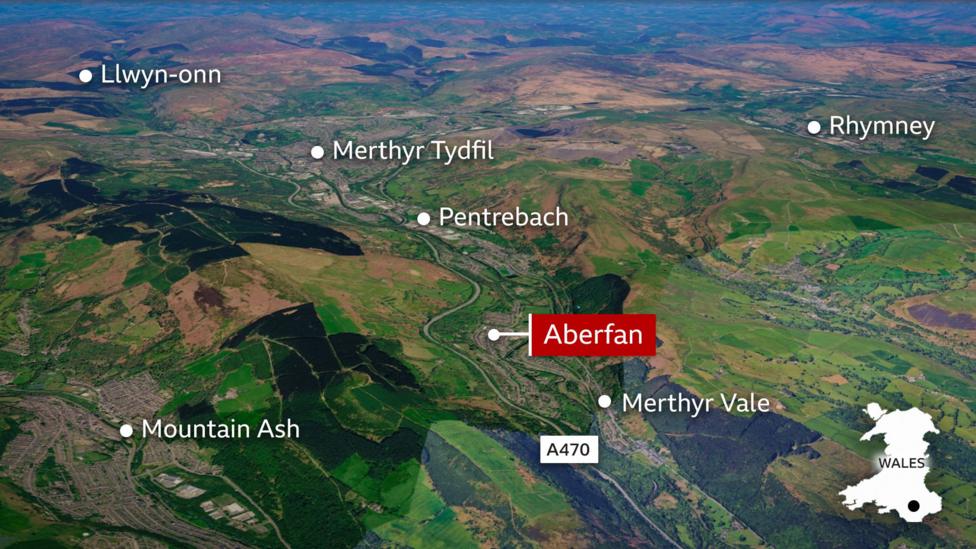
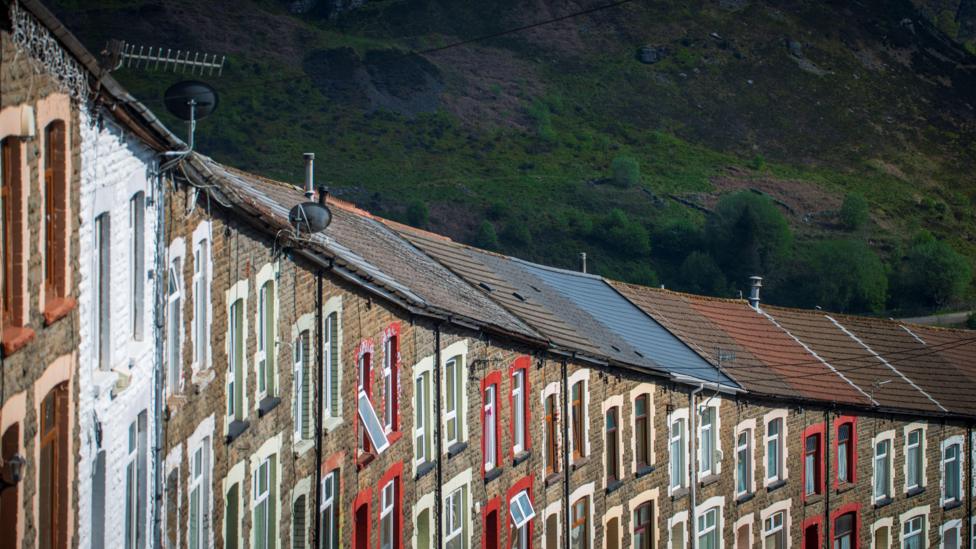
Aberfan is a former mining village just like countless others across the south Wales coalfield area
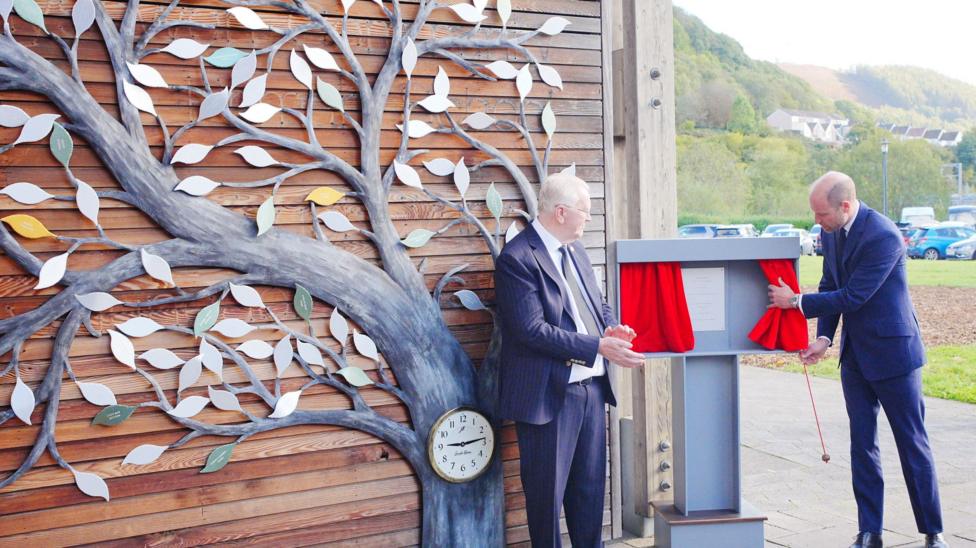 Image source, Reuters
Prince William revealed a plaque during his visit to Ynysowen Community Primary School to unveil the Aberfan Memorial Tree