The key facts
- India is the partner country of SIAL Paris 2026 (17–21 October, Paris), with more than 140 exporters in the pavilion
- The UN declared 2026 the International Year of the Woman Farmer; an example is drone pilot Priyanka Mohite from Nashik
- The EU–India free trade agreement was concluded in January 2026 and is expected to be signed by the end of the year
India is the partner country of the SIAL Paris 2026 trade fair
From 17 to 21 October 2026, the SIAL Paris 2026 food trade fair was held at Paris Nord Villepinte, where India acted as the partner country. The pavilion, named 'Feeding Our Tomorrow', was organised by the India Trade Promotion Organisation (ITPO); it featured more than 140 Indian exporters, hosted culinary masterclasses and a programme dedicated to plant-based protein, women's farming and rice exports. ITPO Chairman Javed Ashraf spoke at the opening — he previously served as India's ambassador to France and Monaco from 2020 to 2024 and is a recipient of the Legion of Honour. He attended alongside French minister Anne Genevard. Ashraf described India's agrarian transformation, based on small farmers, diversity, sustainability and greater self-sufficiency.
Sustainable agriculture and technology
According to Ashraf, India's agri-sector is moving towards more sustainable and climate-resilient farming with less chemical use and improved traceability. Drones, sensors, artificial intelligence and the Internet of Things help farmers manage water, fertilisers and crop protection more efficiently — an advantage amid increasingly frequent extreme weather events. India already produces grain, fruits, vegetables, dairy, meat and seafood for roughly one-sixth of humanity, and, in Ashraf's view, this productivity combined with sustainable practices is part of the answer to the global challenge of feeding a growing population amid climate change, trade disruptions and inflation.
2026 — the International Year of the Woman Farmer
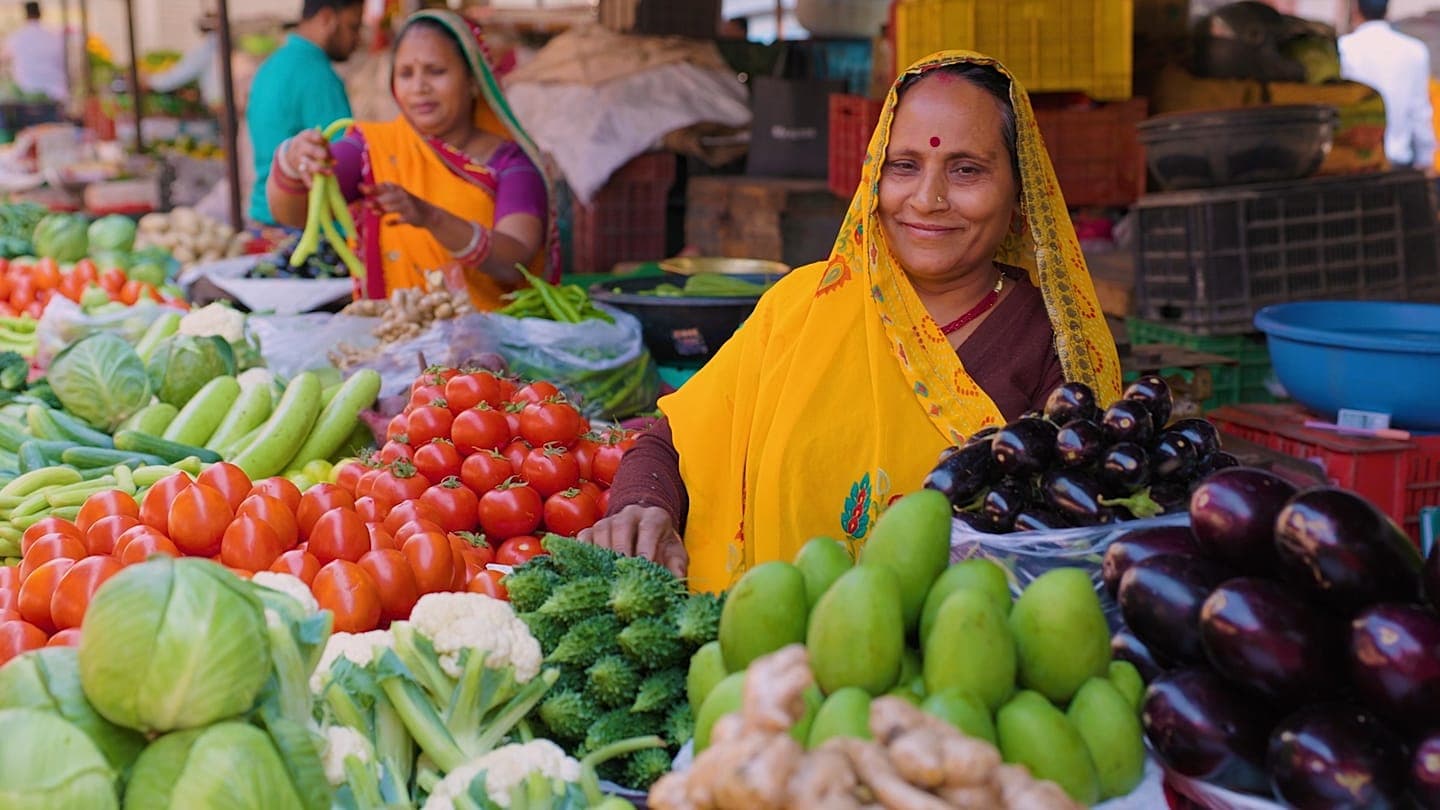
The UN declared 2026 the International Year of the Woman Farmer, and Ashraf used this theme to highlight the role of women in India's agrarian transformation. Many farming and producer organisations are founded and run by women, which raises household incomes and expands women's independence and influence in their communities. One of them came to Paris — Priyanka Rhushikesh Mohite from Nashik (Maharashtra state), a certified agricultural drone pilot. Her husband, an agricultural consultant, told her about the government's Namo Drone Didi Scheme, which trains rural women to operate drones. She completed a month-long training course in Pune and has been flying since August 2024. Her drone sprays nano-fertilisers and scatters seeds: according to her, spraying an acre, which previously took a whole day and about 200 litres of water, now takes seven to eight minutes and requires 10 litres. 'I am a simple housewife,' she said, noting that the profession has given her her own identity, respect in the community and the opportunity to inspire other women. Before 2024 she could not imagine she would travel to Paris, and she thanked ITPO for the opportunity.
The trade agreement with the EU and prospects for cooperation
The free trade agreement (FTA) between the EU and India was concluded in January 2026 and is expected to be signed by the end of the year. It complements India's agreements with the UK and EFTA, which opened access for Indian food products through zero or reduced tariffs. Ashraf believes the benefits can reach farmers and small and medium-sized enterprises if they meet market requirements and reach European buyers. European Commission President Ursula von der Leyen called the agreement 'the mother of all deals'. In Ashraf's assessment, this is a partnership of economies representing about two billion people, with democracy and the rule of law as a common foundation. Cooperation could cover artificial intelligence, data centre equipment, clean energy, green mobility, biopharmaceuticals, critical minerals, digital technologies, defence, education and science; in the field of energy security he sees potential in nuclear power. According to him, India's trade with Europe has almost doubled over the decade, with exports growing by more than 100% (led by electronics, machinery, electrical goods and mobile phones), while European investment in India has grown from 80 to 140 billion over four years. In France, bilateral trade in goods amounted to about €13.6 billion in 2025–26, and 38 companies from the CAC 40 index operate in India. 'The FTA is a tool,' Ashraf noted: it is now up to exporters and trade agencies to turn it into real business.
From commodities to brands
For food exporters, in Ashraf's view, it is important to go beyond volume and price: to build a recognisable presence in Europe, understand European standards, strengthen logistics and create products that stand out on the shelf. At SIAL, the emphasis was on packaged, ready-to-eat and premium products with traceability and geographical indication tags — for example, naga chilli and Mithila makhana (edible fox nut seeds). ITPO is also considering opening offices in several European cities, with Frankfurt, Paris, Milan and Rotterdam among the options. Mohite's story, according to Euronews, shows how technology is changing lives: the drone has become for her not only a work tool, but also a profession and a public platform. The task for India is to make such progress widespread and to strengthen the position of its food producers in European markets.