The key facts
- Moona launched online in July 2023, and the physical store in Boulevard Tashkent City opened in February 2024; initial investments were about 10 billion soums (~$850 thousand at the 2023 exchange rate)
- The space now hosts 27 niche brands (8 at launch), the average check is about $1,100, with prices from $50 to $2,000
- About 80% of customers are local residents; the main promotion channels are Instagram, mailings and word of mouth, with almost no mass advertising used
From Moscow to Tashkent: the project's origins
Saida Azim moved from Moscow to Tashkent at the end of 2022. She graduated from the law faculty of Moscow State University and worked for two years in the commercial department of the construction company Capital Group, with no experience in the fashion industry. Deciding to become an entrepreneur, she set out to bring together in one place niche fashion brands that had previously been practically unavailable in Uzbekistan: many labels are physically present only in America and Europe, and some had never worked with customers from the republic at all. The name Moona, according to her, comes from an Arabic word meaning 'dream' and 'goal', and echoes the English word 'moon'. Her sister Aziza Azim, who worked in the fashion industry and studied in New York, played a major role in the project: she helped with PR and developed the intricate design of the space.
Launch and first sales
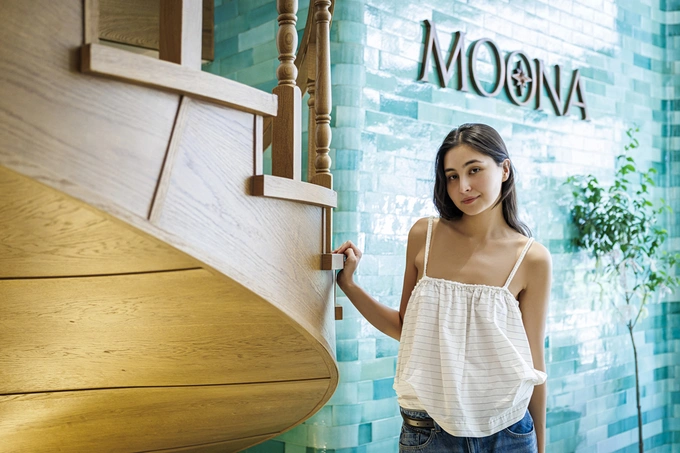
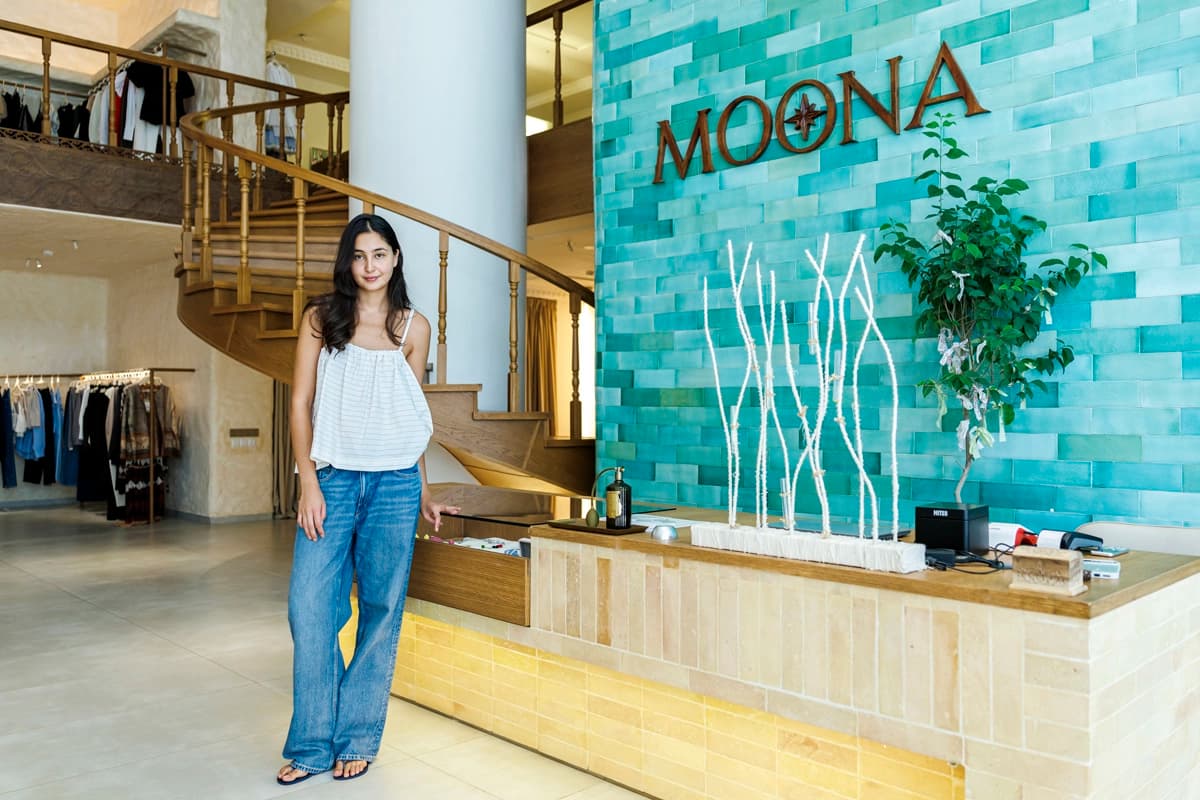
Saida made her first purchases back in 2022. The online store started operating in July 2023, and the physical space opened in February 2024 in Boulevard Tashkent City. The entire launch took more than a year and a half, with about a year spent on creating the space. About 10 billion soums (about $850 thousand at the 2023 exchange rate) were invested in the project at the start — private capital on the terms of personal responsibility for repayment. Since the opening in Tashkent was delayed, in October 2023 the team held an intimate pop-up in Moscow, which became their first experience of working with customers. The project's first slogan was 'Moona — a refuge for modern princesses'. Among the difficulties of the launch, Saida highlighted the construction: the warm tone of the lighting had to be sourced and brought from abroad, while the ceramic wall without sharp corners was made by a local craftsman, a student of the renowned ceramics master Akbar Rakhimov.
Assortment and work with brands
At the start, the space had about 8 brands; now there are 27, from the American Sandy Liang to the Lebanese Renaissance Renaissance. Saida travels to Paris for buying trips about four times a year, and after Moona gained recognition, brands often offer collaboration themselves. According to her, she does not feel any bias due to the location in Uzbekistan: for brands, the business side matters, and the local market is interesting as a new territory. Among the most popular labels she named J.Kim, INTO THE EAST, Bernadette and AZI Land. The only brand with Uzbek roots is J.Kim, but it is purchased in Paris. She does not plan to constantly expand the line of local brands, allowing only pop-ups and collaborations. The assortment is updated approximately every month; older collections remain on the website in the 'Archive' section at a reduced price, but without the words 'discount' and 'sale'. The team deliberately does not add mass-market brands.
Economics: check, logistics and seasonality
The store and the café exist as two separate, independently profitable directions. The business quickly moved to a model that covers its own operational needs. The largest expenses are purchasing goods, customs clearance and logistics, with logistics remaining the most difficult part: high transportation costs and delivery times freeze money. The assortment is gathered from all over the world — from America and Europe to China and Korea. The exchange rate also creates difficulties: Saida fundamentally adheres to the prices recommended by the brands and does not make extra markups. The average check is now about $1.1 thousand, with prices starting at $50 and reaching $2 thousand. The recently introduced Korean brand Dunst, with prices up to $200, showed good dynamics — the collection almost completely sold out. Home goods and perfumery (Cire Trudon, Dr. Vranjes) are in high demand: only 7 items remain from a recent batch of 100. The peak sales month is May, with activity growth starting in March.
Audience, café and promotion
In the first two years, the ratio of local customers to tourists was roughly 50/50; now about 80% are local residents and 20% are tourists. The audience spans all ages: people come as families, from young girls to grandmothers. The café at the store appeared as an addition: a head barista and mixologist built up its operation. Drink prices range from 25 to 60 thousand soums; the café and the store work as cross-marketing, and the coffee shop has its own regular audience. Offline sales are significantly higher than online: according to Saida, there is not yet high trust in local online purchases in Uzbekistan, although the website delivers orders worldwide, including Australia. The project hardly uses mass paid advertising; the main channels are Instagram, mailings via Telegram and email, and in Tashkent, according to the founder, word of mouth works best.
Pop-ups and plans
The team has been holding pop-ups in Moscow for about three years, roughly twice a year; in Tashkent such events began in the last six months — Rasario, Meowshka and other brands have already come to Moona. Saida sees the main indicator of a pop-up's effectiveness not in sales during the event, but in subsequent purchases. The plans include expanding the line of home goods and launching products under the store's own brand, as well as supporting contemporary artisans of Uzbekistan (the website already features a selection of their works, including a box shaped like the Chorsu dome and author's combs). Within the next five years, the founder envisions a new location of the project in another country, the development of the coffee direction into a chain, and turning the online store into the main e-commerce destination for conceptual fashion in Central Asia.