The key facts
- Trump demanded that Ukraine stop strikes on Russian refineries; Kyiv agreed on condition of a mirror response from Moscow, the Kremlin refused
- The Ukrainian army's access to Starlink is restricted at speeds above 161 km/h, hampering drone interception
- Patriot interceptor deliveries are delayed; Belgium is blocking the use of ~€180 billion of frozen assets in Euroclear
Accusations against the administration
Retired US Army General Ben Hodges told Euronews that President Donald Trump is deliberately undermining Ukraine's ability to defend itself against Russia, and called the administration's actions 'completely predictable.' 'He never intended to support Ukraine and was going to take the Russian side — all the signs were there,' Hodges said from his home in Frankfurt. In his view, recent US decisions restricting Ukraine's defense are aimed at forcing Kyiv to cede territory in exchange for an end to the war. He recalled that Secretary of State Rubio said in the first weeks of his tenure that Ukraine would have to give up some of its lands, 'as if it were a Manhattan real estate deal.'
Refinery strikes, sanctions and Starlink
Trump demanded that Ukraine stop attacks on Russian diesel refineries. Kyiv said it was ready to agree on condition that Russia stops hitting Ukrainian energy infrastructure; the Kremlin refused. Trump also canceled new bipartisan sanctions under the so-called Lindsey Graham act (tariffs on major buyers of Russian oil) days before they were due to take effect. After that, the Ukrainian army lost full access to the Starlink satellite system owned by Elon Musk but controlled by the US. According to Zelensky, access is restricted at speeds above 161 km/h, which means the military can no longer intercept 'Shahed'-type jet drones. In Brussels, Zelensky called the situation 'painful,' pointing to loss of life caused by the restrictions. Trump also called for elections in Ukraine and Zelensky's replacement, and blamed Ukrainian strikes on refineries for the rise in diesel prices — despite the price spike following US and Israeli attacks on Iran in February, exacerbated by shipping disruptions through the Strait of Hormuz, through which about a fifth of the world's oil passes.
Patriot problems
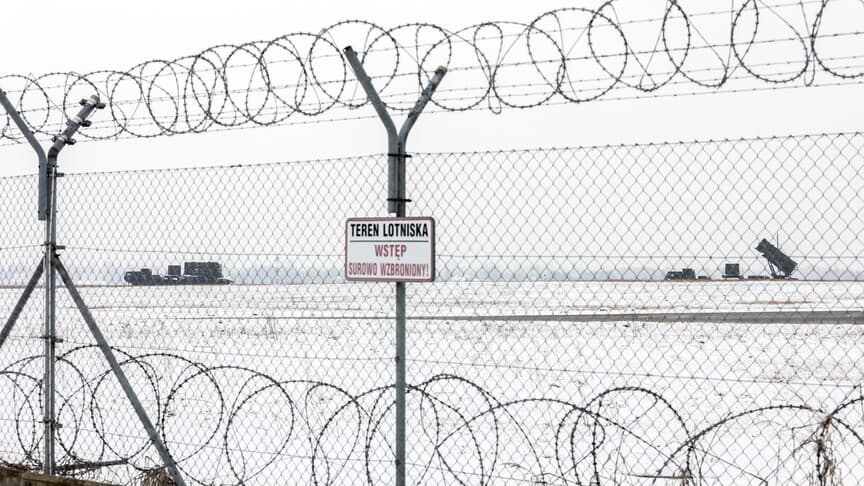
Deliveries of Patriot interceptors funded by European countries under the PURL mechanism (Prioritised Ukraine Requirements List) are complicated by a global shortage of systems: US stockpiles are under pressure due to operations in Iran. A NATO spokesperson confirmed to Euronews that PURL deliveries continue, but declined to comment on the Patriots. Zelensky said on Tuesday that a new missile package 'is still awaiting the signature of Mr. Hegseth,' and European partners are waiting for US approval to transfer interceptors from their own stockpiles. Hodges believes the administration 'will not provide Patriots for anything' and 'is even preventing other countries from supplying them to Kyiv,' and that the actions on Patriots and intelligence are aimed at forcing Ukraine to accept a deal under which Russia keeps what it has seized. Kurt Volker, former US Ambassador to NATO during Trump's first term, noted that what is happening has 'real life-and-death consequences for Ukrainians.'
A call to Europe: a tough line and 'Plan B'
Hodges and Volker believe Europe must respond more decisively to Russia's hybrid aggression, otherwise the Kremlin, confident of Washington's support, will intensify its attacks. NATO countries are facing 'gray zone' incidents — drone incursions, sabotage and arson — but only recently have Germany and Estonia attributed specific episodes to Moscow. Hodges proposed seizing 'shadow fleet' vessels in the Black Sea after each incident, ending the issuance of visas to Russians in the EU, and reconsidering the use of frozen assets. Of approximately €220 billion in frozen assets, about €180 billion are held in Belgium's Euroclear; Belgium opposes their use without guarantees against financial and legal risks. Hodges called Belgium's position — a country hosting NATO and EU headquarters — 'unacceptable.' Volker urged Europe to develop a 'Plan B' for security — possibly a new agreement modeled on the 'coalition of the willing' — to intercept any aircraft or drone illegally entering NATO airspace, hold Russia accountable for civilian casualties, and 'start pushing back against hybrid attacks, otherwise one of them will lead to a major escalation.'