The key facts
- The coalition, created in 2025, has grown to 10 cities: Bishkek, Manas, Isfara, Fergana and Kokand were added.
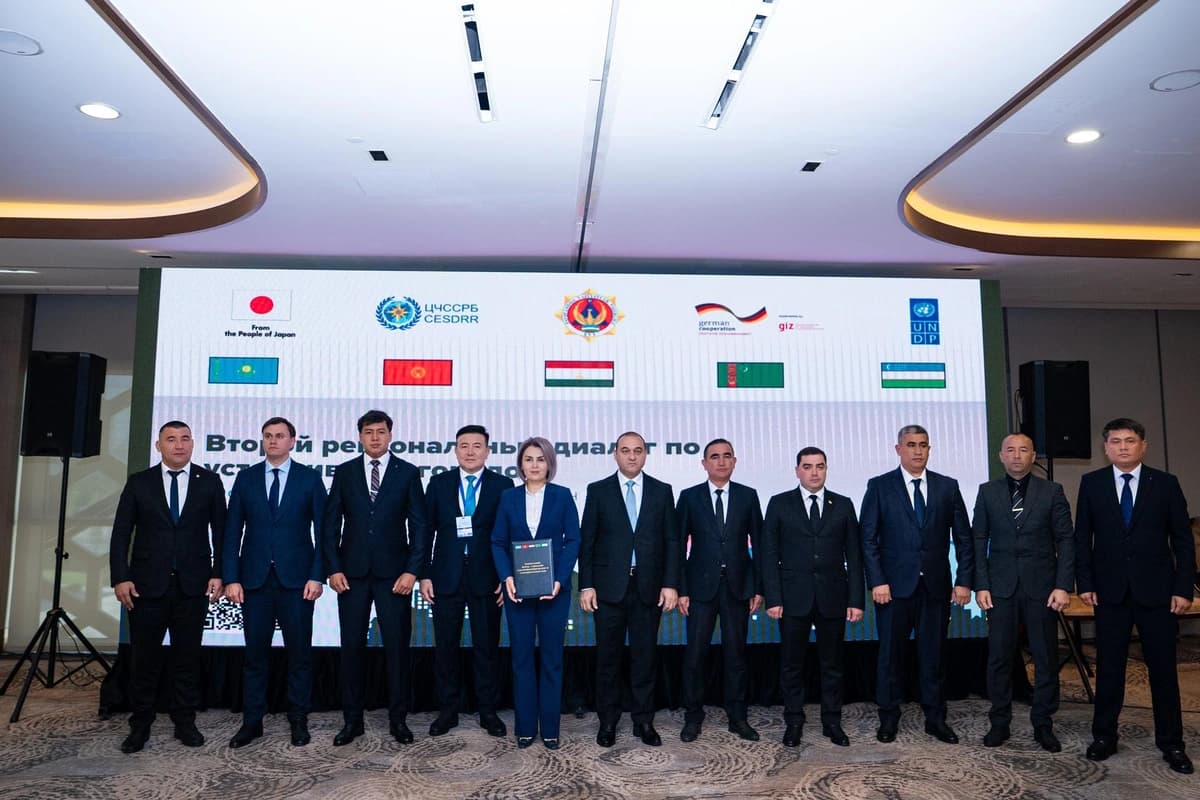
- The second Regional Dialogue was held in Tashkent on 19–20 October with the support of the Government of Japan.
- National seismological institutes signed a memorandum on cooperation in earthquake preparedness.
The coalition has grown to 10 cities
Fergana and Kokand joined Namangan on the list of participants in the Coalition for Urban Sustainability in Central Asia. The total number of cities in the coalition, created in 2025, has reached 10. In addition to the earlier members — Petropavlovsk (Kazakhstan), Osh (Kyrgyzstan), Dushanbe (Tajikistan), Ashgabat (Turkmenistan) and Namangan (Uzbekistan) — Bishkek and Manas (Kyrgyzstan), Isfara (Tajikistan), as well as Fergana and Kokand (Uzbekistan) were added. The announcement was made during the second Regional Dialogue on Urban Sustainability in Tashkent, held on 19–20 October. Its purpose was to discuss strengthening cooperation and supporting local communities in preparing for climate threats and disaster risks.
Organizers and support
The Dialogue was organized by the Ministry of Emergency Situations of Uzbekistan, the Center for Emergency Situations and Disaster Risk Reduction, and the United Nations Development Programme (UNDP). It was held with the support of the Government of Japan within two regional projects: 'Enhancing the resilience of cities to disaster and climate risks in Central Asia' and 'Strengthening the regional disaster risk reduction system in Central Asia'. According to the press office of the UNDP office in Uzbekistan, the coalition allows cities to exchange experience and find practical solutions for preparing for floods, earthquakes and other hazards, as well as to take climate risks into account in long-term development planning. The cities of Osh, Manas, Isfara, Fergana and Kokand are supported within the coalition by GIZ — the German Society for International Cooperation.
Memorandum of seismologists
The national seismological institutes of the countries of the region agreed to strengthen interaction in the field of earthquake preparedness. The memorandum signed at the event creates a basis for exchanging scientific knowledge, improving coordination and helping countries assess and warn about seismic activity risks.
Statements by participants
'Our common goal is safe and sustainable cities and communities,' said Khurshid Sotiev, Deputy Minister of Emergency Situations of Uzbekistan, noting readiness to cooperate with governments, development partners, UN institutions, the scientific community and non-governmental organizations. Akiko Fujii, UNDP Resident Representative in Uzbekistan, emphasized that urban development should take possible risks into account, and every investment in prevention, preparedness and resilient infrastructure saves lives and protects development gains. Kenji Hirata, Ambassador of Japan to Uzbekistan, noted the continuing structural vulnerability of housing stock and infrastructure, urbanization outpacing risk management capacity, and the accelerating consequences of climate change; according to him, Japan continues to share experience, knowledge and resources to support regional and global cooperation on disaster risk reduction.
Dialogue programme
Participants of the dialogue studied the experience of pilot cities supported by UNDP, practical tools for disaster preparedness, as well as Japan's best practices in building safer and more resilient cities.