The key facts
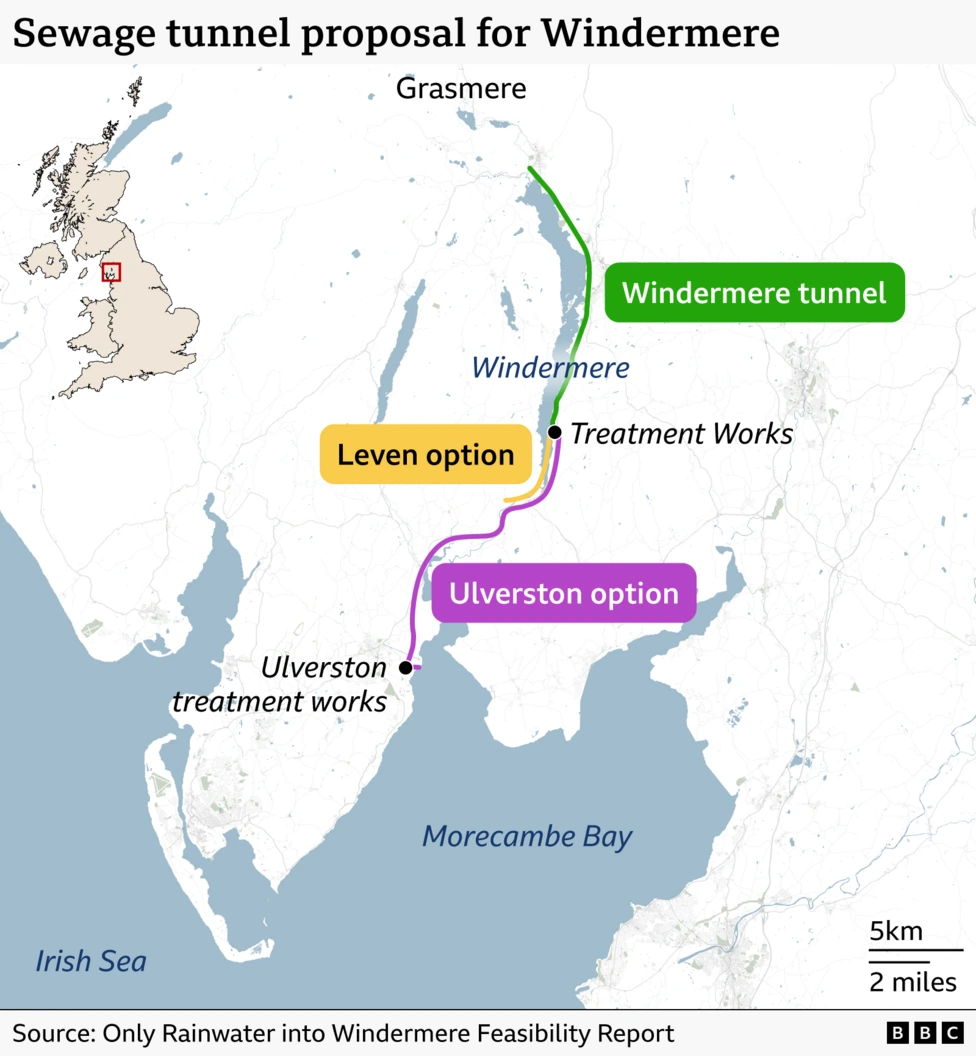
- The £3.6bn ORiW project proposes a tunnel up to 12 miles (19 km) to divert effluent away from Lake Windermere
- Two options: discharge of treated effluent into the River Leven or into the Irish Sea near Ulverston; funding either by United Utilities customers (up to £3.17 a month) or across England (up to 35p a month)
- The government will decide whether the plan is taken forward; Defra said alternative options need further work
'Only Rainwater into Windermere' plan
A £3.6bn proposal has been presented aimed at stopping sewage discharges into Windermere, England's largest lake. The plan, called 'Only Rainwater into Windermere' (ORiW), is backed by water company United Utilities, regulators, local authorities and clean water campaigners. Its core is to be a tunnel 4 m wide and up to 12 miles (19 km) long, diverting effluent away from the lake. At present, both untreated sewage (when treatment works are overloaded, for example during heavy rain) and treated effluent containing high levels of nutrients are discharged into Windermere.
Scale of the problem and the project
The lake holds about 300 billion litres of water, and water takes up to nine months to travel from one end to the other. Over the past five years, a combination of high nutrient levels and warm weather has several times caused algal blooms that turned parts of the lake bright green. The Lake District is a UNESCO World Heritage Site attracting almost 18 million visitors a year. The ORiW project provides for the first-time connection of 12,800 people to the sewerage network, up to 86 miles (138 km) of new infrastructure and a single treatment works at the end of the tunnel. Currently the network around the lake is fragmented: homes are served by public treatment works, private plants and septic tanks.
Two routes and payment options
Two similar options are proposed: in both, the central element is the tunnel, but treated effluent is discharged into the River Leven in one case and into the Irish Sea near Ulverston in the other. The report considers two funding methods: paid for by United Utilities customers — depending on the route this would add up to £3.17 to monthly bills — or by spreading the cost across England, which would increase bills by up to 35p a month. Nigel Wilkinson of the Love Windermere group, linked to local business, believes the lake has national and international significance and should be funded as a national asset.
Reaction and next steps
United Utilities chief executive Louise Beardmore called the proposals 'a 100-year solution for this lake', noting that investment in the UK usually comes in five-year periods, and stressed that a broad coalition of companies, regulators, authorities and environmentalists had come together to develop the plan. Campaigner Matt Stanic, founder of the Save Windermere group, called the proposal 'a milestone' but added that for him it is 'a plan on paper', not final action, and that the end of the story will come only when sewage stops entering the lake. The project's future depends on the government, which must decide whether to take the plan forward and how. In March 2025, then environment secretary Steve Reed promised to end all sewage discharges into Windermere. A spokesperson for the Department for Environment, Food and Rural Affairs (Defra) said it shares the public's determination to protect this iconic lake, while stressing that further work is needed to examine alternative options.
 Image source, Getty Images
Windermere sits at the heart of the iconic Lake District
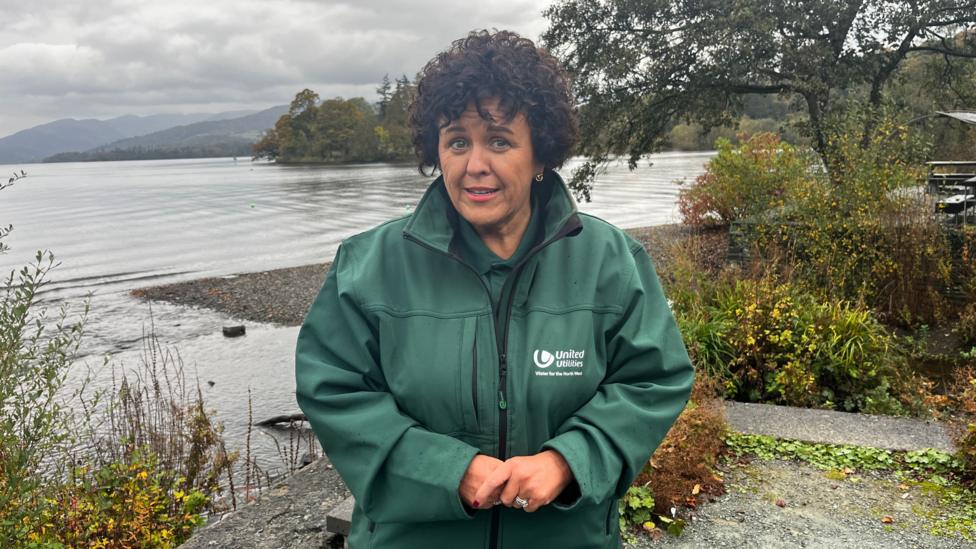
Louise Beardmore, chief executive of United Utilities, says its time to think about the long term
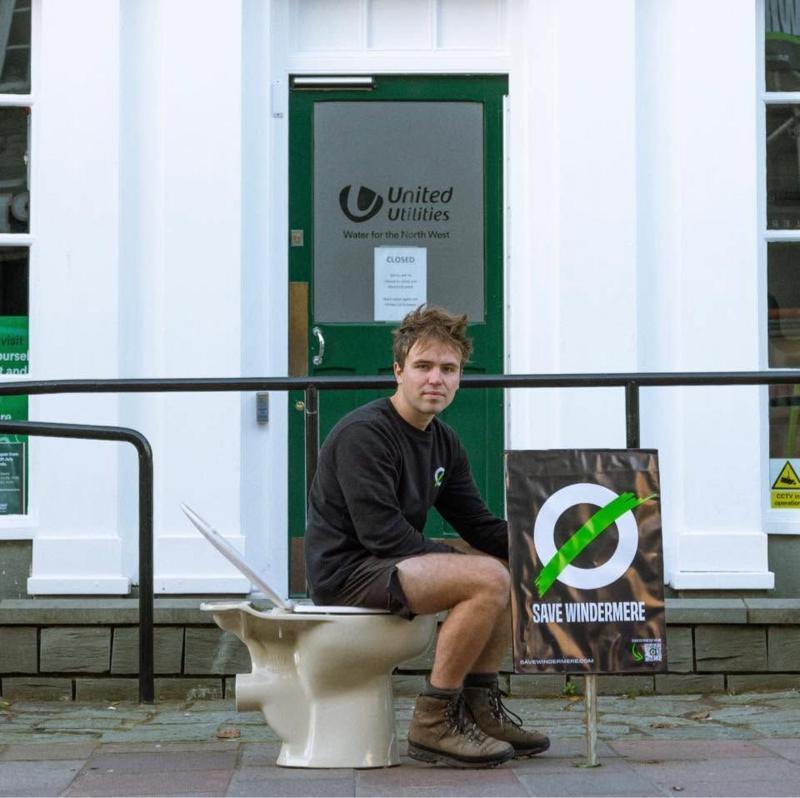 Image source, Matt Staniek
Founder of the Save Windermere group Matt Staniek has campaigned outside United Utilities local offices on a toilet