The key facts
- Punishment of up to 5 years in prison and a fine of up to €20,000 introduced for violent participation in demonstrations
- The measures are a response to riots in Milan and other cities over the weekend
- The Quirinal objected to giving soldiers judicial police functions
New government decree
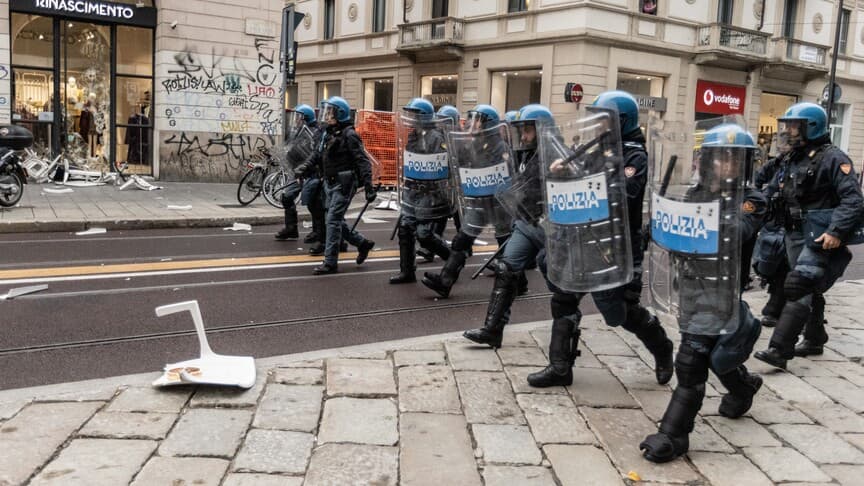
The government of Prime Minister Giorgia Meloni on Tuesday, October 20, approved a decree with new security measures following riots in Milan and other Italian cities over the past weekend, when shops were looted, windows smashed and police attacked. The decree introduces the criminal offense of 'violent participation in a demonstration' punishable by up to five years in prison and a fine of up to €20,000 (about $22,470), the Anadolu agency reported, citing media.
Meloni's statement
'If during a march or demonstration you join a group of five or more people, start throwing stones, firecrackers or sticks and endanger everyone's safety, you risk up to five years in prison and a fine of up to €20,000,' Meloni said in a video address after the cabinet meeting. According to her, penalties are tightened if participants conceal their face or cause harm to anyone. Penalties for participation in group acts of destruction are also increased. Meloni called what happened 'unacceptable' and said it must not be downplayed or justified.
Additional measures
The package of measures provides for extending preventive detention to minors and extending its duration beyond 12 hours, the possibility of deferred arrests of those accused of participating in group damage to property, as well as a ban on assemblies for persons considered a threat to public order. The government also plans to strengthen the existing 'Safe Streets' operation by sending an additional 500 soldiers to patrol the streets of Milan.
The Quirinal's position
A sensitive point was the initial proposal to give soldiers judicial police functions. According to Italian media, this was the only provision against which the office of President Sergio Mattarella (the Quirinal) objected during consultations with the government before the decree's approval. After this issue was resolved, Mattarella, according to Italian media reports, was ready to approve the measure.