The key facts
- The World Cotton Day conference was held for the first time in Central Asia — in Tashkent on October 7, 2026
- It was attended by FAO, WTO, ICAC and specialists from more than 30 countries
- Minister Ibrokhim Abdurakhmonov presented the '5D' principles; the ILO in 2021 noted the end of systematic forced labor, and the Cotton Campaign boycott was lifted in March 2022
Conference in Tashkent
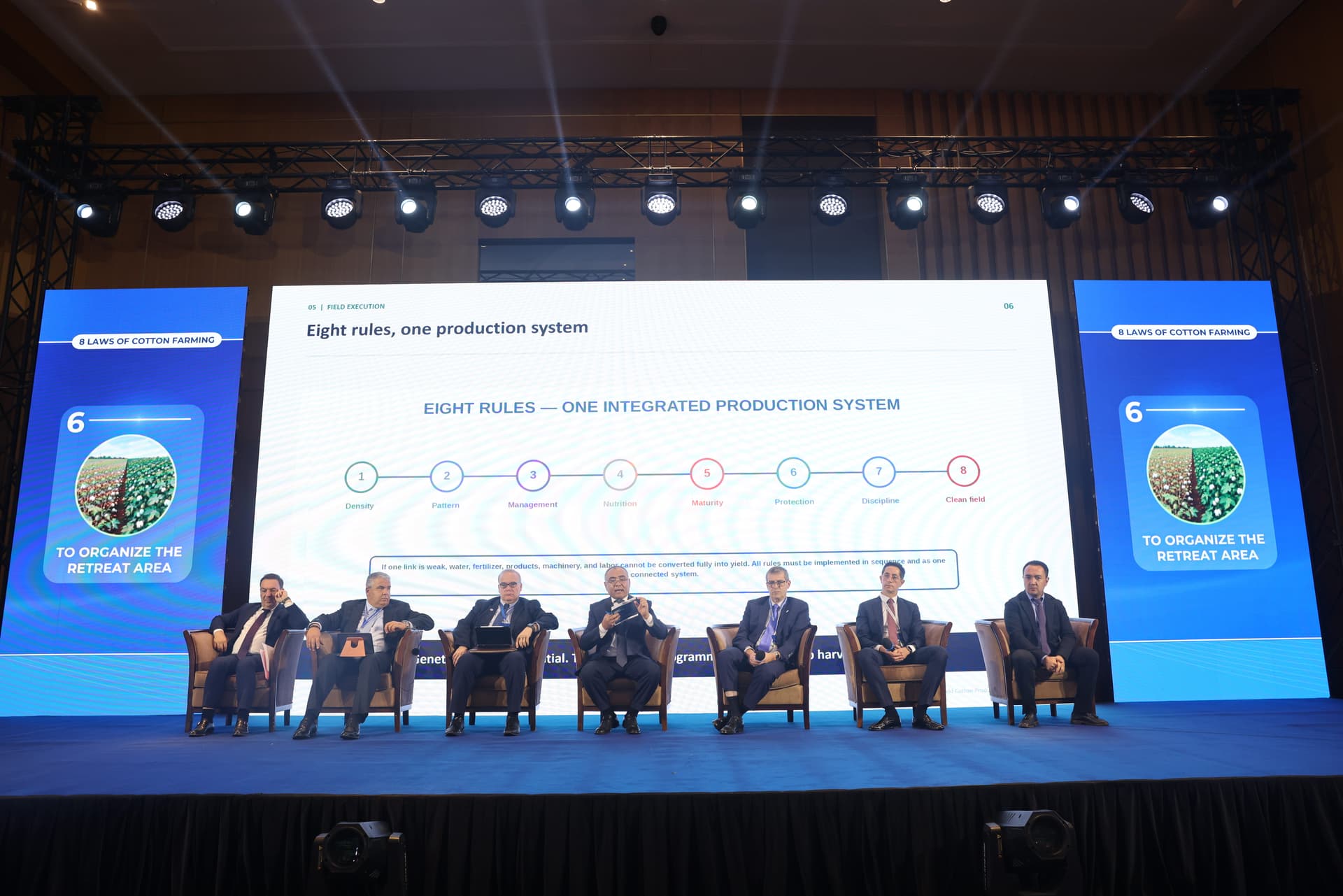
On October 7, 2026, an international conference dedicated to World Cotton Day was held in Tashkent. It was attended by representatives of the Food and Agriculture Organization of the United Nations (FAO), the World Trade Organization, the International Cotton Advisory Committee (ICAC), as well as industry specialists from more than 30 countries. This was reported by Kun.uz, whose correspondent followed the discussions during the event.
History of World Cotton Day
World Cotton Day was established in 2019 at the initiative of four African cotton-producing countries — Benin, Burkina Faso, Mali and Chad. It is celebrated annually on October 7 with the support of the WTO and the UN. The main event was held in 2024 in Benin, and in 2025 in Italy. In 2026, the conference was held in Central Asia for the first time. The agreement to hold the event in Uzbekistan was reached in November 2025 during President Shavkat Mirziyoyev's visit to the United States — between Minister Abdurakhmonov and ICAC Executive Director Eric Trachtenberg.
Lifting of the Boycott
For Uzbekistan, this day has special significance. As noted in the official video shown at the conference, the International Labour Organization in 2021 stated that systematic forced labor in Uzbekistan's cotton fields had ended, and on March 10, 2022, the Cotton Campaign coalition officially lifted the boycott of Uzbek cotton. After that, Uzbekistan was again able to freely sell its cotton on the international market.
The Minister's '5D' Principles
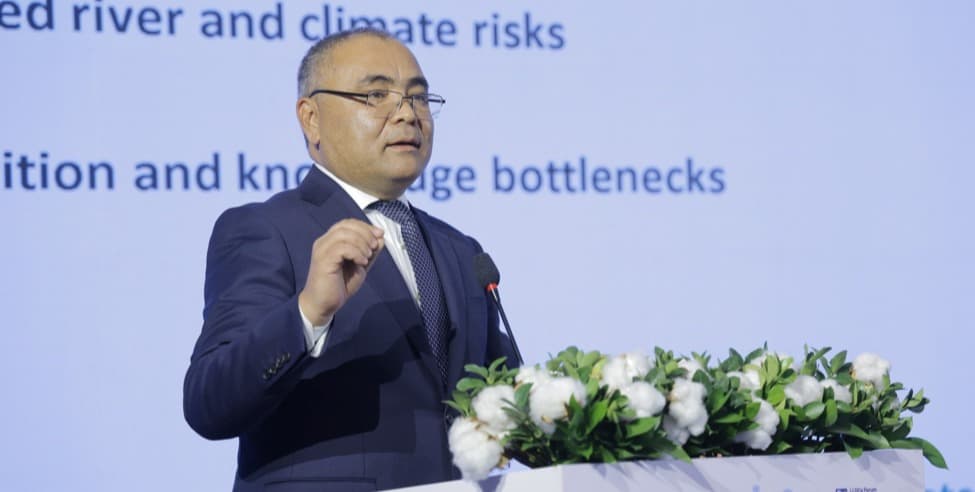
Minister of Agriculture of Uzbekistan, Doctor of Biological Sciences Ibrokhim Abdurakhmonov devoted the main part of his speech to principles he called '5D' — after the first letters of the English words diversify, doable, design, discipline and durable: variety of varieties and technologies, simplifying rules to a level feasible for farmers, clear field planning, discipline and durability. According to the minister, due to rapid climate change, one cannot remain with a single variety and a single method, so Uzbekistan imports and adapts varieties from various breeding centers around the world. 'We are open to any agricultural technology,' Abdurakhmonov stated. He also noted that many technologies in cotton farming are not used because of their complexity for farmers, which explains the second principle — feasible simplicity. As an example, he cited the rule about cotton plant height, explaining it as follows (the explanation in Kun.uz's publication is given incompletely).