The key facts
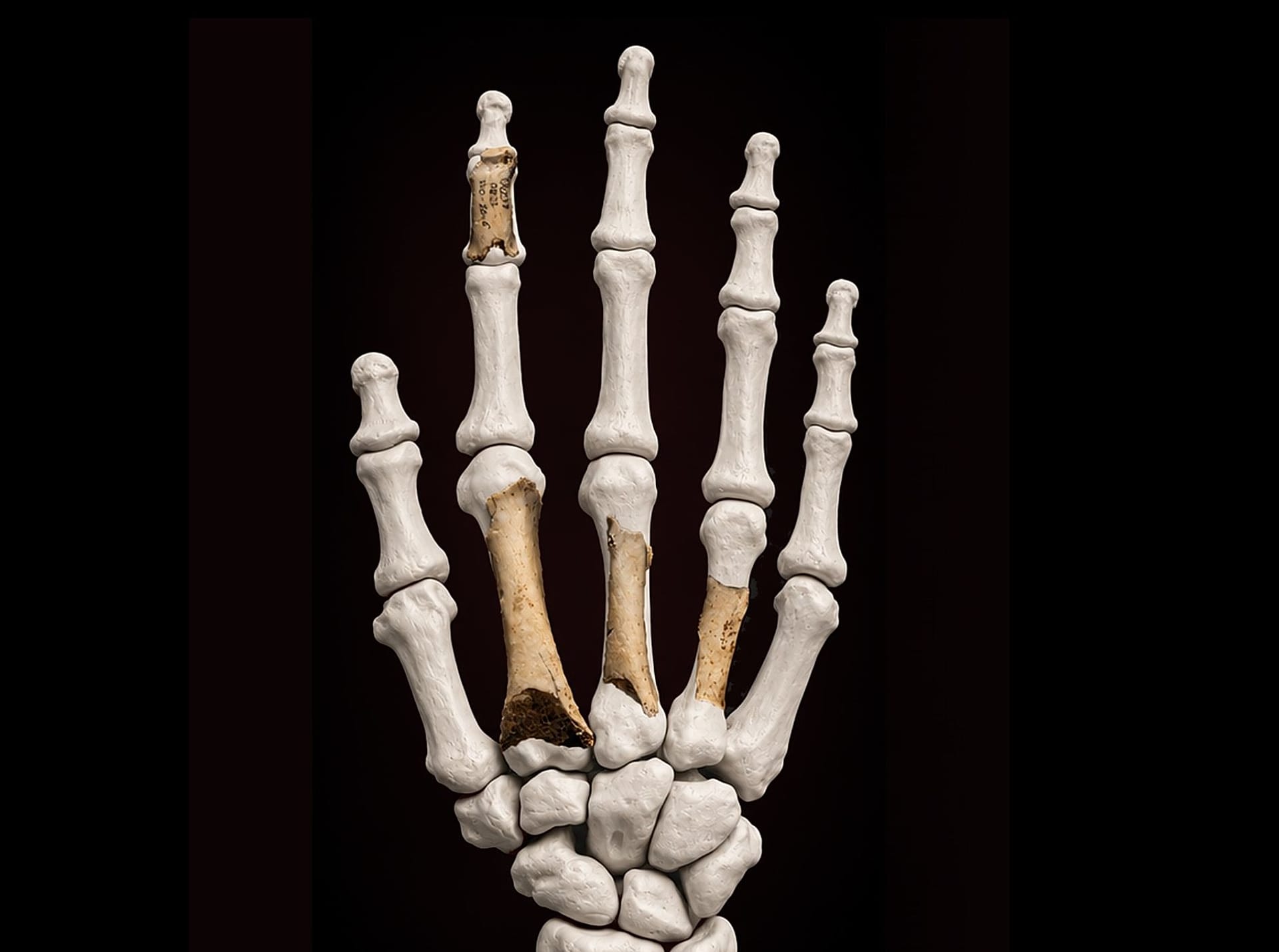
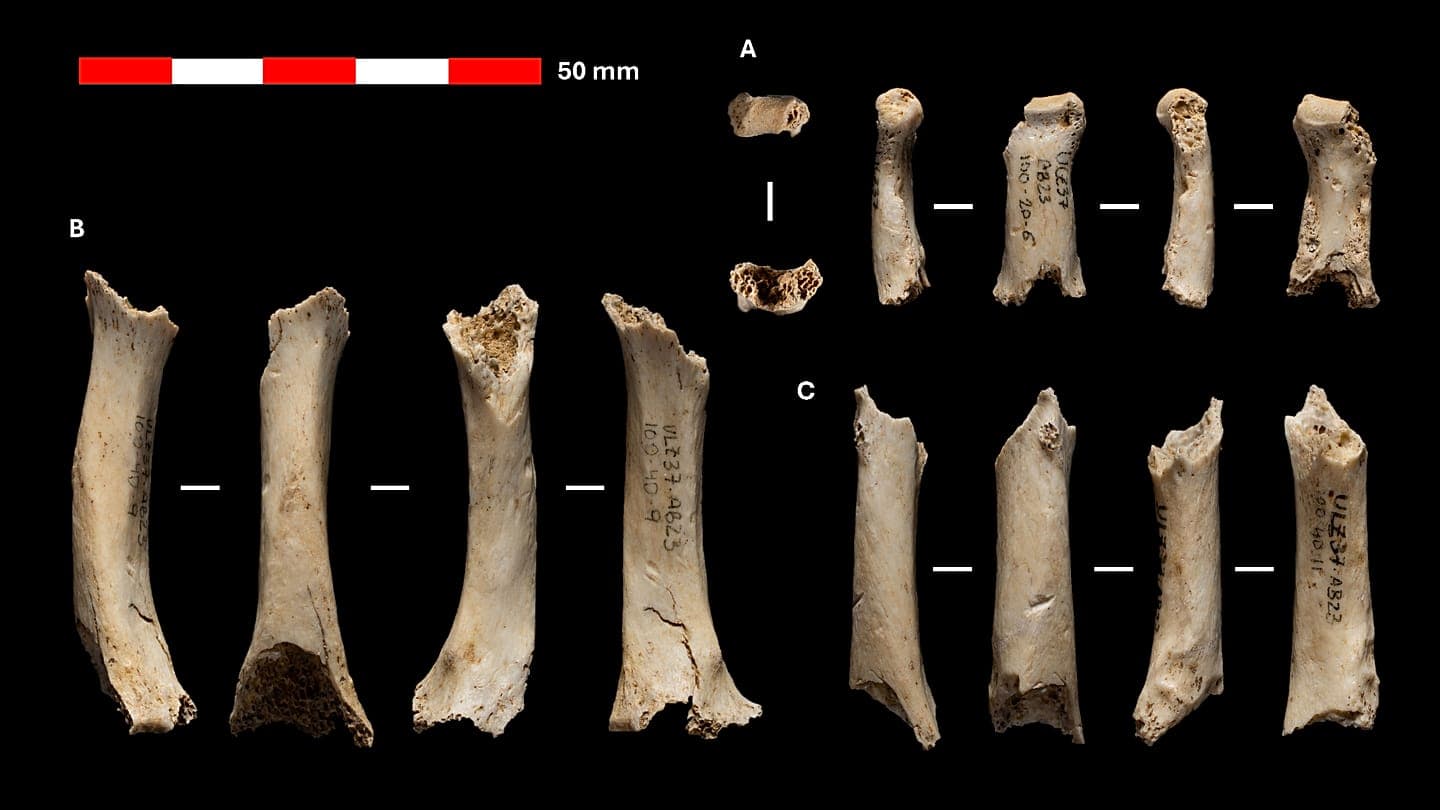
- Six bone fragments, including three metacarpal bones and the middle phalanx of the right hand of an adult male Neanderthal
- The age of about 46,000 years was established by radiocarbon dating; the sex was confirmed by genetic analysis
- Some of the bones bear carnivore bite marks; the finds were made in a context with stone tools and processed animal remains
First Neanderthal remains in Navarre
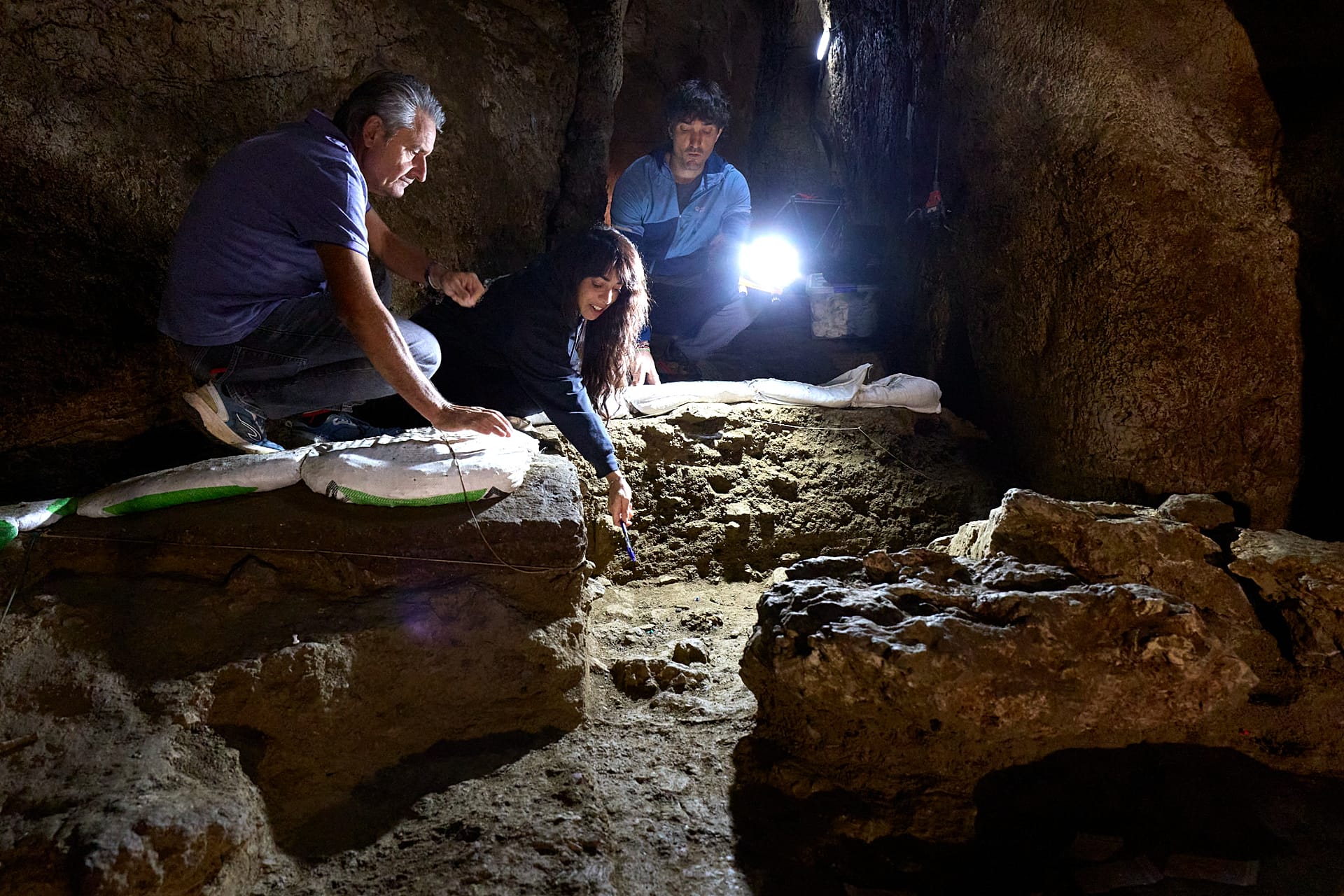
An international team of researchers has reported the identification of the first Neanderthal remains in Navarre. Six bone fragments were found during earlier excavations in the Abauntz cave; according to analyses, they belonged to a man who lived around 46,000 years ago. The discovery was presented on Monday, October 19, at an event led by the President of the Government of Navarre, María Chivite.
What has been established about the find
The find includes three metacarpal bones and the middle phalanx of the right hand of an adult individual, as well as two fragments identified as human by protein analysis. Genetic studies confirm that the remains belong to a male Neanderthal. Some of the bones preserve bite marks from carnivores — these traces offer clues about what happened to the body after the individual's death and how the bones ended up in the cave. The bones were found in an archaeological context with stone tools and animal remains, some of which bear traces of processing and consumption by the humans who occupied the cave.
Significance for the region and chronology
Until now, the region had no fossil remains directly confirming the presence of Neanderthals. 'For the first time we have human remains that allow us to directly identify the presence of Neanderthals in Navarre,' explained project co-director Andión Arteaga. The age of the find is important: 46,000 years ago Neanderthals still lived in various parts of Europe, and around 40,000 years ago the species disappeared from the continent — a period also marked by the expansion of Homo sapiens. Abauntz's location adds interest: the cave lies in a natural corridor connecting the Iberian Peninsula with the rest of Europe, making it a convenient site for studying mobility and possible contacts between human groups on both sides of the Pyrenees.
Methods and participants of the study
Extracting ancient DNA from remains tens of thousands of years old is rare, as genetic material degrades over time and its preservation depends on burial conditions. The team combined paleoproteomics, genetic analyses and radiocarbon dating to identify the bones, determine the individual's sex and precisely establish the chronology. The work is being carried out jointly with the University of Vienna and the Max Planck Institute for Evolutionary Anthropology in Leipzig. 'The ability to extract ancient DNA and obtain direct dates for the fossils is especially significant,' emphasized the second project co-director Mikel Arlegi. The genetic analyses are ongoing and may provide more information about the evolutionary history and demographic dynamics of these populations.
Project organization
The research originated at the Catalan Institute of Human Paleoecology and Social Evolution (Iphes-Cerca) in Tarragona, which remains involved through Lucía López-Polín, Andreu Ollé and Aitor Burguet. The project is led by Arteaga (Center for New Technologies of the University of Warsaw, affiliated with Iphes-Cerca) and Arlegi (a postdoctoral researcher at the Musée de l'Homme in Paris). The team includes more than 25 specialists from different disciplines and institutions, including the National Research Center on Human Evolution (CENIEH) and the Institute of Archaeology of Mérida (IAM, CSIC — Government of Extremadura). The project is supported by the Government of Navarre through the Directorate-General for Culture — the Príncipe de Viana Institute, the Ulzama valley council, the local council of Arraitz-Orkin and the Palarq Foundation. Participants of the new excavation campaign, which is continuing in the cave, were also present at the presentation.