The key facts
- RJ Scaringe: autonomy will open up 'dramatically different' designs and experiences, but he did not reveal details
- Rivian promises 'point-to-point' driving without intervention under driver supervision by the end of the year and is preparing an R2 robotaxi for Uber
- According to Scaringe, most miles in the US (about 95%) will remain on personal vehicles even with Level 4
Autonomy as a source of new design
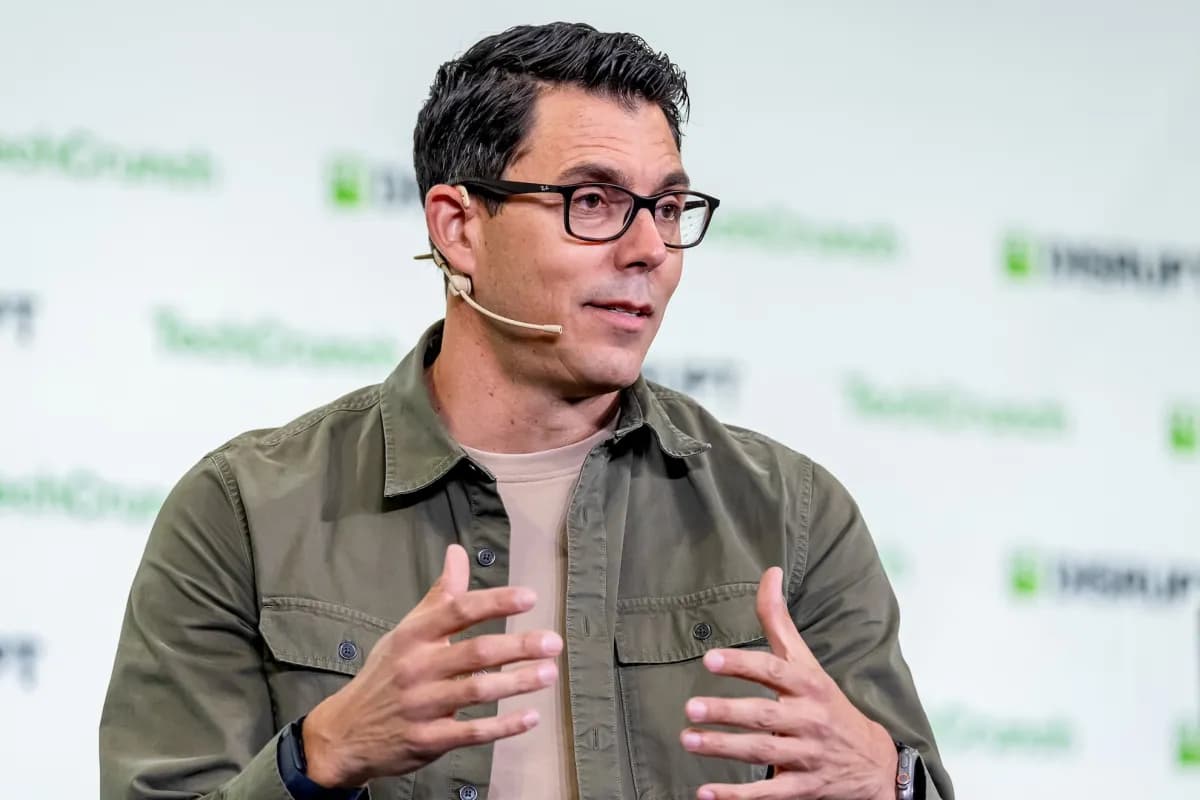
Rivian founder and CEO RJ Scaringe said at the TechCrunch Disrupt conference that the development of autonomous driving will allow the company to build fundamentally different vehicles than today's off-road SUVs and pickups. 'It gets really interesting when you think beyond the R2 and R3 and start imagining form factors for a personal autonomous vehicle. It opens up a huge amount of design opportunity and could create dramatically different experiences,' he said. Scaringe added that he is 'incredibly excited' about what transportation will look like over the next 10 years. He did not reveal what such a vehicle would look like: after the R1, R2 and R3, the next model will be called the R4, but it has not yet been shown — 'it's going to be cool,' he promised.
The idea is not new, but the context has changed
TechCrunch notes that the idea is not new: ten years ago, automakers and AV companies promised a 'Cambrian explosion' of new mobility formats based on autonomy and electric propulsion. Back then, concepts appeared like the bubble-shaped pod from Mercedes-Benz, Toyota's 'rooms on wheels,' and even a car on legs from Hyundai. The design revolution never got past the concept stage: autonomy developed more slowly than expected, and manufacturing and selling fundamentally new vehicles proved difficult. The difference now, according to the publication, is that real robotaxis are already driving the streets of many cities, the components of electric motors and batteries have become cheaper, and Tesla, Rivian and many Chinese companies have learned to produce them at scale — although questions remain about integrating robotaxis into urban environments with cars, bicycles, pedestrians and emergency services.
What Rivian is already doing
Rivian is still far from fully driverless vehicles. The company is only beginning to scale production of the R2 SUV, on which its exit from years of losses depends. In the area of autonomy, Rivian recently completely reworked its software approach. The company released a driver assistance system that allows hands-free driving on the wheel while monitoring the road. By the end of the year, it promises 'point-to-point navigation' — a trip from start to finish without intervention, but under driver supervision. Next comes full autopilot, which is planned to be deployed in robotaxis based on the R2, accessible through the Uber app.
Betting on personal vehicles
Scaringe repeated previous statements: even with full autonomy achieved, most trips will remain in personal cars. 'About 95% of miles in the US — that's trillions of miles — happen on personal transportation. Our view is that it's unlikely, even with Level 4 capabilities, that there will be a dramatic societal shift,' he said, referring to the SAE classification for autonomous vehicles operating in a limited area. According to him, the share could drop to 90% or 80%, but for social and psychological reasons the majority of miles will remain with personal vehicles. It is this belief, he noted, that makes him think about the design of a fully autonomous personal Rivian. For the sake of developing autonomous software, the company is willing to delay reaching profitability.