The key facts
- Laplace Intelligence builds automated red-teaming for physical AI: simulation based on a fine-tuned version of Nvidia Cosmos recreates real locations, while AI agents themselves search for weaknesses in systems
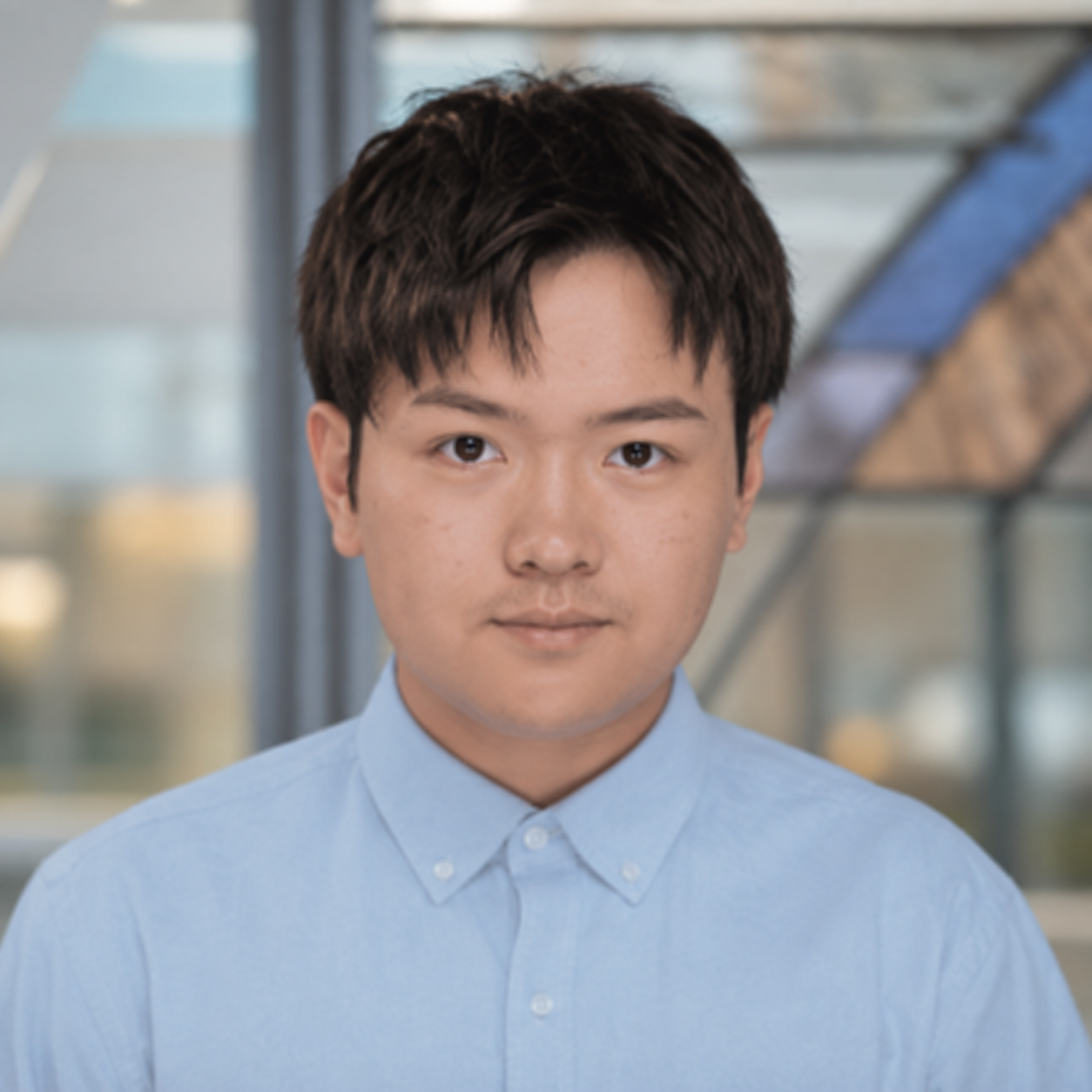
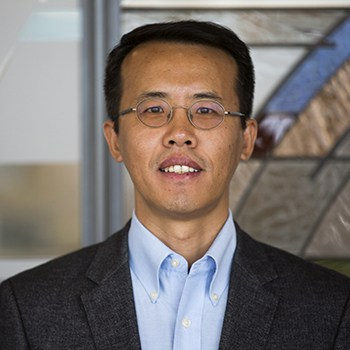
- Founders — CEO Howie Sun and chief scientist Henry Liu — came out of the University of Michigan; their 2023 paper made the cover of Nature
- Clients include Bot Auto and a major Japanese automaker; also a smart city pilot in San Jose with Nvidia and T-Mobile; the main competitor is Applied Intuition ($1.2 billion raised, $15 billion valuation)
AI testing AI: Laplace's approach
Ann Arbor startup Laplace Intelligence is developing automated red-teaming — stress-testing systems by deliberately searching for their failures — for robotics and physical AI. The company's bet: the only way to ensure the safety of physical AI is to entrust its testing to AI. CEO and co-founder Howie Sun, in an interview with TechCrunch, cited the OpenAI–Hugging Face incident as an example of the unpredictability of AI agents and noted that agents are moving from computers into the real world, where failures are unacceptable. The goal, he said, is to help companies find and fix problems before deployment and, over time, build a body of evidence that clients, insurers, and regulators can trust.
Founders and origins
Howie Sun and co-founder, chief scientist Henry Liu, founded Laplace about a year ago out of the University of Michigan. Sun spent eight years doing academic research on validating autonomous driving AI in simulation; in 2023 he and Liu — his then academic advisor — published a paper on the topic that made the cover of the journal Nature. After that, calls began coming in from companies in the autonomous vehicle space, and Sun decided to turn the research into a product. The name references Laplace's demon — a 1814 thought experiment by Pierre-Simon Laplace about the possibility of perfectly predicting the future: 'We are essentially using simulation to predict the future of the real world,' Sun said.
How the simulation works
The core of the product is a high-fidelity simulation recreated from the real world, built on a post-trained version of Nvidia Cosmos, an AI world-simulation platform. The environment is generated from a combination of real data: for example, a Google Street View image can become the basis of an entire street, and map data allows recreating surroundings at real scale — from a highway in Arizona to a pedestrian crossing in Paris. Developers can change the scene with language prompts in real time, for example adding daytime traffic; Laplace, according to Sun, pulls traffic and congestion data from navigation providers like TomTom. The behavior of other participants is simulated as well: in a demo, a test car, at Sun's command, drove into the oncoming lane, and an oncoming car shifted to avoid a collision. 'This is a truly interactive simulation environment… rather a world model with interactive participants,' Sun noted.
Automatic search for corner cases
Laplace's key distinction is AI agents that automatically create corner cases (rare and complex scenarios capable of confusing an AI system), reducing human involvement. The agents, according to Sun, can draw scenarios from news, police accident reports, and other sources to actively probe autonomous vehicles and other physical AI. Currently, autonomous vehicle developers mostly use recordings of real trips converted into simulations, or come up with scenarios manually; some, like autonomous truck maker Waabi, already use AI to generate edge cases. Sun believes demand will surge with the arrival of general-purpose robots: there is less data on them, and no one knows what the edge cases in the real world will be.
Business, clients, and competition
Despite the founders' academic origins, Laplace is already generating revenue and modest profit. The main income comes from autonomous driving scenarios: among the clients are Texas-based autonomous trucking company Bot Auto and a major Japanese automaker. Laplace is also participating, together with Nvidia and T-Mobile, in a free smart city pilot for San Jose (California) on traffic management, and is at an early stage working with partners building humanoid robots for warehouses. Most contracts are project-based; the company aims to move to recurring revenue. The nearest goal is to raise funding and scale to compete with its main rival, Applied Intuition, which has raised $1.2 billion at a post-money valuation of $15 billion. Sun is not too worried: he calls the 'AI testing AI' methodology a new paradigm that turns physical AI testing into a dynamic interactive process, and considers it the company's main 'moat.'
Appearance at Disrupt
Laplace is one of 20 startups competing in the Startup Battlefield 200 contest at the TechCrunch Disrupt conference in San Francisco on October 13–15. The company presented on the Disrupt Stage on Tuesday afternoon, October 13. The TechCrunch article was updated to clarify the nature of Laplace's relationship with Nvidia.