The key facts
- More than 700 million Chinese people regularly play games; consoles were banned from 2000 to 2014
- All games in China require a license; censorship criteria are 'deliberately vague', notes George Osborn
- 'Black Myth: Wukong' became an international hit of 2024; Chinese studios are increasingly targeting a global audience
Chinese studio making a game about the war with Japan
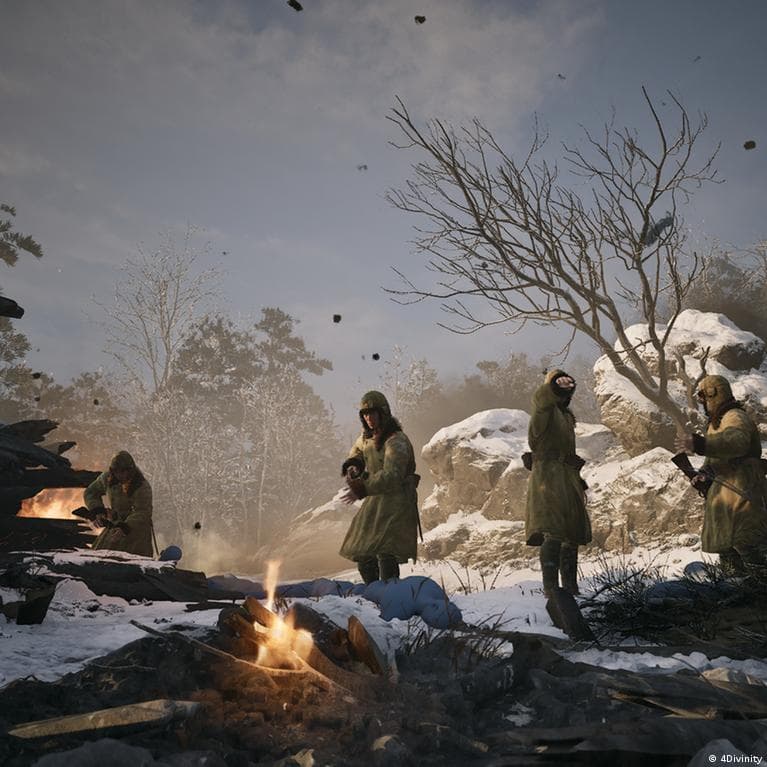
The Chinese studio Hoothanes Technology from Hangzhou is developing the game 'The Defiant' about the struggle of Chinese troops against the Japanese army in the 1930s–1940s. Developer Connor Xu told DW that the weapons in the game were used only in Asia and are unfamiliar to many Western players, and the story itself, in his words, had never before been told in video games. At the same time, the project is also aimed at an international audience.
Games are part of everyday life in China
According to DW, citing the research company Newzoo, more than 700 million people in China regularly play video games, and the majority consider games an important part of their lives; many use them to communicate with friends. The main platforms are PC and smartphones, while consoles are far less widespread: from 2000 to 2014 they were not officially sold in China — the authorities explained this as protecting children and teenagers from gaming addiction.
Restrictions and control
Minors in China are allowed to play online games for no more than three hours a week. There are no limits for adults, but playing requires registration with a real name and personal identification number, which, as DW notes, allows the state to track who plays what, when, and whom they communicate with. There is also a gray zone: some players use VPNs to access officially unavailable games, and some young players use their parents' accounts to bypass time limits.
Licensing system and censorship
Journalist George Osborn, who advises NGOs and governments on video game issues and spoke at the Gamescom congress, explained to DW a peculiarity of the Chinese market: without a license, sales are impossible, and the system forces developers to go through multi-level approvals at the ministry of propaganda and the ministry of culture. Games are prohibited from containing material that threatens the unity, sovereignty, or territorial integrity of China, pornography, gambling, calls for crimes against national security, and the dissemination of information capable of disrupting public order. In Osborn's view, the criteria are 'deliberately made quite vague', and compliance with the rules is a matter of interpretation: games are sometimes changed even after release. He cites the example of the 2025 game 'Wuchang: Fallen Feathers', where enemies based on well-known Chinese figures of the Ming dynasty suddenly became impossible to kill — they fell from exhaustion.
International success and the problem of self-censorship
Chinese companies, including Tencent and NetEase, began investing in Western game studios early on, and in 2024 the Chinese role-playing game 'Black Myth: Wukong', inspired by the classic 16th-century novel 'Journey to the West', became an unexpected international hit. Osborn sees no problem in popularizing Chinese culture, but questions the degree of state interference in the games themselves: players, in his words, are 'fairly deeply skeptical' and recognize propaganda well — 'if it is too obvious, it will not work'. He fears self-censorship by Western developers seeking access to the huge Chinese market: for example, the exclusion of LGBT characters, which he calls a major step backward. DW notes that China is not the only country where games are adapted to national norms: in Germany, for example, Nazi symbolism and depictions of extreme violence are banned, except in cases where the game clearly serves the culture of remembrance.
'The main thing is to tell the story'
Although the glorification of violence is banned in China, Xu's team is allowed to develop a war game. Xu explains it this way: 'I think the most important thing in this game is not the violence. The most important thing is to tell the story.' According to him, the team strives for historical accuracy, and historians will assess the success of this.


