News

PHP

News about PHP: events, facts and developments on tafs uz.

16 stories

CISA confirmed active exploitation of critical PHP vulnerabilities and gave federal agencies three days to patch them

The American cybersecurity agency CISA reported that hackers have begun using two critical PHP vulnerabilities (PHP2Shell) in real-world attacks, allowing remote takeover of servers without a password. The agency added the bugs to its catalog of known exploited vulnerabilities and required US civilian federal agencies to patch them within three days. The vulnerabilities were discovered two years ago but were considered impractical to exploit until researchers at Calif found a way to exploit them using AI.

2 min read

A PHP vulnerability put the internet on the brink of mass compromise

Two critical vulnerabilities that had existed for decades were discovered in the open programming language PHP. Website owners were instructed to install updates immediately or temporarily take their resources offline. Cloudflare recorded millions of attack attempts, and Amazon recorded exploitation attempts even before the public disclosure.

2 min read

Anthropic: surge in vulnerabilities threatens critical infrastructure with a 'tsunami'

Anthropic's deputy chief information security officer Jason Clinton warned that a wave of newly discovered software vulnerabilities could overwhelm defense systems in the coming months, putting power grids and water supplies at risk. He urged isolating sensitive networks and asking boards of directors for help with 'the basics' rather than AI, estimating the period of elevated risk at roughly 18 months.

2 min read

IT professionals on the PHP emergency: “It was endless”

After two critical vulnerabilities were discovered in PHP, the language powering millions of websites, IT teams worldwide rushed to install patches or take servers offline. Satya Nadella called the situation unprecedented, but experts note that rumors of hacker attacks — some of which were not confirmed — amplified the panic.

3 min read

PHP2Shell vulnerability forces websites worldwide to urgently update PHP

Two critical vulnerabilities have been discovered in the popular programming language PHP, allowing remote code execution without authentication. The FBI and the US NSA warned of the threat, the Netherlands and France took some government websites offline, several countries declared cyber alerts, and Turkey conducted checks and issued guidance for organizations.

2 min read

AI finds two critical PHP vulnerabilities: emergency updates and regulator warnings

Researchers from Calif and Wiz, using AI, discovered two critical vulnerabilities (CVE-2026-109618 and CVE-2026-109619, rated 9.2/10) in the PHP language, affecting versions from 5.4 to 8.5.11. Developers released emergency patches on October 21, and regulators in the US, UK, EU and Australia urged urgent system updates. Cloudflare recorded attacks after details leaked ahead of the official disclosure.

3 min read

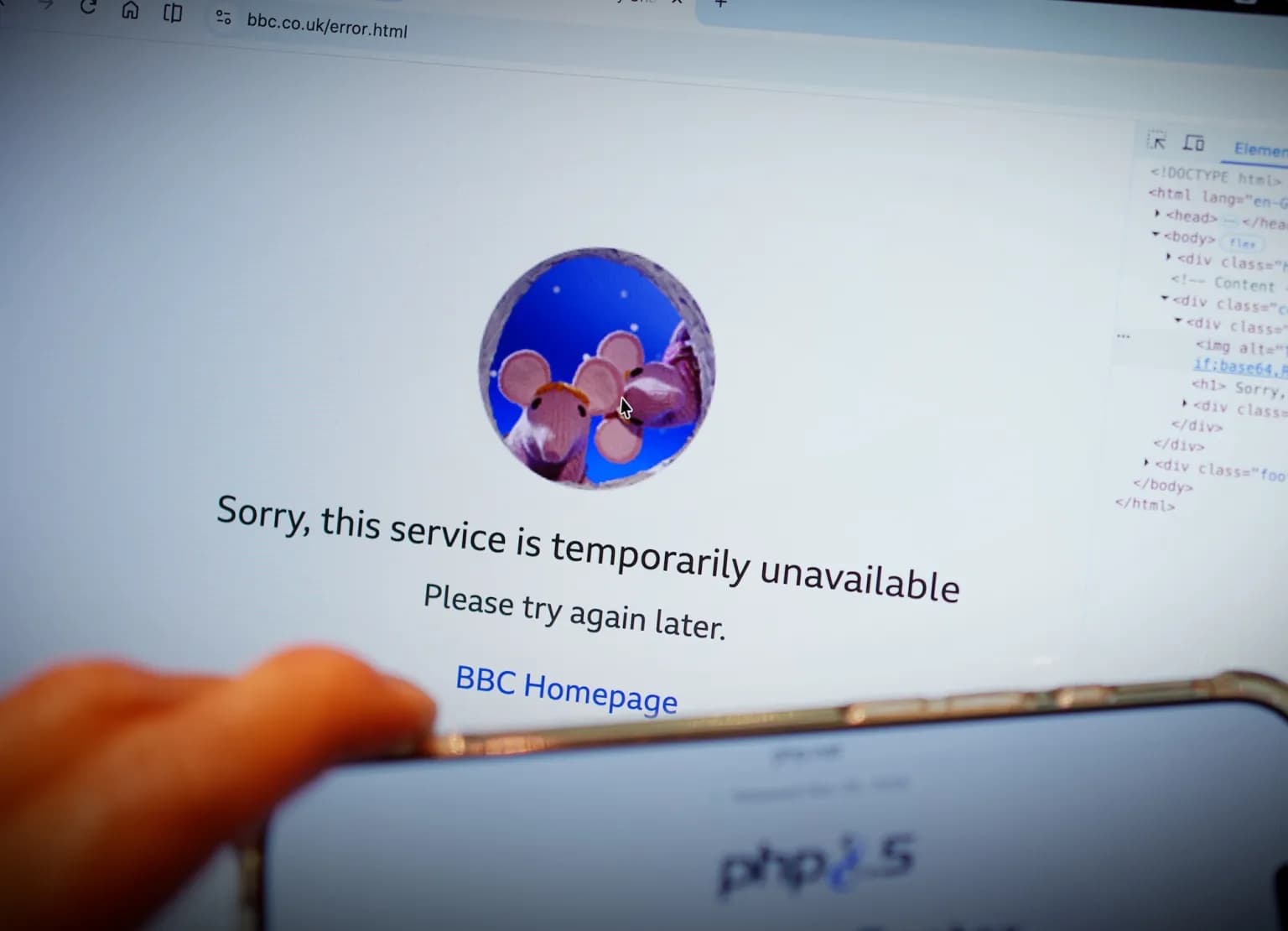
PHP2Shell vulnerability: governments and companies worldwide urgently take websites offline

After the disclosure of two critical vulnerabilities in the PHP language (CVE-2026-109618 and CVE-2026-109619), known as PHP2Shell, governments and companies around the world temporarily took websites offline to install patches. In the UK, 32 government services were unavailable and four were running partially; Cloudflare recorded millions of attack attempts. The vulnerabilities allowed remote code execution without a password on systems running PHP, which powers about 70% of websites. No mass exploitation has been observed so far, but After the disclosure of two critical vulnerabilities in the PHP language (CVE-2026-109618 and CVE-2026-109619), known as PHP2Shell, governments and companies around the world temporarily took websites offline to install patches. In the UK, 32 government services were unavailable and four were partially working; Cloudflare recorded millions of attack attempts. The vulnerabilities allowed remote code execution without a password on systems running PHP, which powers about 70% of websites. No mass exploitation has been recorded so far, but

4 min read

Governments and companies worldwide take websites offline due to critical PHP vulnerabilities

British, German, French and other government websites were temporarily taken offline as a precaution after two critical vulnerabilities were discovered in the PHP programming language. Developers released updates, and cyber agencies recommended taking sites offline if patches could not be installed in time. Experts call the finding one of the most serious in recent years.

3 min read

PHP Vulnerability: Websites Worldwide Taken Offline as a Precaution

Vulnerabilities that had existed for years have been discovered in the popular programming language PHP, which powers millions of websites. They are difficult to exploit, but the companies Cloudflare and Palo Alto Networks are recording millions of attack attempts. A patch has been released, but it only works on the latest version of PHP, so older websites require an update. Experts describe the situation as 'the cyber equivalent of an unexploded bomb'.

3 min read

Governments and companies rush to patch critical PHP vulnerabilities

After critical vulnerabilities were discovered in PHP, the language powering a significant share of the world's websites, the governments of the UK, US, EU, Australia and Finland urged installing patches or taking sites offline. Amazon reported exploitation attempts on 17 and 21 October. The vulnerabilities, which had existed for at least ten years, were found by researcher Ryan Austin with the help of AI, but details leaked to social media ahead of schedule.

3 min read

Japan suspends websites due to critical PHP vulnerabilities; NSA and FBI urge urgent updates

After two critical PHP vulnerabilities (CVE-2026-109618 and CVE-2026-109619) were discovered, allowing unauthenticated remote code execution, Japanese agencies and companies suspended a number of services. PHP developers released patched versions, and the NSA and FBI urged organizations to update systems urgently. According to OpenAI, its models helped find the vulnerabilities; PHP, it says, powers roughly 70% of websites.

2 min read

AI discovered two critical PHP vulnerabilities: governments worldwide are urgently taking websites offline

Two critical vulnerabilities (CVE-2026-109618 and CVE-2026-109619, rated 9.2 out of 10), hidden for more than a decade, have been found in the PHP programming language, which powers about 70% of websites. They were discovered by the companies Calif and Wiz using AI models from OpenAI and Google. Emergency patches were released on Wednesday, but due to a leak of information about the bugs, the governments of the US, Europe, Japan and Australia recommended taking websites offline until updates are installed. Wikipedia, government resources of Finland, the Netherlands, Germany, France and others. Two critical vulnerabilities (CVE-2026-109618 and CVE-2026-109619, rated 9.2 out of 10), hidden for more than a decade, have been found in the PHP programming language, which powers about 70% of websites. They were discovered by the companies Calif and Wiz using AI models from OpenAI and Google. Emergency patches were released on Wednesday, but due to a leak of information about the bugs, governments of the US, Europe, Japan and Australia recommended taking sites offline until updates are installed. Wikipedia, government resources of Finland, the Netherlands, Germany, France and others

6 min read