The key facts
- Rubio: deal with India 'very close' to finalization
- Visit to India begins on Tuesday: Mumbai and Jamnagar
- Refraining from oil and gas sanctions explained by risks to energy supply and prices
Rubio on the progress of negotiations
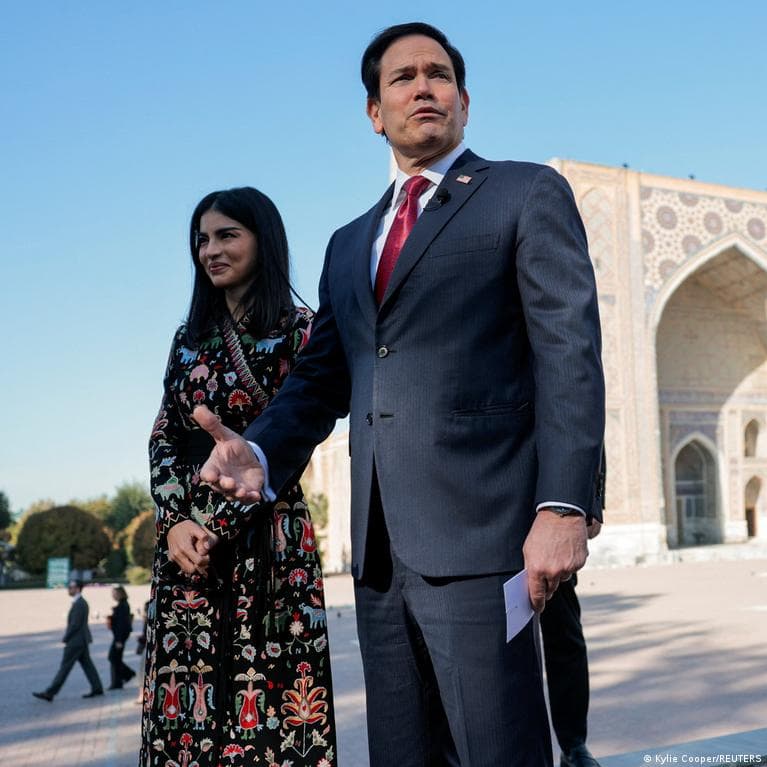
US Secretary of State Marco Rubio said on Monday that Washington is 'very close' to finalizing a trade agreement with India. 'We are now trying to complete a trade deal with India. We are very close to that,' he said in the Uzbek city of Samarkand, where he is meeting with counterparts from Central Asia ahead of a three-day visit to India beginning on Tuesday.
Itinerary of the visit
Rubio is expected to arrive in Mumbai, India's financial center, and then visit Jamnagar in the state of Gujarat, home to the world's largest oil refining complex on a single site.
Sanctions and Russian oil
Commenting on Russian oil and gas, Rubio said that Washington has decided not to impose sanctions due to their potential impact on global energy supplies and prices. According to him, this is taken into account when President Donald Trump makes decisions on national security exemptions. He added that every country faces a 'complex set of factors': 'Geography is real. It is very difficult for some countries to obtain energy from alternative sources. That is not an excuse, but all of this needs to be balanced when conducting foreign policy.'
Context of the negotiations
In February, the US and India announced they had reached the terms of an interim framework agreement aimed at resolving the bilateral trade dispute. Last week, India's Commerce Minister Piyush Goyal said the first part of the deal had been agreed and was undergoing 'legal vetting'; he expressed hope to finalize and launch it soon, 'when we gain a comparative or competitive advantage over competitor countries.'
Background of tensions
Tensions between the US and India escalated last year due to the 50 percent tariffs imposed by the Trump administration on Indian goods, partly because of India's continued purchases of Russian oil amid the Russia-Ukraine war. Bilateral trade in goods between the two countries, which maintain a comprehensive global strategic partnership, amounted to about $149.4 billion last year.