The key facts
- France's first «22-26» type residential building has been built in Lyon's Confluence district: 23 apartments, seven storeys
- The temperature is meant to stay at 20–22°C in winter and 26–28°C in hot weather; savings on bills could reach 80% (about €380 a year for a three-room apartment)
- Construction costs rose by 15%, and the concept's scalability is in question; a second project is planned near Paris in 2028
A building that regulates its own temperature
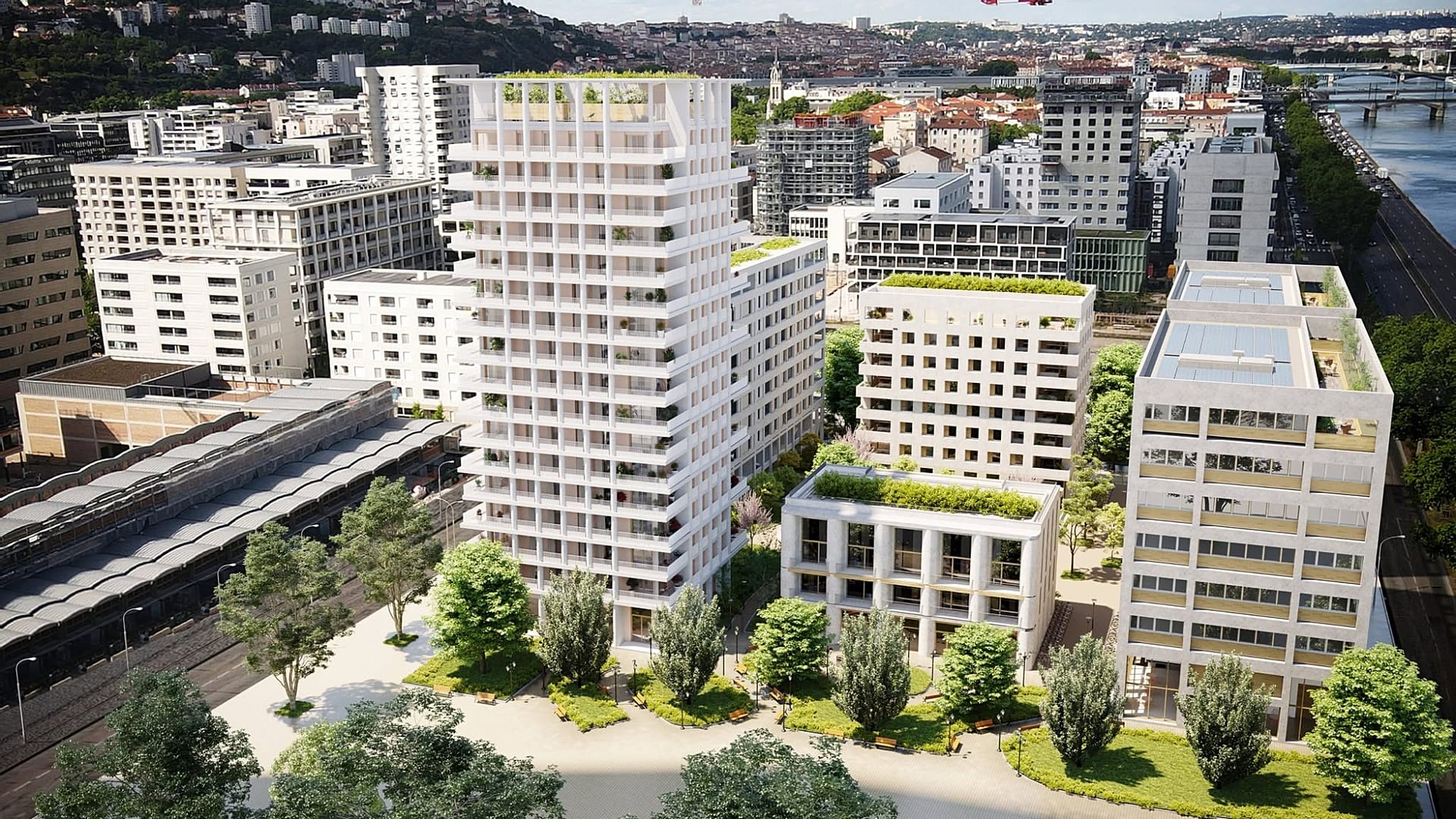
In Lyon, France, the country's first residential building that, according to its creators, needs neither heating nor air conditioning has been unveiled. The seven-storey, 23-apartment project was built in the rapidly redeveloping Confluence district; it was presented on Tuesday by developer Nexity and Austrian architecture firm Baumschlager Eberle, Euronews reports. The concept is called «22-26» — after the temperature range (in degrees Celsius) the building is meant to maintain indoors: 20–22°C in winter and 26–28°C during heatwaves.
How it works
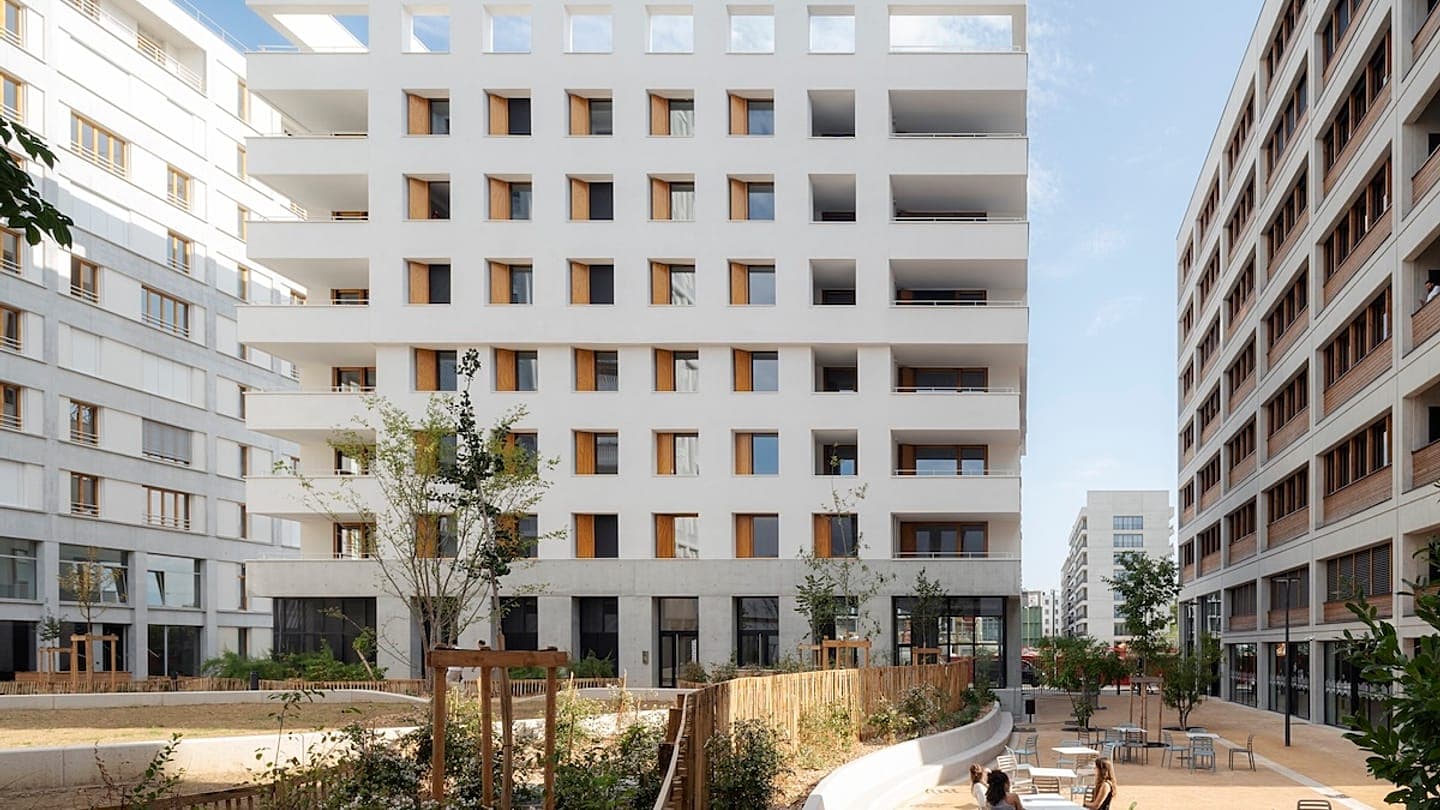
The concept's author is Austrian architect Dietmar Eberle, who was seeking an answer to the energy and climate crisis. The technology is based on the thermal inertia of materials, whose effectiveness, as Euronews notes, still has to be proven. According to the online publication Vert, an insulating shell made of monolithic hollow ceramic blocks (Monomur), concrete and lime plaster keeps heat or coolness inside the apartments; the walls and floors are twice as thick as the French average — 61 centimetres versus roughly 30. Two layers of hollow brick with a layer of glass wool give the building a massive look, while large recesses in the façade protect it from direct sunlight.
Automation and 'heating' by residents
The concept also relies on an automated system of wooden louvres in every apartment: according to Nexity, sensors track temperature, humidity, air quality and the weather, and residents can also operate the shutters themselves. Backup heaters, required by regulations, switch on only during extreme weather events or after the home has been vacant for a long time. Heat from residents' bodies, cooking, showers and electrical appliances stays inside the apartments: «We are the building's heaters — ourselves and what we do», explained Cédric Ata, programme manager at Nexity Auvergne Bourgogne, on BFM Business. According to Nexity CEO Véronique Bédague, this will cut energy bills by 80% — about €380 a year for a three-room apartment.
The cost and the outlook
Each apartment is nevertheless equipped with heaters and dual-flow mechanical ventilation, as French law requires; connection to the urban heating network, according to the developer's estimate, raised construction costs by 15%. Nexity says the technology should reduce energy consumption for thermal comfort by 73% and cut carbon emissions by 65% over 50 years. The Baumschlager Eberle firm has already built two similar buildings in Switzerland and Germany, but this is the first in France. The concept's scalability is in doubt: «This project cannot be replicated on a large scale», Renaud Peyr, eco-adviser to the Lyon metropolitan authority, told Vert, calling the 'smart home' system too complex and expensive for a standard construction model; in his view, the best way to improve housing energy efficiency remains renovation. At the same time, the concept has interested other cities: Nexity plans to complete a similar 80-apartment project in La Garenne-Colombes near Paris by 2028, which is precisely meant to test the approach's effectiveness.