The key facts
- Jeffries nominated as Speaker candidate with a 251–11 result in the caucus's closed vote
- Final election will be by a vote of the full House on January 3, 2027; at least 218 votes are needed
- Clark and Aguilar were also nominated and will become the first woman majority leader and the first Latino whip
Nomination and vote results
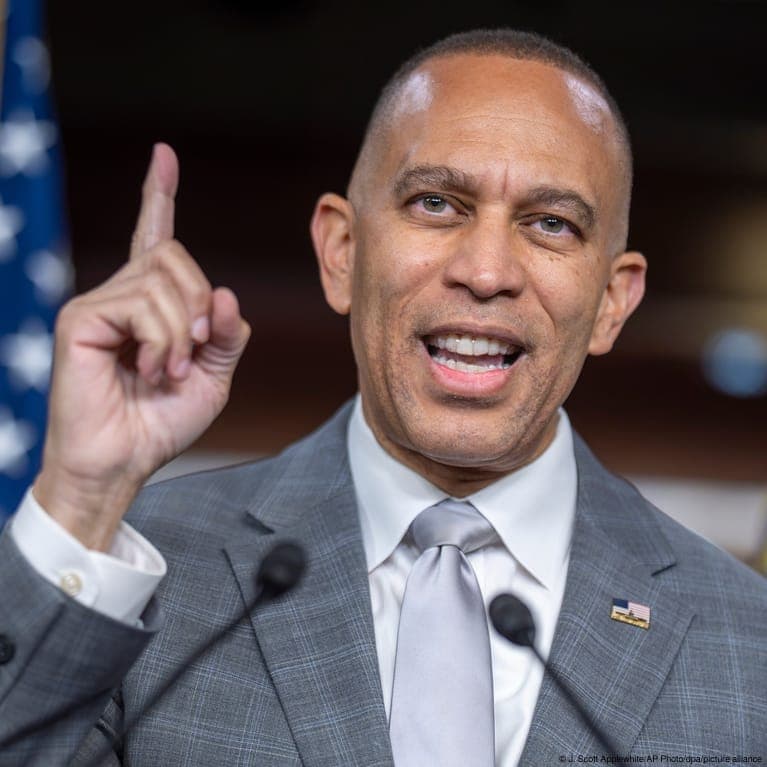
Democrats in the U.S. House of Representatives on Wednesday, November 18, nominated Hakeem Jeffries as their candidate for Speaker — Deutsche Welle and Anadolu reported. The vote was held behind closed doors, by secret ballot, at a meeting of current and incoming members of the caucus: 251 votes were cast in favor of the nomination, 11 against. Jeffries himself wrote on X after the vote: “Thank you, House Democrats. Together, we will deliver bold change.”
What is happening and why this is a historic step
Formally, this is only an intra-party nomination: the final decision will be made by the full House at the first session of the new Congress on January 3, 2027, where a minimum of 218 votes is needed to be elected. But after the Democrats' victory in the November 3 midterm elections — according to DW, they won at least 257 of the 435 House seats, plus 56 seats and control of the Senate — Jeffries' election is, in the outlet's assessment, practically a foregone conclusion. If so, the 56-year-old congressman from New York will become the first Black Speaker of the House in U.S. history. He has already led the Democratic minority in the House since 2023, succeeding Nancy Pelosi, and, as Anadolu notes in a profile piece, at that time he became the first African American to lead the caucus of a major party in either chamber of Congress. If elected, he would also be second in the line of presidential succession after Vice President JD Vance.
Progressive resistance and other leaders
The nomination went unopposed, but it was not unanimous. The votes against came mostly from new progressive members, some of whom are affiliated with the Democratic Socialists of America. In a joint statement, they listed the issues on which they demanded commitments from Jeffries: Medicare for All, “stopping ICE terror,” money in politics, and “ending the genocide in Gaza”. Last week, protesters interrupted Jeffries' speech at the Democrats' conference in Denver. Nevertheless, no one openly challenged him, and he is also supported by prominent progressives, including Alexandria Ocasio-Cortez, Pramila Jayapal, and Greg Casar. According to Anadolu, citing Axios, Jeffries intends to request a recorded secret ballot on his candidacy rather than election by acclamation — this would give a clearer picture of his support within the caucus.
The team and the agenda
Nominated alongside Jeffries were Katherine Clark of Massachusetts — she will become the first woman to serve as majority leader — and Pete Aguilar of California, the first Latino to serve as party whip; both also ran unopposed. In a November 4 letter announcing his candidacy, Jeffries named three priorities for the new Congress: affordability, accountability, and American values — including healthcare, housing costs, tariffs, immigration, and investigations into the Trump administration. According to DW, in the Republican Party, Trump ally Jim Jordan of Ohio will become House minority leader, while in the Senate the Democrats will likely continue to be led by Chuck Schumer of New York, who is being challenged by Chris Van Hollen of Maryland.