The key facts
- Relations between Uzbekistan and Oman were enshrined in an agreement as a strategic partnership; more than 30 documents were exchanged
- The portfolio of joint projects was valued at $5 billion; Mirziyoyev stated a goal of raising mutual trade to $1 billion
- An agreement on mutual visa-free travel for holders of ordinary passports was signed — previously the regime had been one-sided
What Happened in Muscat
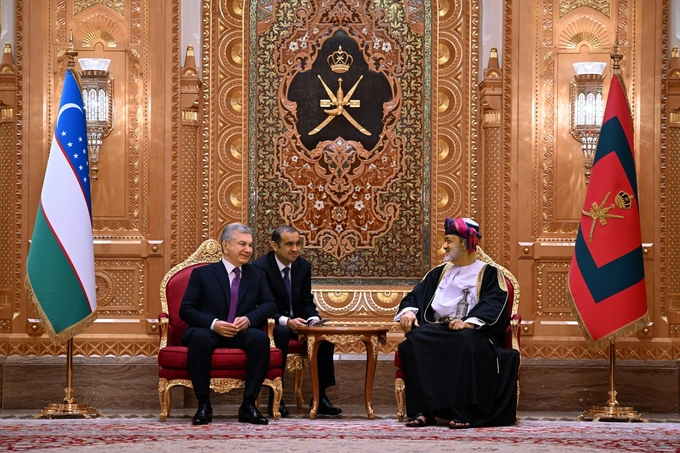
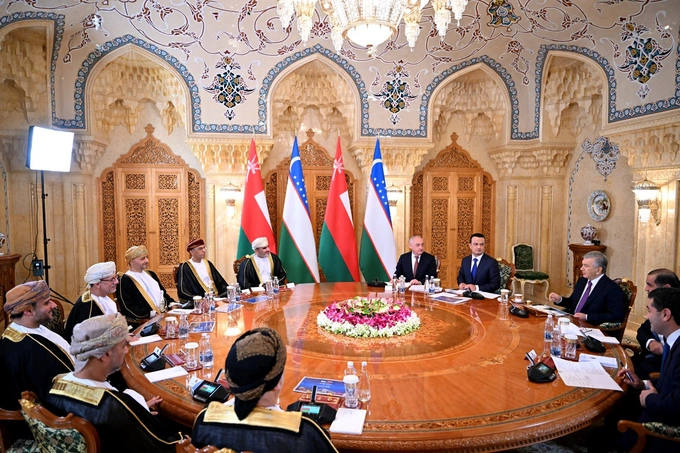
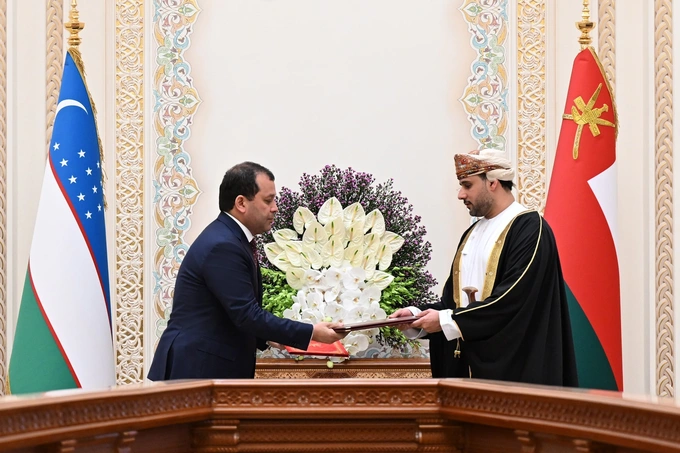
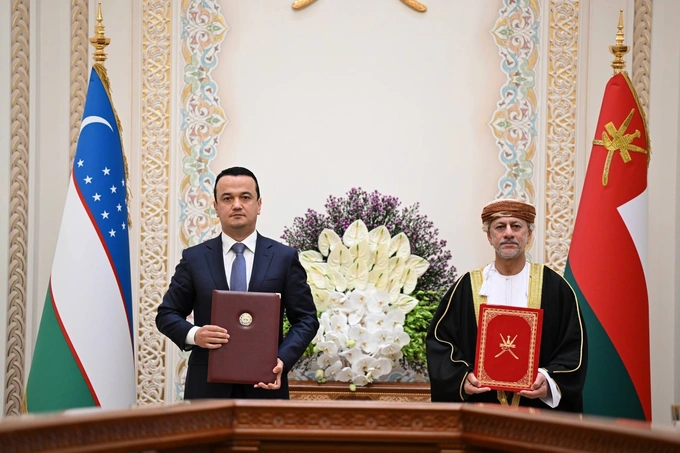
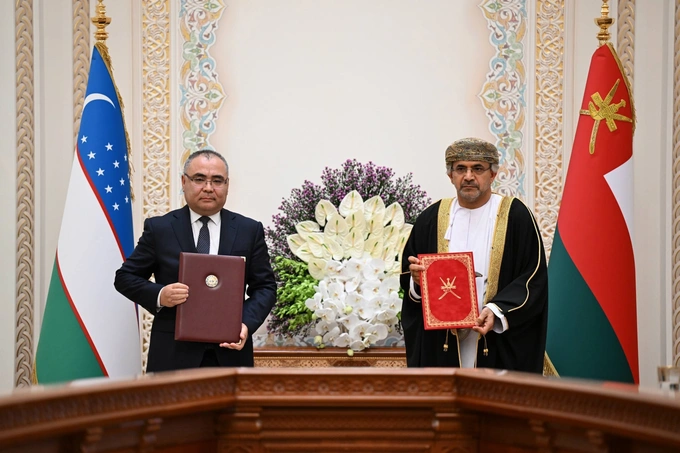
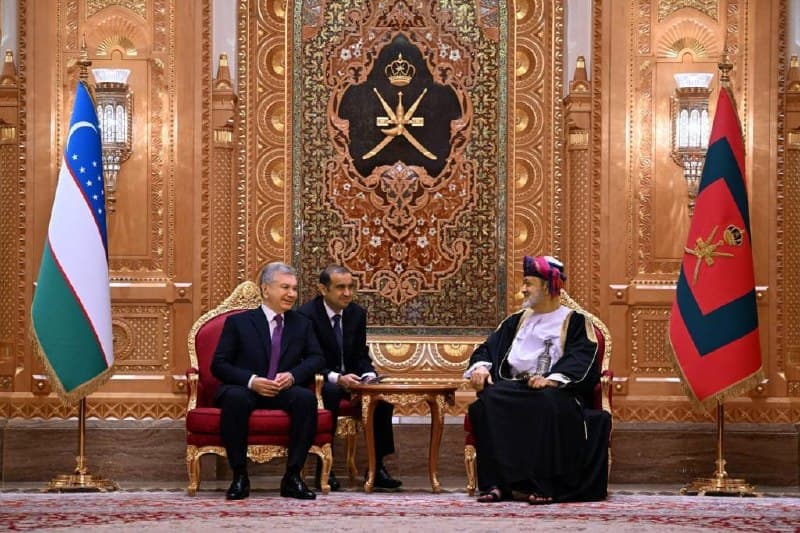
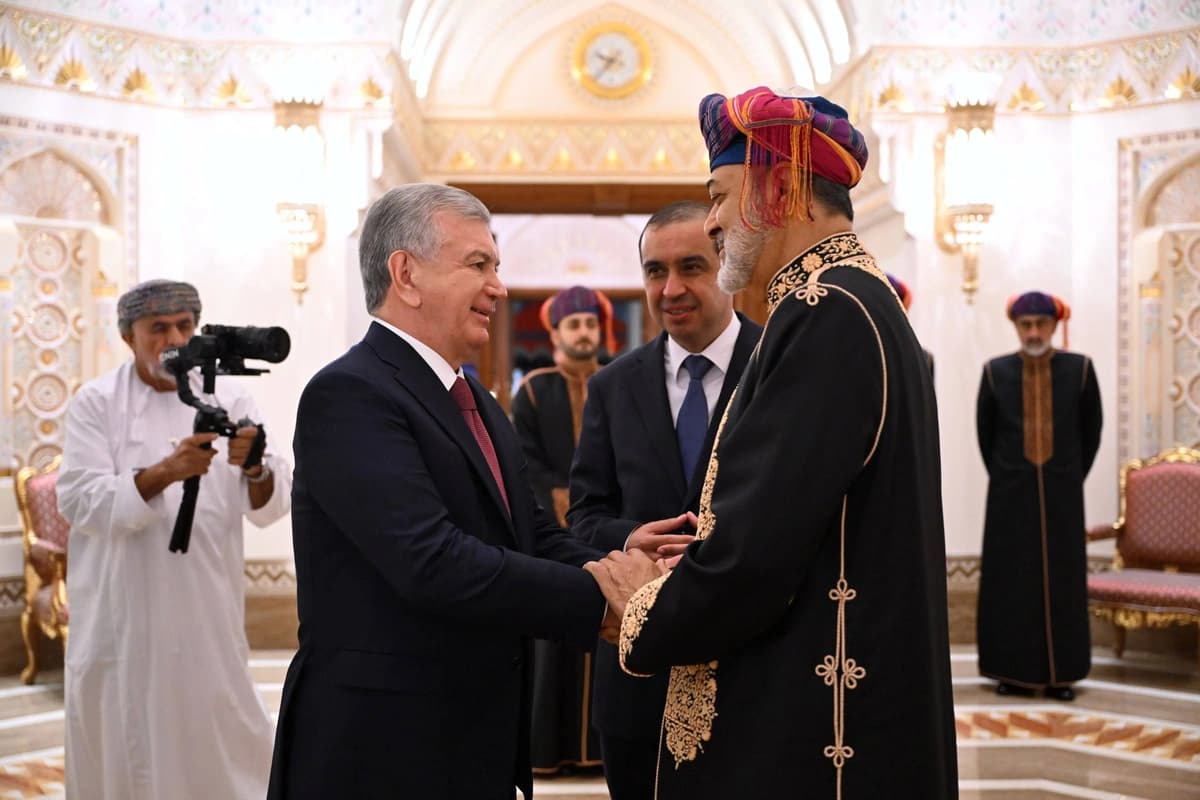
President of Uzbekistan Shavkat Mirziyoyev was on a state visit to Oman on 16–17 November at the invitation of Sultan Haitham bin Tarik Al Said. Following talks in narrow and expanded formats, the parties decided to elevate relations between the two countries to the level of strategic partnership and enshrined this in a corresponding agreement. To implement the agreements, it was decided to adopt a 'roadmap' and create a Coordination Council mechanism. In total, following the talks on 17 November, the parties exchanged more than 30 documents: according to the Omani side, the package included a framework agreement, six agreements, 21 memoranda of understanding and a cooperation programme.
Political Agreements
The leaders emphasised the importance of mutual support within the UN, the Organisation of Islamic Cooperation, the Non-Aligned Movement and the 'Gulf Arab States — Central Asia' format. In a joint statement, they advocated the peaceful settlement of conflicts on the basis of international law norms and the UN Charter. The Sultan of Oman called for dialogue and diplomacy against the backdrop of tensions in the region which, in his words, affect global energy security, trade and maritime shipping, and also spoke in favour of a just settlement of the Palestinian question and the creation of an independent Palestinian state within internationally recognised borders. He highly praised Uzbekistan's role in ensuring regional stability and supported constructive engagement with Afghanistan. Mirziyoyev invited the Sultan to visit Uzbekistan on a state visit; the parties agreed on more regular high-level visits.
Economy: From $5.5 Million to a $1 Billion Goal
The current scale of trade relations between the countries is modest, which makes the stated goals indicative. In 2025, trade turnover amounted to $5.52 million, up 21.9% compared with 2024 (exports — $3.35 million, imports — $2.17 million). In January–September 2026, the figure reached $3.28 million, 70.4% more than a year earlier; according to Oman's National Centre for Statistics and Information, in the first eight months of 2026 trade turnover amounted to 1.15 million rials (about $3 million). At the Uzbek-Omani business forum, Mirziyoyev stated a goal of raising mutual trade to $1 billion and announced a portfolio of joint projects worth a total of $5 billion. The President named five priority areas: industrial cooperation, transport and logistics, modern urban development and tourism, development of mineral resources, as well as finance and digital technologies. According to him, joint investment projects have been developed in the chemical industry, geological exploration and deep processing of mineral resources, and work is under way to establish a joint venture for launching satellites.
Logistics and Preferential Trade
The key idea is to connect Oman's seaports with Uzbekistan's potential in Central Asia: in the joint statement, Oman is described as a 'gateway' for Uzbek products through its ports, and Uzbekistan as a potential 'gateway' for Omani goods and investments into Central Asia and Eurasia. It was proposed to create logistics infrastructure in the city of Sohar, form a unified trade and logistics platform, increase the number of flights and establish cargo services. On the eve of the visit, on 15 November, the sixth meeting of the intergovernmental commission was held in Muscat, led by Uzbekistan's Minister of Investment, Industry and Trade Laziz Kudratov and Oman's Minister of Commerce, Industry and Investment Promotion Anwar bin Hilal al-Jabri. The Uzbek side proposed holding the first round of negotiations on a preferential trade agreement in December 2026 and extending the preferential regime to 200 tariff lines. Uzbekistan is interested in supplying food, fruit and vegetables, copper, aluminium, textiles, electrical and household goods, as well as chemical products to Oman; from Oman, supplies of sugar, polymers, petroleum products, lubricants and aluminium products are being considered. The Omani side proposed joint investments in pharmaceuticals, the production of electrical equipment, aluminium products and auto components.
Key Documents and Specific Projects
In addition to the strategic partnership agreement, an agreement was signed on mutual visa exemption for citizens holding ordinary passports: previously each of the countries had established a visa-free regime unilaterally, and now it is enshrined on a mutual basis. Also signed were an agreement on cooperation and mutual assistance in customs matters, terms of reference for an agreement on preferential trade, and a framework agreement on establishing a new commercial bank in Uzbekistan. Separate documents enshrined an increase in the authorised capital of the investment company UzOman, the accession of the Fund for Reconstruction and Development of Uzbekistan to the Central Asia and Caucasus Investment Fund, and the creation of an Uzbek-Omani Business Council. According to the Oman News Agency, at the business forum companies of the two countries signed another 20 agreements and memoranda — from industry and energy to space technologies, automotive manufacturing and artificial intelligence. Among specific projects: an agreement between the Ministry of Energy, the Ministry of Investment, Voltamp Energy and UET Construction on the joint development of a 500 MW solar plant in the Fergana Region (about 1 billion kWh per year after launch), and an agreement between Voltamp Energy, NURA Electric and UzOman on a power transformer plant with voltage up to 220 kV and a capacity of 5000 MVA per year, which, according to the Ministry of Energy, is planned to be built in the Akhangaran District of the Tashkent Region. Omani investors are also participating in the construction of New Tashkent, where a 'Muscat' quarter will appear. On 16 November, Mirziyoyev met with the heads of major Omani companies — the Oman Chamber of Commerce and Industry, SABCO Group, Voltamp Energy, Asyad Group, Zubair Corporation and UzOman.