The key facts
- In its second report to the UN Security Council, the Board of Peace stated that Israel and Hamas are failing to meet key ceasefire commitments
- The Gaza administration committee and the International Stabilization Force have still not entered the enclave
- Israel launched the first publicly announced ground operation since the ceasefire; Hamas called it a violation
Report to the UN Security Council: both sides are behind the roadmap
Israel and Hamas are failing to meet key commitments under the Gaza ceasefire agreement, delaying the establishment of a new Palestinian administration and the deployment of an international stabilization force. This is stated in a report by the US-led Board of Peace for the UN Security Council, which The National has reviewed. It is the board's second report; the Security Council is expected to discuss its findings this month.
What is not working: governance, police and humanitarian aid
The report criticizes ongoing Israeli military strikes, Hamas militant activity and the dragging out of political and security arrangements. The committee for the administration of Gaza (NCAG), which is to take over civilian governance, has not yet entered the enclave; the International Stabilization Force (ISF) also remains undeployed. The board noted that Israel has not made the decisions needed to prepare and deploy a Palestinian civilian police force to replace Hamas, and called on the Israeli government to 'translate confirmed commitments into action' as well as to lift without delay restrictions hampering the entry of shelters and winter supplies. Progress is limited, despite the fact that Hamas and other Palestinian factions adopted a 15-point roadmap in July on surrendering weapons and transferring civilian and security authority.
Humanitarian situation and funding
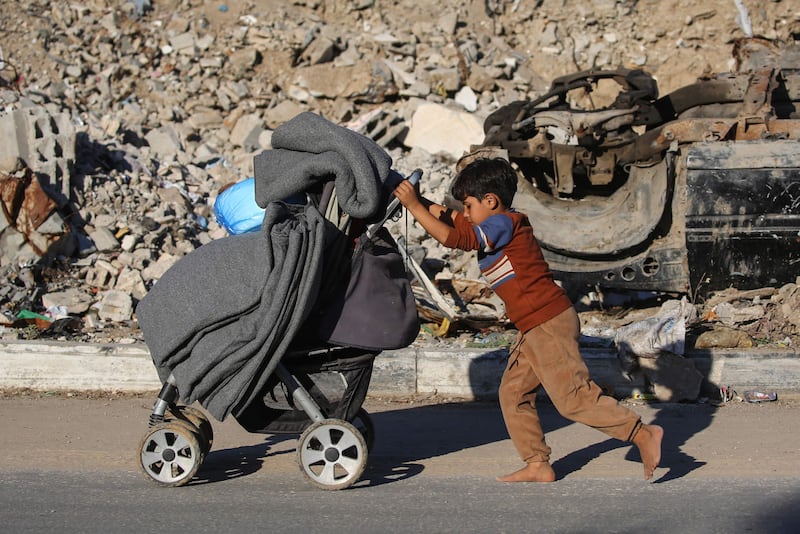
According to the report, floods this month destroyed more than 6,000 family shelters and damaged another 17,400; more than 150,000 tents remain outside Gaza awaiting delivery. Aid has not yet reached the levels required by UN Security Council resolution 2803, which endorsed the Board of Peace plan and provides for supplies no lower than those agreed in January 2025. At the same time, the board recorded about $17 billion in pledged reconstruction funds, of which $280 million 'has been used for the preparatory phase.' The European Union and member states pledged $1 billion for early recovery under the Team Gaza initiative launched in July. Morocco is offering help with disarmament and reintegration, Egypt with police training, Kazakhstan with university scholarships for students from Gaza, and Romania with medical evacuation. The UAE has provided $4.33 billion in direct humanitarian aid over the past three years.
Ground operation in central Gaza
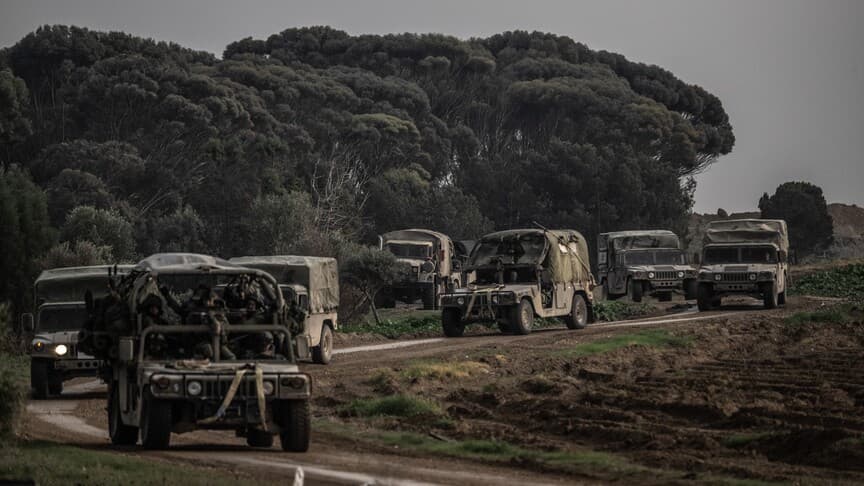
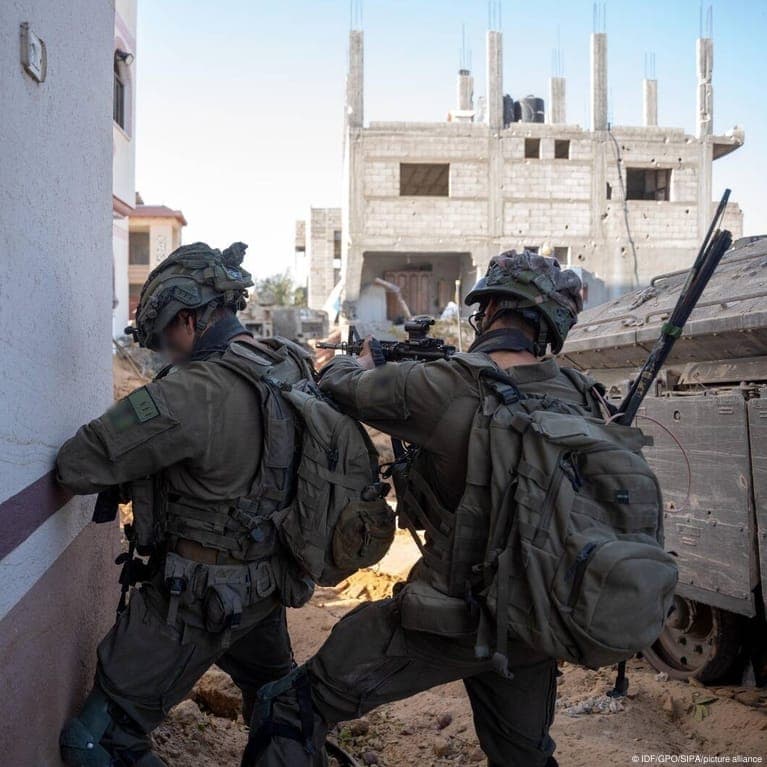
The report was published on the same day that Israeli troops launched one of the largest operations in Gaza since the ceasefire came into force in October last year. Residents reported that tanks and bulldozers entered areas near the Bureij and Nuseirat camps; Palestinians were leaving parts of central Gaza, the Israeli army closed sections of the enclave's main north-south road and ordered residents to stay away. Artillery shelling and prolonged gunfire near the 'yellow line' marking territory held by Israel were reported. The military said the goal of the operation was 'terrorist infrastructure.' Hamas condemned the offensive as a violation of the ceasefire and called the advance of troops and the displacement of residents northeast of Nuseirat a dangerous escalation. Israeli Defense Minister Israel Katz said on Wednesday that Israel will not withdraw troops from Gaza until Hamas is disarmed and the territory is demilitarized.
Complaints against Hamas and the board's warning
The Board of Peace noted that Hamas continued armed operations, including attacks on Israeli forces, and imposed taxes on goods brought into Gaza, which affects supplies of basic goods. The organization was called upon to fulfill its commitments of July 30: to end military activity, weapons possession, tunnel construction and interference with aid delivery. The board warned that further delays could jeopardize recovery and weaken the prospects of a political transition to self-determination and statehood for the Palestinians: 'A ceasefire that delivers nothing visible cannot be sustained indefinitely.' According to the report, Hamas's attacks on Israel in October 2023 killed about 1,200 people, and Israel's campaign in Gaza has killed more than 74,700 Palestinians; despite the US-brokered ceasefire reached in October 2025, more than 1,600 Palestinians, many of them civilians, and five Israeli soldiers have been killed in Gaza since then.