The key facts
- Two truckloads of bananas from Anamur (about 400,000 fruits) were handed out to COP31 participants in Antalya
- Nikol Pashinyan carried a banana through Ireland, Armenia, India and Cambodia and ate it in a video
- Anamur produced about 207.9 thousand tonnes of bananas in 2025 — roughly a quarter of Turkey's output
Anamur bananas at the COP31 conference
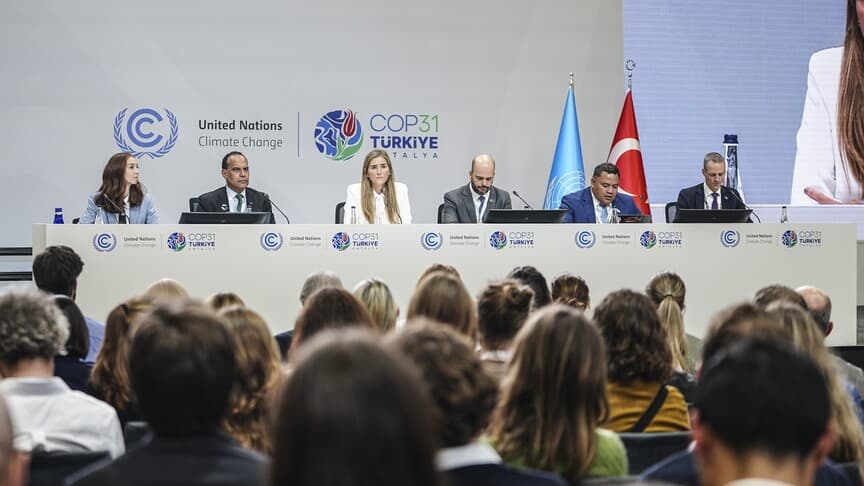
Participants of the COP31 climate conference in Antalya were given two truckloads of bananas grown in the Anamur district of Mersin province. Local producers estimated the shipment at roughly 400,000 fruits. In this way the district presented one of the region's best-known agricultural products to an international audience.
Pashinyan's banana across four countries
Particular attention on social media went to Armenian Prime Minister Nikol Pashinyan. A banana gifted to him at a hotel in Antalya he carried through four countries after leaving Turkey and eventually ate it in a video posted on social media. In the post he compared his journey to Ferdinand Magellan's route: Antalya — Dublin — Yerevan — New Delhi — Phnom Penh — back to Yerevan. In earlier posts from Dublin and Yerevan he showed the banana being taken out of his pocket. Pashinyan arrived in Antalya on November 11 for the COP31 leaders' summit; his schedule then included the European Political Community summit in Dublin, a meeting with India's Foreign Minister Subrahmanyam Jaishankar in New Delhi, and the summit of the International Organization of La Francophonie in Phnom Penh.
Scale of production and the product's status
According to producers, Anamur accounted for nearly a quarter of Turkey's banana production in 2025. According to data from the CONA agricultural platform citing the Turkish Statistical Institute, production of bananas, plantains and similar products in the district amounted to 207.9 thousand tonnes over an area of 32.1 thousand decares (3,210 hectares) — about 53% of the 392,347 tonnes for Mersin province. Anamur bananas were registered as an appellation of origin on July 9, 2003 (protection effective from June 2, 2002), according to the Turkish Patent Office; the protected growing zone covers Anamur and Bozyazı in Mersin, as well as Gazipaşa and Alanya in Antalya. Harvesting takes place year-round, but the peak falls in October–March; greenhouse cultivation supports production outside the main season. According to the registration document, a bunch under suitable conditions can weigh from 20 to 60 kilograms.