The key facts
- From 2027, economic growth is to be driven by added value, technology and high-paying jobs
- Service exports in tourism, transport logistics and digital payments are planned to increase from $11.5 billion to $29 billion
- McKinsey is developing a development strategy for ten industries up to 2035; covering the costs of preparing investment projects from the budget has been proposed
New growth model from 2027
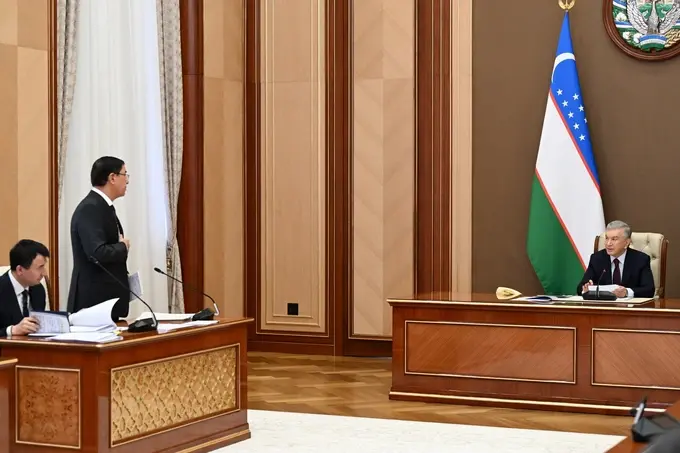
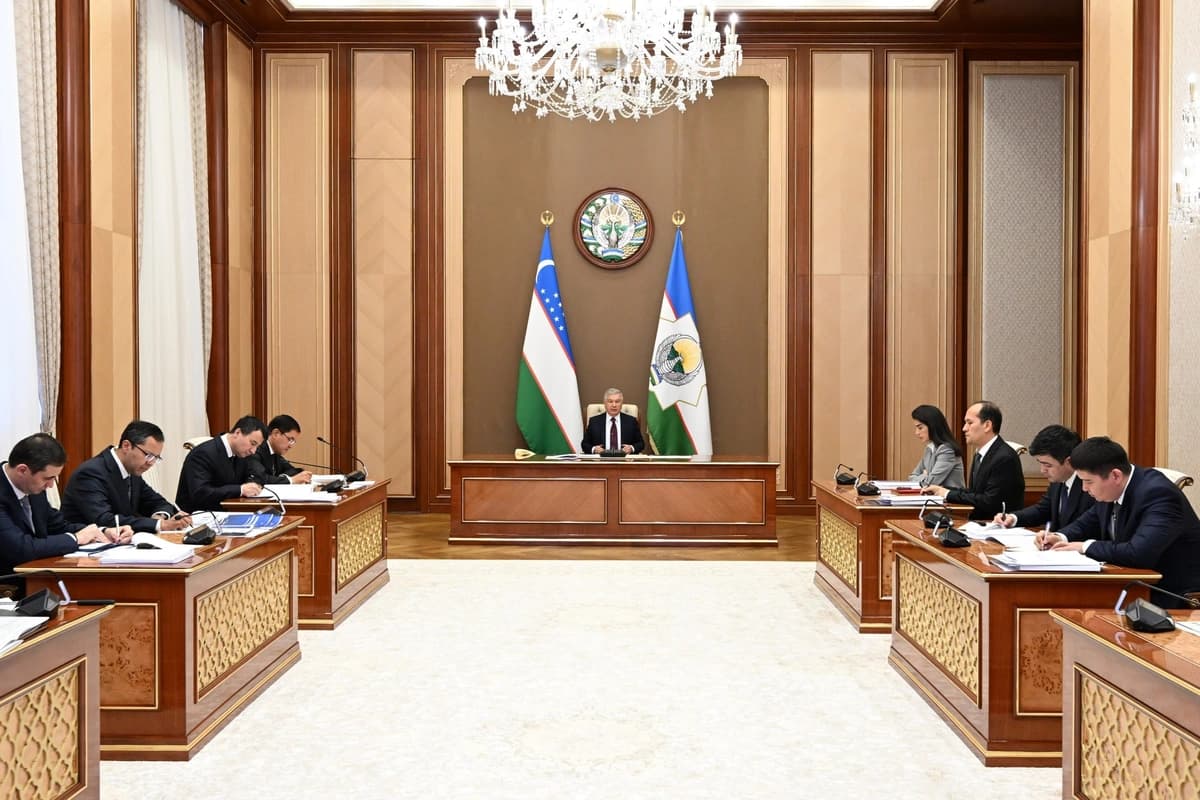
Uzbekistan plans to switch to a new economic growth model from 2027. President Shavkat Mirziyoyev announced this on November 13 at a meeting devoted to the draft state budget for 2027, the main macroeconomic forecasts and new approaches to ensuring growth. «Life itself demands a transition to a new model of economic growth from next year. In every industry and sphere, new technological drivers must be identified. Without this, there will be no change,» Gazeta.uz quoted his words, citing footage from the Uzbekistan 24 TV channel.
Service exports: the $29 billion target
According to the president, future economic growth must be ensured by increasing added value, introducing technology and creating high-paying jobs; exports are planned to be doubled through a sharp increase in the share of added value, while expanding the middle class through the creation of high-income jobs was named a key task.
Service exports: the $29 billion target
One direction of the new model will be the development of service exports. Deputy Prime Minister, Minister of Economy and Finance Kudratkul Kushkurov, together with the World Bank, calculated the possibilities of increasing exports in three areas — tourism, transport logistics and digital payment services — from $11.5 billion to $29 billion, the president said. This is growth of more than 2.5 times, or $17.5 billion. However, Mirziyoyev did not specify by which year the $29 billion figure is planned to be reached, and did not disclose exactly which cross-border financial operations and digital payment services are meant.
Current service export figures
According to the Statistics Committee, in January–September 2026 Uzbekistan's service exports amounted to $9.7 billion, up 31.1% compared with the same period last year; services accounted for 37.6% of the country's total exports. The main revenue came from tourism — about $5.3 billion, transport services — $2.9 billion, and telecommunications, computer and information services — about $805 million. According to the presidential press service, in 2027 exports of goods and services, excluding gold, are planned to reach approximately $40 billion.
Strategy for ten industries and investment projects
Another direction of the new economic policy is accelerated industrial development. Work has begun with the international consulting company McKinsey on developing a strategy for the development of ten industries. The president instructed deputy prime ministers Kushkurov and Jamshid Khojaev, as part of this work, to launch at least two large industrial enterprises in each district. Earlier, on October 15, the Agency for Strategic Reforms reported consultations with McKinsey & Company on a draft strategy for the development of Uzbekistan's industry up to 2035; among the areas discussed were the competitiveness of local enterprises, human capital development, the introduction of advanced technologies and preparing industry for WTO accession. According to official data, in 2027 at least two or three large investors are planned to be attracted to each priority industry; promising areas include semiconductor production, robotics, biotechnology, high-tech components and batteries for electric vehicles, as well as the chemical and petrochemical industry, machine building, electrical engineering, textiles and pharmaceuticals.
Financing project preparation and institutional reform
The meeting also discussed mechanisms for preparing and implementing investment projects with the participation of international financial institutions. The president supported the proposal by Kushkurov and Khojaev to cover the costs of developing project documentation from the state budget: according to him, with proper organization this will shorten the time before practical work on projects begins by at least a year. Such a possibility is already provided for by current legislation — a presidential decree of February 11, 2025, which established budget financing for the development of appraisal documentation for projects with state external debt repayable from the budget; grants and concessional loans from international organizations are also allowed.